
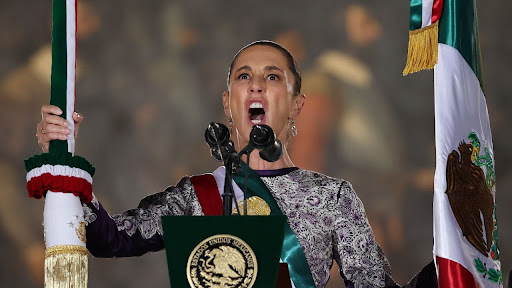
On September 15, 2025, Mexico experienced a historic night with the first Independence Cry presided over by Claudia Sheinbaum, a speech that resonated not only for the solemnity of the ceremonial act but also for its clear feminist imprint that redefines the role of women in both national history and the present.
The Cry of Independence, that emblematic ritual recalling the call to rise against Spanish colonial rule initiated in 1810 by Miguel Hidalgo, occupies each year a central place in Mexican memory and identity. It celebrates the heroic struggle that culminated in the formation of a free and sovereign nation, a symbolic moment of patriotic reaffirmation. Traditionally, the speech is delivered by the president, marking a direct act of connection with the people and with history.
In 2025, Sheinbaum shattered a ceiling by becoming the first woman to deliver the Cry, a gesture she herself described as a “symbol of inclusion, equality, and justice.” In her speech, the president upheld the dignity and worth of all Mexican women, focusing especially on Indigenous women and the heroines of independence. She paid special tribute to iconic figures such as Josefa Ortiz de Domínguez, Leona Vicario, and Gertrudis Bocanegra, who, both in the shadows and on the battlefield, wove the resistance that led Mexico to freedom.
Sheinbaum stated explicitly: “We pay tribute to the women who made our independence possible, brave women who bent the arc of history with their presence, commitment, and example. Indigenous women, our first caretakers of the land, guardians of language and culture, an indispensable pillar in the building of Mexico.” This acknowledgment granted a place of honor to the women traditionally silenced in patriotic accounts, highlighting their leadership and reclaiming their enduring legacy.
The protocol also echoed this moment with feminist symbols: the purple dress worn by the president and the guard of honor before the portrait of Leona Vicario, the first woman admitted into the national pantheon of heroes, together offered a political reading that emphasized the urgency of opening paths for equality and respect for women’s rights in Mexico.
This event was not only an exercise in historical memory but also a contemporary statement: in times of femicide and the ongoing struggle for women’s rights, Sheinbaum’s Cry represents a call for justice and for the repair of the social fabric from a gender perspective, infusing one of the nation’s greatest symbols with an inclusive dimension.
Thus, the 2025 speech and protocol constitute a milestone that frames Mexico’s transition toward equality, making women visible as active agents of history rather than mere witnesses. The president’s explicit commitment opens doors for reconstructing a more plural and just national narrative, where sovereignty is also exercised through gender equality and respect for the country’s cultural and historical diversity.