

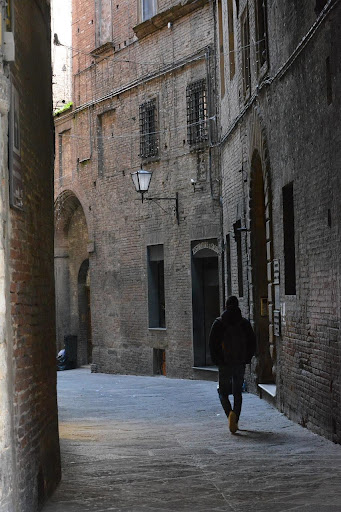
If you are living in a major city, as I do in Lahore, and you do not have a few minutes to think alone, to gaze out the window, and to focus your consciousness inward upon your very self—then you are lost. You are lost in the world and have forgotten your Self. You are facing what Martin Heidegger would call Angst—anxiety, dread, and a profound loneliness that stems from inauthenticity.
To simply sit alone, without a mobile phone, a laptop, books, or any distraction—to do nothing—has become a difficult, almost alien, task. We feel a sense of lack, a missing of our Selves, and we become unsettled. For instance, if the internet connectivity is interrupted, everyone becomes perplexed and feels a strange emptiness, as if they have nothing to do in life and no connection to the world.
Thus, one feels connected to this world, but this very world makes life uneasy, for it is saturated with disturbing news. This news is fragmented and scattered—a chaotic stream of half-truths, fake news, and AI-generated narratives. We are, in a Heideggerian sense, thrown into a world of das Man (the “They”), where public opinion and information-overload determine our state of mind, obscuring our own unique capacity for Being.
I return to my original concern: focusing my consciousness on my Self, much like Descartes’ Cogito (“I think, therefore I am”). Without the endless scrolling on mobile and laptop screens—without the mediation of social or any other media—I actually see: a beautiful lawn, white birds, sunshine, silence, and the chirping of birds… I had become accustomed to seeing even these immediate phenomena through my mobile phone, including all global disasters and calamities like floods.
There is a proverb: “What the eye doesn’t see, the heart doesn’t grieve over.” If you are far away, watching news on social or print media about flood victims and poor people migrating from their homes, it feels distant and abstract. But if you are there, living inside that village and experiencing it alongside others, your experience is one of immediate, palpable reality—you might be filled with anger, cursing governments. This is the difference between a mediated, inauthentic relation to the world and an authentic, direct engagement with it.
We are living in a world where the mind is occupied with confusion, and this confusion blurs consciousness. This state of confusion ultimately benefits the oppressors who run governments around the world. Our social connectivity is dependent on social media, which is controlled by powerful entities, and thus we are indirectly controlled. Our freedom is compromised. We are becoming slaves to information and social media, objects within a technological framework Heidegger warned against.
We no longer have time to sit alone and ask for a minute: Who are we, and where are we going?
In this age of globalization, we are becoming more alone and isolated, fundamentally different—and disconnected—from our previous generations. We are surrounded by a crowd yet exist in profound solitude, a testament to our flight from our own authentic Being.
Heidegger’s philosophy calls for a retreat from the “They-self” to retrieve our authentic Self. It is a call to pause the noise, to experience the anxiety of our own finite existence not as a threat, but as the very ground of our freedom. Only by confronting this Angst and recognizing our thrownness into this mediated world can we begin to make authentic choices about our existence.
Retreat, my friend, not to escape the world, but to find your authentic place within it.



