
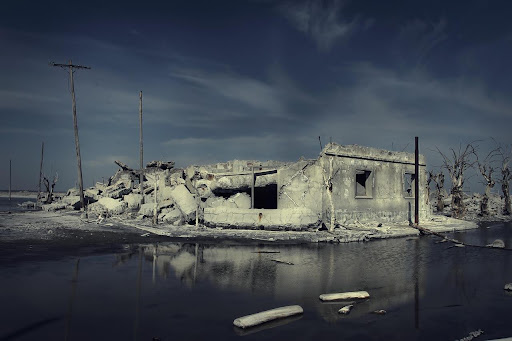
The reconstruction of flood-devastated rural Punjab demands a radical departure from conventional donor-driven aid models. Grounded in the transformative praxis of Paulo Freire, this framework proposes a holistic, community-led approach that integrates physical rebuilding with socio-economic liberation. The core principle is to reject treating affected populations as passive beneficiaries (“objects”) of aid and instead engage them as active subjects and co-investigators of their own reality. The goal is not merely to rebuild what was lost, but to foster conscientização (critical consciousness) to build back more resilient, just, and self-reliant communities.
The Pillars of Integrated Reconstruction:
- Housing & Construction: Building Back Safer, Together
- Freirean Principle: Praxis (Reflective Action) and Dialogue.
- Approach: Construction programs are reconceived as “Community-Led Building Academies.”
- Dialogue Circles: Facilitators (architects, engineers) engage communities in dialogues to critically analyze why homes failed, what traditional designs worked, and what safer, adapted, and locally-sourced materials can be used.
- Participatory Design: House and village layouts are co-designed, respecting cultural norms and improving upon pre-flood conditions (e.g., raised plinths, flood-resistant techniques).
- Skill Development: Training in disaster-resilient construction (e.g., compressed earth blocks, bamboo treatment) is provided. This transforms aid into an investment in human capital, creating a cadre of local skilled masons for future resilience.
- Implementation: Communities contribute labor and local materials, fostering ownership. External resources provide technical expertise, specialized tools, and cost-sharing for materials not available locally.
- Water, Sanitation, and Hygiene (WASH): Empowering Community Stewardship
- Freirean Principle: Problem-Posing Education.
- Approach: Move from simply installing pumps and toilets to facilitating a community-wide dialogue on public health.
- Critical Investigation: Communities map contamination pathways, analyze the causes of waterborne diseases, and investigate traditional and modern WASH practices.
- Co-Creation of Solutions: The community prioritizes WASH needs and collaboratively designs solutions (e.g., location of tube wells, sanitation systems, drainage plans). This ensures solutions are culturally appropriate and collectively owned.
- Formation of WASH Committees: Elected, gender-balanced committees are trained to manage, maintain, and repair WASH infrastructure, ensuring sustainability beyond the project lifecycle.
- Hygiene Promotion: Instead of top-down messaging, community members develop and lead context-specific hygiene promotion campaigns through theatre, song, and local media.
- Education: Rebuilding Schools as Hubs of Critical Hope
- Freirean Principle: Conscientização and the rejection of the “Banking Concept” of education.
- Approach: Reconstruction of school infrastructure is integrally linked to the transformation of pedagogy.
- Temporary Learning Spaces (TLS): Immediately establish TLS that utilize Freirean methodologies. Curriculum is contextualized, using the flood event as a generative theme for literacy, numeracy (e.g., calculating reconstruction costs), and science (e.g., understanding hydrology and ecosystems).
- Co-Design of Schools: Students, teachers, and parents participate in designing the new school environment, ensuring it is child-friendly, disaster-resilient, and a source of community pride.
- Teacher Training: Educators are trained in participatory and problem-posing methods, empowering students to see themselves as agents of change in their communities.
- School as a Community Resource: The rebuilt school functions as an adult education center at night, for vocational training, and as a emergency shelter, deepening its value and integration into community life.
- Livelihoods & Agriculture: Fostering Economic Agency
- Freirean Principle: Authentic solidarity and humanization through work.
- Approach: Move from input distribution to facilitating a critical analysis of the local economy.
- Dialogue on Resilience: Farmers and pastoralists engage in dialogues to analyze crop patterns, seed sovereignty, water management, and market access in the context of a changing climate.
- Participatory Research: Communities experiment with flood-resistant and saline-tolerant crop varieties, rehabilitate land collectively, and explore diversified livelihood options (e.g., aquaculture, agro-processing).
- Community-Managed Funds: Instead of individual cash grants, establish community-managed revolving funds or seed banks. This encourages collective decision-making, invests in communal assets, and reduces dependency.
Implementation & The Role of External Actors:
- Facilitators, Not Implementers: NGOs and government agencies must adopt the role of humble facilitators and co-learners.
- Timeline: Commit to long-term engagement (5-7 years) to allow for genuine dialogue, capacity building, and sustainable transformation.
- Monitoring & Evaluation: Shift metrics from quantitative outputs (e.g., number of houses built) to qualitative outcomes (e.g., increased community confidence in managing projects, reduction in dependency rhetoric, evidence of critical problem-solving).
Conclusion:
This Freirean model is inherently more complex and time-consuming than a top-down delivery mechanism. However, it is the only approach that treats the disaster as a teachable moment for profound structural change. By investing in dialogue, participatory processes, and the development of critical consciousness, the reconstruction effort can transform a narrative of victimhood into one of empowered agency, ensuring that rebuilt villages are not just physically stronger, but are also more democratic, resilient, and self-reliant.