

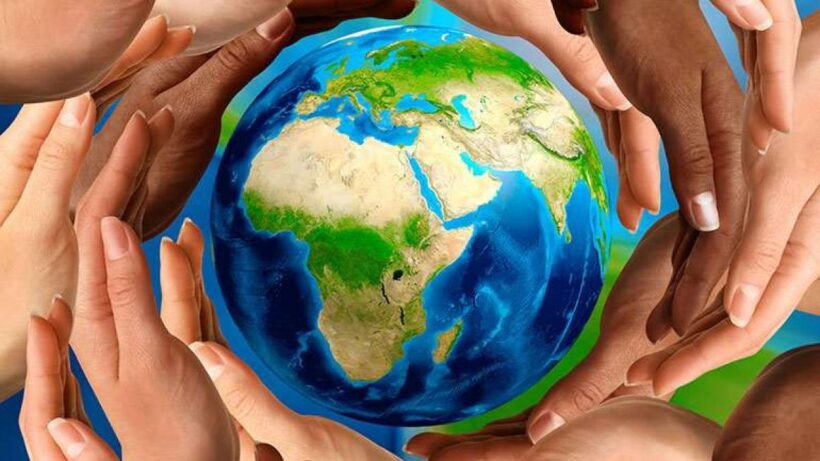
We are witnessing not only the collapse of neoliberal models but also the exhaustion of their so-called humanitarian counterpart. Crises demand our attention, yet deeper transformations are already underway. Humanitarians respond to immediate emergencies—such as Gaza and the Flotilla—but Humanists are challenged to go further: to propose principles and values that transcend the present moment and open the path toward a new civilization—a Universal Human Nation.
Singing “We Are the World” is no longer enough. Now we must live it.
For Humanists, the task is not just to denounce wars, genocides, ceasefires, and cycles of violence. It is to question the very structures that sustain them: entrenched beliefs, a market-driven economy, and systems of social and political domination.
At the same time, signs of transformation are emerging all around us. Cities are being reshaped by bicycles and renewable energy. Cultural diversity is drawing millions into global centers. Decolonization movements across Asia and Africa are breaking open old frameworks of domination. Even the sheer fact that over a million people are in the air at any given moment speaks to the new interconnection of humanity. These are not passing trends; they are seeds of a different future.
The decisive question of our time is global governance. Neoliberal globalization is unraveling, yet no coherent replacement has taken full shape. What is emerging instead are competing projects of multipolarity, regional cooperation, and new institutional alignments. As Andrew Korybko recently observed in Pressenza, in The SCO & BRICS Play Complementary Roles in Gradually Transforming Global Governance:
“The processes that are unfolding will take a lot of time to complete, perhaps even a generation or longer, so expectations of a swift transition to full-blown multipolarity should be tempered.”
The task, then, is not to declare victory or despair at delays, but to recognize how these new forms of governance are already taking root and reshaping the horizon of possibility.
Examples abound. In Bangladesh, the Anti-Discrimination Student Movement signals a generational push for justice and equality. In Mexico, the government has responded to Trump’s attacks not with escalation but with a politics of dialogue and conflict resolution. Even in New York City, the dynamics of the mayoral election reveal shifting cultural and political currents, as Partha Banerjee has noted.
Taken together, these developments remind us that the world is not static. Multipolarity is not simply a diplomatic formula—it reflects deeper changes in culture, economy, and human consciousness. The urgent choice before us is whether we will exhaust ourselves merely reacting to each new injustice amplified by the media, or whether we will dedicate ourselves to building humanity’s future.



