

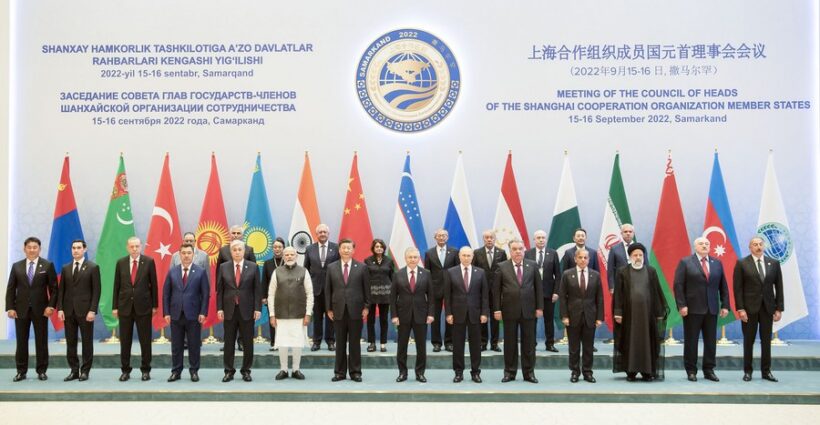
Against the backdrop of a summit of Eurasian leaders representing more than half of the world’s population, Chinese President Xi Jinping unveiled a bold vision: a proposal for global governance that seeks to reform the international system at its very core. This initiative comes at a critical moment, marked by growing global tensions and discontent with the functioning of the current international order. It is imperative to approach this proposal with rigor and clarity in order to prevent conspiracy theories, distortions, and disinformation—which are already beginning to circulate—from obscuring its purpose and creating false narratives that only obstruct responsible dialogue and global cooperation.
On the Summit and Global Governance
The proposal was presented at the Shanghai Cooperation Organization (SCO) summit, an intergovernmental forum that brings together key Eurasian countries such as China, Russia, India, Pakistan, and several Central Asian nations. These states represent a substantial portion of the global population and economic dynamism, and they seek greater influence in global architecture. The SCO serves as a space for dialogue and multilateral cooperation, working to strengthen regional security, economic development, and political collaboration.
The concept of global governance refers to the mechanisms, institutions, and norms that regulate relations and actions among countries, organizations, and international actors in addressing common challenges—from peace and security to sustainable development and climate change. It is a system that must be inclusive, effective, and fair in order to achieve international cooperation in an interdependent world.
Xi Jinping advances this initiative because he believes that the current system of global governance, inherited from postwar structures, does not reflect today’s realities and needs. The distribution of global power, emerging threats, and the aspirations of the majority of countries are out of step with existing institutions. For this reason, it is necessary to reform and harmonize these mechanisms so that all the peoples of the world can benefit equitably and cooperate in solving common problems.
Xi’s proposal for global governance is a luminous invitation to reform and revitalize the international system, grounded in universal principles and practical orientations designed to close the door to manipulation and hegemonism. The following sections explain each principle in depth, with historical context and examples that allow for a full understanding of the initiative while dismantling potential misinterpretations.
Context and Justification
This initiative does not emerge in a vacuum but at a time of deep global tensions and questioning of the international system forged after World War II. That system—centered on organizations such as the United Nations and the Bretton Woods institutions (IMF and World Bank)—faces growing skepticism and structural challenges today. Global interdependence has reached unprecedented levels with globalization, but it has also exacerbated inequalities and tensions.
Xi argues that this system reflects, in many respects, the power of a bygone era, where the countries of the Global South remain underrepresented in key bodies such as the UN Security Council or the IMF, generating frustration and imbalance in decision-making. For example, developing nations—which make up the majority of the world’s population and much of its economic growth—have limited voice within these entities. Moreover, contemporary challenges such as the climate crisis, the rise of artificial intelligence, the digital divide, and regional conflicts demand coordinated responses adapted to today’s realities—responses that the traditional system is failing to provide effectively.
Consequently, the reform proposal aims to adapt the international system so that it is more inclusive, effective, and fair, ensuring that the fruits of progress are shared equitably among all nations, with a strengthened UN as the central pillar of global governance.
Fundamental Principles
1. Sovereign Equality: Ending Hierarchy
This is the foundational principle and the cornerstone of the initiative. It is based on international law, which recognizes the equality and sovereignty of all states, large or small. Xi emphasizes that this equality must not be a mere ideal but a tangible reality. This means that no country has the right to dictate another state’s model of development, political system, or values. For instance, “democracy by export”—historically promoted by some Western powers through interventions or pressure—is explicitly rejected under this premise.
Sovereign equality also entails equitable decision-making power in international forums. Thus, developing countries such as India, Nigeria, or Brazil must hold real influence in decisions affecting the world, replacing the current practice of relegating them to secondary or symbolic roles. This shift is crucial to balancing a global order that has long privileged historically powerful nations.
A concrete example is the call for UN Security Council reform, where China supports expanding representation to better reflect today’s world, including countries from Africa, Latin America, and Asia.
2. Respect for International Law: Against Double Standards
The core idea here is that the UN Charter and international law must serve as the supreme foundation of international relations. Xi explicitly criticizes the tendency of some countries to apply “double standards”—choosing whether to respect or ignore international norms depending on their interests. This practice has been evident in conflicts such as Syria, Ukraine, or Palestine, where certain powers question UN resolutions or intervene unilaterally.
The initiative seeks to end this arbitrary selectivity, which undermines global legitimacy. Great powers are urged to lead by example, respecting international law and avoiding the imposition of new rules that benefit only a select few.
This principle aims to reinforce the legitimacy and authority of multilateral institutions, restoring the confidence of all countries in a system based on clear norms respected equally. For instance, Xi calls for an end to illegal economic sanctions or unilateral blockades against sovereign nations, which are considered violations of these principles.
3. Multilateralism as the Basic Path: Ending Blocs
The proposed model of multilateralism is grounded in open cooperation, broad consultation, and consensus among all nations. This stands in clear contrast to the formation of exclusive blocs or alliances that fragment and polarize the world, while fostering protectionism and geopolitical rivalries.
An illustrative example is the Belt and Road Initiative (BRI), introduced by China not as a military or political bloc but as a global economic cooperation project. The BRI is open to any country that wishes to participate, promoting investment in infrastructure, energy, transport, and technology without geopolitical exclusions.
Xi also underscores the central role of the UN as the decision-making forum for international affairs, emphasizing the need to strengthen its mechanisms so they are agile and efficient, and not paralyzed by the particular interests of certain states.
4. People-Centered Governance: From States to Peoples
This principle marks a conceptual evolution, shifting the focus of global governance beyond bureaucracies and diplomatic relations between states toward the effective well-being of people. Governance cannot be confined to treaties and intergovernmental agreements; it must deliver tangible benefits to the global population.
For Xi, this means fighting poverty, ensuring equitable access to emerging technologies, and urgently addressing the consequences of climate change, which disproportionately affect the most vulnerable countries and marginalized communities.
For example, African countries and rural regions of the Global South have seen the digital divide restrict access to education and digital services. The proposal for global governance aspires to narrow this gap, ensuring that technological development reaches all social and geographic levels.
It also seeks to bridge the historic North-South divide, so that progress and prosperity are not concentrated in developed economies but shared with developing nations that require real support and opportunities for growth.
5. Concrete Results and Coordinated Action: Beyond Words
Finally, the initiative stresses that global governance must translate into concrete, coordinated results that address structural and urgent problems. Declarations and good intentions are insufficient; visible commitment and effective resource-sharing are required.
China calls on developed countries to increase their contributions in financing, technology transfer, and support for developing nations. At the same time, it urges countries of the Global South to strengthen cooperation and resilience through regional networks and strategic alliances.
A practical example can be seen in international cooperation on climate change, where financial and technological contributions from developed countries are essential for vulnerable nations to implement green and adaptive policies.
This principle seeks to break the paralysis that often characterizes international negotiations and to elevate global commitment toward coordinated action with tangible impact on millions of lives.
Critical Areas and Future Reforms
Xi Jinping highlights specific priorities for comprehensive reform: international financial architecture, artificial intelligence governance, cybersecurity, climate change management, fair trade, and the regulation of outer space. In all of these areas, the goal is to uphold the authority and centrality of the UN and international organizations, adapting and strengthening their capacity to respond in an increasingly multipolar and complex world.
Final Message
The initiative firmly rejects Cold War mentalities, hegemonism, and international fragmentation, instead reviving cooperation and historical progress as the only viable path toward universal security and development.
Its vision is that of a community with a shared future in which global reform is built “through extensive consultation, joint contribution, and shared benefits.” This perspective not only appeals to justice but also preempts manipulation, conspiracy theories, and media distortions, since its foundations are clear, universal, and transparent.
In sum, Xi Jinping’s proposal is a bold commitment to justice, reason, and world peace, grounded in profoundly renewing principles that respect diversity. It renders disinformation and paranoia dead ends in the face of an integrative and fair future.



