

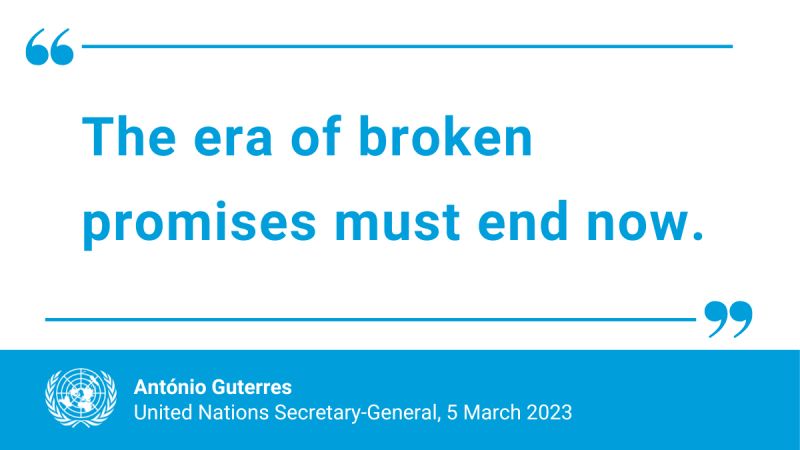
In 1945, when the bombs were still smoking over Hiroshima and Nagasaki, the nations of the world swore “never again.” Never again world wars, never again genocides, never again indifference in the face of barbarism. The promise was solemn. The United Nations was born as humanity’s shield, a moral pact against horror and a political tool to contain the powerful. It was said that at last there would be a place where small nations would have a voice and the great powers would be kept in check. It was supposed to be the dawn of an era of universal peace.
Eighty years later, the irony bites. The UN exists, but so do wars. Massacres never disappeared, they simply changed location. The “Never again” of San Francisco has turned into “Always again” in Gaza, in Ukraine, in Rwanda, in Bosnia, in Yemen, in the Congo. What was born as a global hope now drags itself through empty speeches, vetoed resolutions, and press releases no one listens to. The UN is not the arbiter of humanity. It is the notary of its tragedies.
The institution that was meant to embody global justice became trapped in the snare of its own statutes. Each time a great power decides to use force, the Security Council turns into a theater where the word “veto” outweighs millions of lives. People watch their children die while in New York diplomats debate the wording of a paragraph. The UN does not stop wars, it counts them. It does not prevent genocides, it certifies them. It does not protect the weakest, it watches them fall.
Turning eighty should be cause for celebration. In the UN’s case, it is an uncomfortable birthday. It is the anniversary of a broken promise. What is at stake now is not its prestige but its very purpose. Either the UN becomes the shield it once vowed to be, or it will be condemned to irrelevance, remembered as the most expensive and useless bureaucracy in history.
What It Promised and What It Failed to Deliver
In its early years, the UN showed signs of hope. The 1948 Universal Declaration of Human Rights was a beacon. For the first time, humanity agreed that all human beings are born free and equal in dignity. That text inspired constitutions, social movements, and struggles against dictatorships. It was a moral triumph, even if it never guaranteed those words would be fulfilled.
The UN also accompanied the decolonization of Africa and Asia, with more than 80 countries achieving independence under its political and diplomatic umbrella. It was a historic advance, although many of those new nations remained trapped in poverty and in dictatorships backed by the very same powers that preached freedom. Independence arrived, but justice did not.
Its specialized agencies were the most effective. UNICEF saved millions of children from hunger and disease. UNHCR protected the displaced. The WHO eradicated smallpox and coordinated global health campaigns. These acronyms did more for humanity than a hundred speeches at the General Assembly. They were islands of efficiency in a desert of political paralysis.
What was the UN supposed to prevent but failed to?
The Vietnam War, with more than 3 million dead under napalm and bombs. The UN watched in silence while a country was devastated in the name of geopolitics.
What did it not stop?
The Rwandan genocide in 1994, one million dead in one hundred days while blue helmets were ordered not to intervene. One of the worst massacres of the 20th century unfolded before its very eyes.
What did it allow?
The Srebrenica massacre in Yugoslavia (1995), where eight thousand Bosnian Muslims were executed just meters away from Dutch peacekeepers who had orders to “observe” without firing.
What has it tolerated?
The Israeli occupation of Palestine since 1948. The UN was complicit in the partition that sowed an eternal conflict and for 75 years has issued resolutions vetoed in sequence by the United States. The result: Gaza bombed, thousands of children killed, millions of refugees, a continuous tragedy that the UN records but does not stop.
What did it omit?
The illegal and devastating 2003 invasion of Iraq, with more than 500,000 civilian deaths. The UN did not authorize it, but neither did it prevent it. Later, when it was already too late, it issued statements.
What did it remain silent about?
The disaster in Libya in 2011, turned into a failed state after a NATO intervention backed by ambiguous resolutions. Today the country is a hell where even slave markets exist, while the UN appears only as a decorative witness.
What does it tolerate today?
The war in Ukraine, where the Russian invasion and war crimes face cross-vetoes in the Security Council. The result: diplomatic paralysis, thousands dead, millions displaced.
The UN was also unable to stop coups and massacres in Africa, from the Congo to Darfur. It was unable to stop the war in Yemen, where more than 300,000 civilians have died in a conflict sponsored by powers that sit on its own Council.
The Catalog of Tragedies
The UN was not a shield, it was a witness—and at times an accomplice.
- Rwanda, 1994. One million dead in one hundred days. The blue helmets had orders not to intervene. The UN apologized years later, when the bodies were already underground.
- Bosnia, 1995. The UN declared Srebrenica a “safe zone.” Eight thousand Muslims were executed within sight of its troops. The promised safety became a mass grave.
- Palestine, since 1948. The partition endorsed by the UN sowed eternal conflict. More than 200 resolutions vetoed, thousands dead in Gaza, millions of refugees. The UN observes, denounces on paper, and allows impunity to rule.
- Vietnam, 1955–1975. Twenty years of war, three million dead, a country in flames under napalm and chemicals. The UN was a diplomatic ghost.
- Iraq, 2003. The illegal invasion left half a million dead. The UN was ignored and reduced to a decorative backdrop.
- Libya, 2011. It authorized a no-fly zone and opened the door to disaster. Today it is a failed state with slave markets. The UN legitimized the operation and then vanished.
- Ukraine, 2022. Crossed vetoes, resolutions without effect. Thousands dead and millions displaced while the UN gets tangled in speeches.
- Yemen, 2015 onward. More than 300,000 civilians killed. Children starving to death under bombings sponsored by Saudi Arabia and the Emirates. The UN delivers aid but never sanctions the sponsors because they are allies of the great powers.
- Congo. Decades of war. Millions dead in the heart of Africa over strategic minerals. The UN deployed one of its largest peacekeeping missions but was unable to stop massacres, mass rapes, and resource plundering.
- Sudan and Darfur. In the early 2000s, more than 300,000 dead and two million displaced. The UN took years to call genocide what was obvious from day one.
- Syria, since 2011. Endless war, hundreds of thousands dead, millions of refugees. Crossed vetoes in the Council turned the UN into a paralyzed parliament while Aleppo and Homs were reduced to rubble.
- Afghanistan. Four decades of invasions, occupations, and civil wars. The UN administered humanitarian aid but never stopped the destruction. It ended up a powerless guest in the most intervened country on Earth.
The list could go on: Congo, Sudan, Syria, Afghanistan are only part of an archive written in blood. Every continent has its mass grave with the UN watching from the balcony. Eighty years later, the organization that was born to prevent wars has become the notary
The Poison of the Veto
The veto is the dagger driven into the heart of the UN. With a single raised hand, one country can silence 190 nations. It does not matter if the entire world condemns an invasion, a bombing, or a genocide. All it takes is for the United States, Russia, China, France, or the United Kingdom to say “no,” and justice dies on the Security Council’s table.
That mechanism, created in 1945 to soothe the egos of the victorious powers, has become the most expensive institutional paralysis in history. The veto was not a technical mistake. It was a privilege carved in stone, turning five countries into owners of the planet’s fate.
Thanks to the veto, the United States has blocked more than 40 resolutions against Israel, shielding decades of occupation and massacres in Palestine. Thanks to the veto, Russia can justify its invasion of Ukraine while sealing with a finger any condemnation. Thanks to the veto, China paralyzes resolutions on human rights that affect its interests. France and the United Kingdom used it as well, defending their colonial wars disguised as operations.
The result is grotesque. The body that was supposed to guarantee peace is nothing but a club of five permanent members with the right to impunity. A club where wars are decided based on business, alliances, and power, not on justice.
The irony is brutal. The UN was born as a symbol of international democracy, but its Security Council operates like a medieval monarchy. Five kings with the right of veto facing 190 vassals with no real power.
Eighty years later, the veto is the reason the UN fails in Gaza, in Ukraine, in Syria, in Yemen. It is not that the UN cannot act, it is that it is not allowed to act. The problem is not a lack of information or resources. It is a problem of architecture. An institution held hostage by five chairs cannot be the world’s arbiter. It can be a stage for speeches, but never a guarantor of justice.
What It Should Have Done and Did Not Do
The UN was not born to draft communiqués. It was born to stop wars, halt genocides, and protect defenseless peoples. And in eighty years, it did not. The actions it should have taken are as clear as their absence.
- It should have stopped genocides in real time, not after the massacres. In Rwanda, in Bosnia, in Darfur. The troops were there but were ordered not to intervene. The UN was an armed witness that chose passivity.
- It should have prevented illegal invasions like those of Vietnam, Iraq, or Afghanistan but preferred to remain silent before empires. When war was launched by a permanent member, the UN vanished from the map.
- It should have protected defenseless peoples such as the Palestinians, subjected to occupation and bombardment for decades. Every vetoed resolution was another grave, every silence another complicity.
- It should have sanctioned all aggressors, not just the enemies of the moment. It condemned some dictators while remaining silent with others. It targeted the weak and tolerated the strong.
- It should have created a real mechanism for humanitarian intervention, capable of stopping massacres even if a power opposed it. Instead, it chose to be a hostage of the veto.
- It should have broken with the dictatorship of the Security Council by giving more power to the General Assembly, where peoples have a voice. But it never dared to strip the five veto holders of their privileges.
- It should have defended the right of self-determination for all peoples, from Western Sahara to Kurdistan, but chose indifference. Stateless nations remain in limbo because it does not suit the powers to recognize them.
- It should have prohibited the arms race, condemned the mass production of nuclear, biological, and chemical weapons. Instead, it tolerated death merchants sitting at its negotiating tables, even presiding over disarmament committees.
- It Should Have Guaranteed an Independent System of International Justice
- It should have guaranteed an independent system of international justice, where war crimes would be punished no matter who committed them. Instead, the International Criminal Court is selective, and impunity remains the norm for the powerful.
- It should have become a refuge for the poorest, ensuring food, health, and education as universal rights. Instead, it allows hunger to kill millions while trillions are spent on weapons.
The UN was supposed to be an arbiter but became a commentator, supposed to be a guardian but became a witness, supposed to be a shield but became an excuse. The problem was not a lack of resources or personnel, it was a lack of political courage. It chose to obey the powerful rather than defend humanity.
Urgent Changes
If the UN wants to survive its 80th anniversary, it does not need make-up or commemorative speeches, it needs major surgery. The changes are clear, they require not philosophers but courage.
- It must abolish the veto. No country can have the divine right to block justice. That medieval privilege is the root of all paralysis. Either the veto ends, or the UN ends as a credible institution.
- It must transform the Security Council into a Global Council of Justice, with rotating and equal representation from all regions. No power can permanently sit on the destinies of the planet. Power must circulate, not stagnate in five seats.
- It must give real teeth to the International Criminal Court so it can prosecute war crimes without regard for flags. A nuclear power president and an African dictator must have the same duty to stand before justice. Selective impunity is the cancer of the UN.
- It must secure independent financing, not rely on the checks of those who later demand obedience. An organization financed by the powers becomes a servant, not a judge.
- It must have the capacity for immediate humanitarian intervention, without waiting for endless authorizations. When genocide erupts, committees and semantics are useless—what is needed are blue helmets with a mandate to protect, not just to observe.
- It must give real power to the General Assembly, the only body where all countries stand as equals. Today its resolutions are binding on no one. They must become global law so that the voice of 190 nations does not count less than the raised finger of a single country.
- It must open itself to global citizenship. Social movements, indigenous peoples, and human rights organizations must have institutional representation, not just guest speeches. A UN without the people is a UN without a soul.
- It must prohibit the trade and mass production of weapons, condemn the merchants of death, and expel from its committees the powers that thrive on the arms industry. An organization that claims to want peace cannot remain hostage to war profiteers.
- It must create mechanisms of climate justice to sanction those who pollute the planet and force states to meet environmental commitments. One cannot speak of peace when humanity’s future is melting in silence.
- It must guarantee the protection of minorities and stateless peoples, such as Western Sahara, Kurdistan, or the Rohingya, who survive today in oblivion. The UN cannot continue as a club of recognized nations; it must become the home of the voiceless.
- It must be able to intervene against dictatorships and repressive regimes even if they are backed by great powers. Defending freedom cannot be selective—it must be universal, or it is not a defense at all.
Eighty years later, the UN faces two paths: radical reform or irrelevance. Everything else is empty rhetoric.
Philosophy and Irony of an Uncomfortable Birthday
The UN turns 80 and wants to celebrate with speeches, diplomatic cakes, and reports filled with friendly numbers. But behind the applause lie open cemeteries. What exactly is being celebrated? Surviving as a bureaucratic building while millions died under its powerless gaze?
The irony is brutal. An organization founded to prevent war has witnessed more than 250 armed conflicts in eight decades. It was created to stop genocides and ended up apologizing after every massacre. It was supposed to be an impartial arbiter and ended up as a stage for powers that talk peace with one hand while selling weapons with the other.
The UN’s 80th birthday is not a solemn anniversary; it is a moral exam. The philosophy behind its creation was clear: a pact of humanity in the face of horror. But that philosophy has been corroded by vetoes, privileges, and cowardice. Today, the UN is more archive than shield, more notary than judge, more observer than protector. An institution commemorating what it should have done and never did.
The UN celebrates in New York with flags and ties, while in Gaza children keep dying under bombs it never condemned with force. It celebrates in illuminated auditoriums while in Ukraine millions of refugees flee without knowing if they will return home. It celebrates its longevity, not its effectiveness.
Eighty years later, the UN is a caricature of itself. It is not the parliament of humanity, it is the hollow echo of speeches no one listens to. It looks more like a museum of broken promises than a guardian of justice. It showcases human rights in display cases while in the next room it negotiates who will bomb with impunity.
The most ironic part is that many still call it “humanity’s hope.” But humanity no longer expects anything. People look at the UN with the same faith as at a dead traffic light: it is there, but it orders nothing. It stands, but it prevents no crashes.
A New UN or Nothing
Eighty years later, the UN faces its last chance. Either it becomes the real shield of humanity or it will be remembered as the most expensive and useless bureaucracy in history. We do not need an archive of resolutions, we need an institution that saves lives.
The UN must be reborn without vetoes or privileges, with the moral strength to represent all peoples and not just five permanent chairs. It must be capable of saying “no” to the powers when they violate justice and “yes” to the weak when they ask for protection. It must become a true tribunal, a refuge for the voiceless, a guarantor that no child will ever again die under bombs while committees argue in New York.
The future of humanity demands a different UN—one that punishes crimes without regard to flags, that sanctions invasions even when ordered by a powerful state, that acts swiftly when genocide looms, and that places life above geopolitics. A UN that does not fear expelling war profiteers or confronting the merchants of death.
What is at stake is not just the credibility of an institution, but the legacy we leave to our children. Will we hand them a planet ruled by the law of the strongest, or a world with a fair arbiter? A decorative UN, or a UN worth having?
The 80th anniversary must not be a hypocritical toast; it must be an act of moral rebellion. Either the UN dies as a passive witness to barbarism or it is reborn as the guarantor of universal justice. There is no third option. Humanity does not need a notary, it needs a guardian.
Note
The expenses of the entire UN system (including funds, programs, and agencies): in 2022, the UN system had total expenditures of around USD 67.4 billion, including specialized agencies and voluntary initiatives.



