

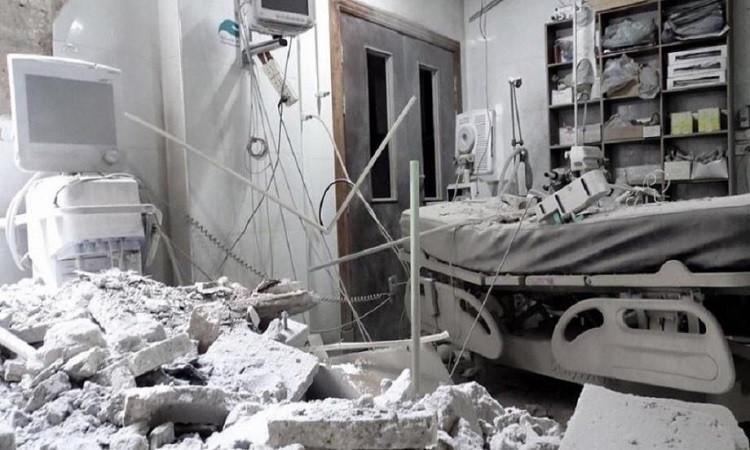
On Monday, August 24, 2025, the Nasser Hospital, the main medical center in southern Gaza located in the city of Khan Yunis, was the target of a violent Israeli airstrike that caused the death of at least 20 people, including four international journalists and several humanitarian workers and civilians. This attack occurred in two phases: first, the hospital’s fourth floor was bombed, and subsequently, while rescue teams, journalists, and medical personnel were inside the building trying to save lives and recover bodies, Israel launched a second live bombardment, destroying that area and causing more fatalities.
The journalists killed were Hossam Al Masri (independent cameraman for Reuters), Mohamed Salama (cameraman for Al Jazeera), Mariam Abu Daqqa (independent reporter collaborating with AP and other media), and Moaz Abu Taha (reporter for NBC). The journalists were using a strategic point on a fire escape of the hospital to broadcast live, especially because of the good electrical and internet connection available there, from where they could record with a view toward the east of Khan Yunis. The footage clearly shows rescuers and journalists arriving at the site of the first impact to assist victims when the second Israeli airstrike occurred.
The director of Nasser Hospital, Saber al-Asmar, denounced the critical situation of healthcare centers in Gaza, which operate with minimal resources and are overwhelmed with patients, many of whom are refugees seeking safety in these hospitals. “I can see the fear and horror on the faces of patients who are supposed to be in a place with international protection,” he said, emphasizing that now patients even fear sitting at the hospital entrance for fear of new attacks.
The Israeli military justified the attack, claiming the target was a potential threat to its troops and expressed regret for any collateral damage to uninvolved persons. It also stated that it does not target journalists as such and announced an internal investigation. However, this double strike on the hospital, which directly affected journalists and rescue teams, has been condemned and identified by international organizations and media as a brutal act and a grave violation of international humanitarian law.
Violations and War Crimes Committed in the Attack
This double attack on Nasser Hospital in Gaza constitutes a serious set of war crimes and crimes against humanity recognized under international law. Among the violations are:
– Attack on protected medical infrastructure: The hospital is a humanitarian installation protected by the Geneva Conventions; directly attacking it is illegal and criminal.
– Attack against medical personnel and rescue teams: Doctors, nurses, and firefighters are protected and must not be targeted.
– Attacking journalists in the exercise of their profession: The killing of journalists covering and reporting on the conflict violates international law and endangers freedom of the press and the right to information.
– Indiscriminate bombing and disproportionate use of force: The second attack, which occurred while civilians and rescuers were present, breaches the principles of distinction and proportionality.
– Death of civilians and vulnerable patients: Civilians and patients seeking refuge in the hospital suffered avoidable harm.
– Obstruction of humanitarian and journalistic work: Attacking a space from which assistance and information were provided is an inhuman act that hinders life-saving efforts.
These actions may constitute crimes against humanity, as they involve intentional or systematic attacks against the civilian population in a prolonged conflict context.
Context and Consequences
This episode is part of an intense escalation of violence in the Gaza Strip that has left thousands dead and triggered a severe humanitarian crisis. Since October 2023, nearly 250 journalists have been killed in Gaza, making this war one of the deadliest for press professionals in decades, reflecting the high risks and disregard for information work in conflict zones.
The attack on Nasser Hospital also reflects the deterioration of international protection for vital infrastructure ensuring the survival of the civilian population and the persistent impunity on the ground. Reports show Israel’s continued targeting of so-called “red zones” and humanitarian presence, justifying attacks against alleged military targets without adhering to fundamental safeguards.
The international community, various human rights organizations, and press freedom defenders have called for independent investigations and sanctions against those responsible. The International Criminal Court, amid recurring complaints, has initiated processes to determine whether these acts constitute war crimes and crimes against humanity.
For the Palestinian population, this attack occurs within a broader context of siege, dispossession, and ongoing violence. Since the escalation began in October 2023, thousands of civilians have died in Gaza while much of the health infrastructure has been destroyed, leaving the population without adequate access to essential treatments. Over 244 journalists have lost their lives in Gaza since the conflict began, highlighting the blockade on information and censorship of the Palestinian voice.
The international medical community and humanitarian organizations have denounced a “genocide strategy” and “systematic cleansing” aimed not only at destroying the population but also its capacity to survive and resist. In the words of Raúl Incertis, a volunteer doctor at Nasser Hospital, humanity is tested when structures dedicated to saving lives are attacked with such brutality, and the world cannot remain indifferent to the suffering this generates.
This double bombing of Nasser Hospital and the killing of journalists, doctors, and rescuers is an emblematic case exposing the brutality and disrespect for international law in the prolonged conflict in Gaza, demanding justice and real protection for the civilian population and defenders of human rights and information.



