

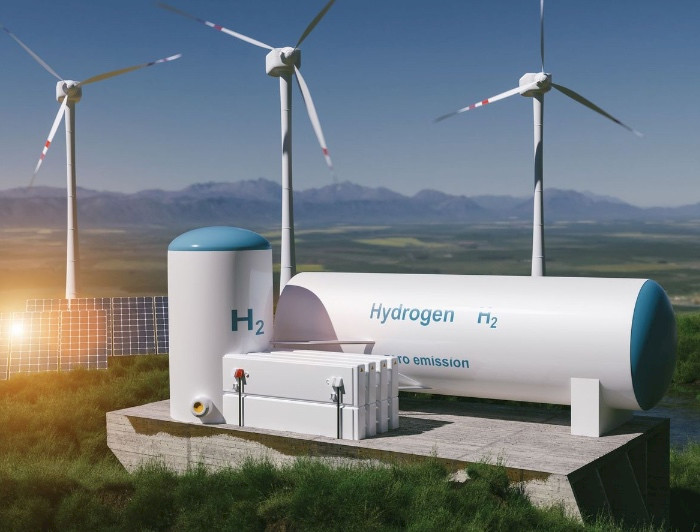
There will be no power without energy, nor energy without hydrogen — and in the race to control it, geopolitics will once again be stained with oil, but this time it will be green.
Hydrogen as the new key to global power
In the 20th century, oil defined the great powers. The routes of crude drew invisible borders, decided wars, and sealed alliances. In the 21st century, that role will belong to green hydrogen. This is not just an energy transition — it is the construction of a new architecture of power, where the molecule that today looks clean and technical will tomorrow become either a passport to sovereignty or a sentence to dependency.
Green hydrogen is no longer an experiment. In 2023, the world produced nearly 180,000 tonnes; by 2030, according to the International Energy Agency, production could exceed 100 million tonnes annually. The projected market value for that year is over one trillion dollars, and by 2050 it could move 1.4 trillion each year. This is no environmentalist niche — it is a geopolitical chessboard.
Each tonne of hydrogen can replace 2.6 barrels of oil. In a world that still consumes 100 million barrels of oil per day, the substitution potential is massive. Whoever controls large-scale production will also control the energy flows that sustain industries, armies, and supply chains. Whoever controls the routes and ports for hydrogen will have the power to turn entire economies on or off.
Supply corridors are already on the drawing board. Mega maritime routes are being projected from Australia to Japan and South Korea; pipelines in Europe are being repurposed to carry green ammonia from North African ports; specialized terminals in Chile and Namibia are being developed to ship compressed hydrogen to Germany and the Netherlands. Every port built and every contract signed redraws the map of power. Hydrogen is not just an energy market — it is a diplomatic weapon, a bargaining chip in trade and security agreements. It is the new tool of pressure to impose agendas, and those who understand this early will write the rules of the 21st century. The rest will be trapped in a story written by others.
Announcements are already turning into steel in the ground. In Saudi Arabia, an integrated complex of renewables and green ammonia is rising in the desert, backed by long-term supply contracts. In Australia, public–private consortia are preparing hubs of more than ten gigawatts, combining wind and solar with desalinated seawater. In the Iberian Peninsula, corporate and railway alliances are planning value chains that go from production to industrial consumption in steel and fertilizers.
This is not futurism — these are construction sites, permits, auctions, and financing lines already underway.
A century ago, oil transformed ports like Rotterdam or Houston into platforms of power. Hydrogen will do the same with Punta Arenas, Sines, Algeciras, Hamburg, Yokohama, and Perth. Every port specialized in hydrogen, derivatives, or ammonia will attract shipyards, insurers, certifiers, and banks. The wealth will not be only in selling molecules — it will be in capturing the services, logistics, and knowledge surrounding that molecule. That is the true multiplier.
The powers already arming themselves for control
Germany is moving with surgical precision. It has neither desert sun nor constant winds, but it has capital, technology, and political influence. It has signed supply agreements with Namibia, Morocco, Saudi Arabia, and Chile. It has committed more than €10 billion in infrastructure and subsidies to secure green hydrogen for the next three decades. Its first plants in Lower Saxony and Hamburg already add up to 1 GW of electrolysis capacity and are connected to ports ready to export to the Netherlands and Belgium. Berlin does not want to produce everything — it wants to control long-term contracts and import routes.
China is playing a different game. It does not only seek access to the molecule — it aims to dominate the entire value chain. It produces electrolyzers at scale, manufactures wind and solar turbines to power its plants, develops synthetic ammonia for maritime transport, and controls storage technologies. It has invested more than $20 billion in hydrogen since 2015 and already has over 100 green hydrogen pilot projects, mostly in Hebei and Inner Mongolia. While others debate how to import, Beijing is designing how to sell — and how to become the indispensable supplier.
Japan and South Korea, lacking sufficient space and natural resources, have opted for energy diplomacy. They have signed strategic alliances with Australia and Gulf countries to secure shipments starting in 2030. They are investing in liquid hydrogen transport vessels and port infrastructure to receive and distribute it. Both have made hydrogen part of their national security strategy, reducing dependence on imported oil and Russian or Iranian gas.
The United States does not intend to lose this race. Its weapon is massive subsidies. The Inflation Reduction Act grants up to $3 per kilo produced. This means that a U.S. producer can generate green hydrogen at prices no competitor without subsidies can match. Washington’s goal is to attract investment, build electrolyzer factories, and dominate the technology. Its bet is that control of innovation and industrial capacity will secure global leadership — just as it did with oil and unconventional gas.
The silent militarization of hydrogen
History shows that every energy revolution comes with a military reshuffling. In the 20th century, oil maps determined the location of naval bases and strategic airfields; controlling the Strait of Hormuz, the Strait of Malacca, or Bab el-Mandeb became a top priority for entire armies. Green hydrogen, though still presented as a clean and peaceful project, is already beginning to sketch its own geography of conflict.
The strategic routes and ports of green hydrogen will concentrate flows of extremely high-value goods. A ship loaded with green ammonia can carry the energy equivalent of millions of dollars in fossil fuels — without emissions. That makes it a potential target in tense scenarios. Any port handling shipments to Europe or Asia will not only be a commercial hub, but also a national security asset. And as happened with oil, its defense could justify foreign military presence.
The “geography of oil” taught that maritime choke points are vulnerable to blockades and attacks. Hydrogen will have its own: maritime corridors from Australia to Japan and South Korea will pass through waters that have already seen naval disputes; routes from North Africa to Europe will cross the Mediterranean and the Atlantic, where military alliances weigh as heavily as trade contracts.
The risk of green hydrogen being used as leverage in economic wars is real. A country concentrating supply could cut shipments, raise contract prices, or redirect cargo as a form of political pressure. In a world where 10% of global energy depends on this molecule, a blockade or sabotage at a key port could have effects as severe as an oil crisis. Clean energy is not immune to the dirty logic of power.
History offers clear warnings. The 1973 oil embargo showed that energy can paralyze entire economies. The Gulf Wars, attacks on oil tankers, and crises in the Strait of Hormuz left lessons that are not forgotten. If hydrogen traffic becomes concentrated in a few ports and corridors, any technical or political incident could trigger systemic impacts on prices, insurance, and supply chains.
In this scenario, the idea of secure corridors, escorted convoys, shared security protocols, real-time monitoring centers, and joint naval exercises emerges. Maritime security will become part of the molecule’s cost, and the final price will reflect insurance premiums and geopolitical risk. Clean energy does not mean zero risk — it means new responsibilities and new tensions
Producing countries and the sovereignty dilemma
The countries that hold the resource face a paradox: they have the sun, wind, or water needed to produce green hydrogen at record-low costs, yet lack control over the value chain. Chile, Namibia, Morocco, and Australia are among the territories with the highest potential on the planet. However, in most cases, the projects are in the hands of foreign consortia that set the terms, control the technology, and determine the sale price.
Chile could produce more than 25 million tons annually by 2050. Namibia plans to export over 300,000 tons a year to Germany starting in 2030. Morocco has signed contracts to supply the European Union with millions of tons without the Moroccan state being the majority shareholder. Australia, despite having industrial muscle, also depends on foreign capital and technology to bring its megaprojects to life.
The pattern repeats: local resources, external financing and technology, long-term contracts that lock in volumes and prices before the producing country has its own industrial capacity. As a result, added value is captured in the consumption centers, not in the territories where the energy is generated. The risk is that the history of oil and gas will be repeated with a molecule presented as clean but bound by the same logic of dependency.
Energy sovereignty is not measured only by having the resource; it is measured by controlling production, technology, distribution, and profits. Without strong public companies, without domestic industrial development, and without legal frameworks that ensure majority state participation, green hydrogen risks becoming just another raw export. In that case, producing countries will once again be reduced to the role of primary suppliers for powers that already dominate the technology and the market.
The United States combines abundant resources with an aggressive subsidy policy to dominate production and technology. It aims to be not only a producer and seller, but also a global manufacturer of electrolyzers and key patents.
The European Union is the emerging major buyer. It cannot produce enough due to geographic limitations, but it invests in long-term contracts with Global South countries, conditioning financing and market access in exchange for guaranteed supply.
China and Russia play together and separately. China dominates the technology and seeks to control the entire chain, while Russia sees hydrogen as a way to maintain energy influence over Europe and Asia by converting part of its gas infrastructure.
India wants to become a relevant exporter; it has sunlight and cheap labor but lacks large-scale infrastructure and technology. It is betting on partnerships with Japan and Australia to gain market space before 2035.
Australia will not be a marginal player but an energy giant of two oceans. Its renewable generation capacity, combined with one of the highest solar irradiation rates on the planet and constant coastal winds, will allow it to project volumes rivaling those of traditional powers. Between 2025 and 2030, it could produce 5 Mt of green hydrogen valued at USD 25 billion, compared to oil output barely reaching 30 Mt annually. By 2035, announced projects could raise that to 12 Mt, worth USD 60 billion, easily surpassing the value of its crude and transforming Australia into the clean molecule export hub for Asia. For Australia, green hydrogen is not a replacement — it is the key to dominating the South Pacific energy market.
The contracts being signed today define tomorrow’s room for maneuver: take-or-pay commitments of fifteen to twenty years, price clauses indexed to electricity and origin certificates, preferential purchase options for Northern markets. When signed without state equity participation or local content requirements, the producing country assumes the risk and cedes the rent.
There is another path: public companies with a clear mandate partnering in joint ventures where control remains at home; requirements for technology transfer; development of local suppliers; development banks and sovereign funds financing patient capital. Also, pricing policies that prioritize strategic domestic uses such as green steel, fertilizers, and heavy transport. Sovereignty is not about shutting the door — it is about negotiating from a position of strength.
The war for technology and patents
The power of hydrogen is not only in megawatts — it lies in who builds the machines, who owns the patents, and who sets the standards. The battle is fought over electrolyzers, cells, compressors, catalysts, and green ammonia. Whoever controls that engineering will control the rent of the century.
The electrolyzer market is growing exponentially. Announced capacity for 2030 exceeds 300 gigawatts, and the learning curve is pushing costs down every year. Today, an installed alkaline system can range between USD 500 and 900 per kilowatt. A high-performance PEM can cost between USD 900 and 1,400 per kilowatt. SOECs promise higher efficiencies at elevated temperatures, yet remain in pilot phases. China is scaling up manufacturing with Longi, Sungrow, and Peric. Europe is advancing with Siemens Energy, Nel, and ITM. The United States is building muscle with Cummins and Plug Power. The industrial map already has its owners and entry barriers.
Patents hold the real power. Iridium- and platinum-based catalysts in PEMs. Ceramic coatings in SOECs. Proton exchange membranes. High-pressure compressors for 350 and 700 bar. Cryogenic valves for liquefaction at minus 253 degrees. Every critical component has patent applications or families registered in the United States, Europe, and China. Those who license collect royalties; those who do not, pay for dependency.
Green ammonia is another front in the dispute. The Haber-Bosch process adapted to renewable hydrogen requires specific catalysts, fine thermal integration, and real-time digital control. Japan is pushing maritime engines that burn ammonia. South Korea is developing industrial boilers. Europe is financing cracking technology to reconvert ammonia back into hydrogen at destination. The patents for synthesis, transport, and cracking form a control triangle that will determine which ports win and which ports lose.
Logistics builds its own fortress: liquid hydrogen carriers with extreme insulation; ammonia tanks with redundant safety systems; dedicated pipelines with anti-embrittlement coatings; valves and sensors certified under ISO and IEC standards. Whoever sets the standard decides who can sell — a standard is power without a uniform.
Bottlenecks are strategic. Iridium is scarce, creating risk for PEM cells; high-purity nickel and stainless steel pressure supply for alkaline systems; power electronics compete with the solar and wind industries. Without an industrial policy to diversify materials and recycle critical metals, the cost of the molecule will remain tied to invisible oligopolies.
The race for software determines efficiency. Digital twins that optimize electrolysis. Algorithms that match production to hourly grid prices. Control systems that integrate wind, solar, and thermal storage. The cheapest kilowatt will be the one best programmed; the advantage will not only be in the plant — it will be in the code.
Technology exports and controls are already in place: licenses subject to national security; rules of origin excluding components from rival countries; non-re-export clauses; restrictions on high (electrolyzers. Geopolitics has entered the factory) and it will not leave soon.
The conclusion of the technological front is clear: if a country produces without manufacturing equipment, without owning patents, without mastering catalysts, and without setting standards, it will only export cheap energy while importing expensive dependency. Hydrogen sovereignty is not proclaimed — it is designed, patented, and manufactured at home.
What’s at Stake
Green hydrogen is not just a technological promise — it is the backbone of the future global energy architecture and the axis around which the 21st-century economy will revolve. By 2050, the International Energy Agency estimates it could supply up to 20% of the world’s energy demand — the equivalent of replacing much of the oil, gas, and coal that currently power industry and transportation. That transition will move over USD 1.4 trillion a year and determine who holds power and who is subordinated.
What’s at stake is the real sovereignty of nations. Those who control their hydrogen, their technology, and their export routes will have economic independence and political bargaining power. Those who do not will depend on contracts drafted in other capitals, patents registered in other languages, and technical standards designed to favor third parties. Those who lose control will become secondary players in a market that rewards integration and punishes dependence.
Green hydrogen could be a major opportunity for nations rich in renewable resources to become energy powers — but it could just as easily become a new trap if the extractivist model is repeated. The history of oil shows that exporting raw material without technological or industrial control creates apparent growth and structural dependency. If the same scheme is repeated, the “clean energy” label will only mask old chains.
The dispute is not only economic but strategic. Countries such as Germany, Japan, South Korea, and India are already projecting their energy security based on hydrogen contracts. China and the United States are competing for patents, industrial capacity, and standardization. Russia seeks to convert its gas influence into hydrogen to maintain geopolitical weight. The European Union is designing import routes that avoid dependence on a single supplier. Each move redraws a map where energy defines alliances, blockades, and spheres of influence.
Time is critical. The window to secure sovereignty in green hydrogen is measured in years, not decades. Supply contracts, infrastructure investments, and patent registrations are happening now. A country that arrives late will not be able to renegotiate from a position of strength — it will enter a closed market with prices and conditions dictated by those who had vision and will.
What’s at stake is simple to understand and difficult to reverse: sovereignty or dependence, power or submission. A seat at the table where the future is decided, or a place in the queue waiting for instructions. Green hydrogen is not given — it is taken.
By 2035, the map will show defined energy blocs: the United States, with industrial hubs on the Gulf Coast and the Midwest, exporting technology and part of its production; China, with integrated supply chains from polysilicon to electrolyzers and fleets of ammonia carriers operating in Asia and Africa; the European Union, as the great buyer, setting carbon standards that will act as entry barriers under the language of sustainability; Russia, converting pipelines and Baltic and Arctic ports to maintain relevance; and India, scaling its national hydrogen mission with mega solar projects in Rajasthan and Gujarat and soft credit directed to its heavy industry.
The risk of technical fragmentation is high: differing certificates of origin, incompatible carbon accounting methodologies, purity and pressure standards that do not align, local content requirements clashing with supply chain realities. If each bloc imposes its own rules, trade will become more expensive, and the promise of global scale will evaporate. Hence the urgency to participate in standardization forums and create national agencies that certify with credibility and open data.
Clean Energy Will Be the New Dirty Weapon of Power
Green hydrogen is no longer an ecological promise — it is an arms race without uniforms, where numbers weigh more than speeches. By 2070, green hydrogen and oil will not only compete in barrels or tons, but in influence, contracts, and sovereignty. Whoever leads this transition will control the invisible currency of power. Whoever lags behind will be a customer in a closed market.
To grasp the true magnitude of what is at stake, we must read the numbers, not the speeches. Green hydrogen production, which today barely accounts for a tiny fraction of the global total, is projected to multiply many times over in less than a decade. Between 2025 and 2030, investment and installed capacity will explode, and between 2030–2035 and 2050–2070, some countries could move volumes that, in energy terms, equal billions of liters of metallic oil. These figures will shape the map of clean power.
Below are the estimated projections (in million tons — Mt — and billions of USD) for the countries on the front line of this dispute, comparing green hydrogen (GH) production and oil.
2025 – 2030
USA – GH: 8 Mt, USD 40B | Oil: 480 Mt, USD 200B
- GH vs Oil: 1.6%
China – GH: 10 Mt, USD 50B | Oil: 220 Mt, USD 90B
- GH vs Oil: 4.5%
EU – GH: 6 Mt, USD 30B | Oil: 100 Mt, USD 45B
- GH vs Oil: 6%
Russia – GH: 3 Mt, USD 15B | Oil: 540 Mt, USD 180B
- GH vs Oil: 0.5%
India – GH: 4 Mt, USD 20B | Oil: 250 Mt, USD 85B
- GH vs Oil: 1.6%
Brazil – GH: 2 Mt, USD 10B | Oil: 150 Mt, USD 60B
- GH vs Oil: 1.3%
Argentina – GH: 1 Mt, USD 5B | Oil: 30 Mt, USD 12B
- GH vs Oil: 3.3%
Chile – GH: 2 Mt, USD 10B | Oil: 12 Mt, USD 5B
- GH vs Oil: 16.6%
Australia – GH: 3 Mt, USD 15B | Oil: 30 Mt, USD 13B
- GH vs Oil: 10%
2030 – 2035
USA – GH: 20 Mt, USD 100B | Oil: 450 Mt, USD 190B
- GH vs Oil: 4.4%
China – GH: 25 Mt, USD 125B | Oil: 200 Mt, USD 85B
- GH vs Oil: 11.1%
EU – GH: 15 Mt, USD 75B | Oil: 90 Mt, USD 42B
- GH vs Oil: 16.6%
Russia – GH: 8 Mt, USD 40B | Oil: 500 Mt, USD 170B
- GH vs Oil: 1.6%
India – GH: 12 Mt, USD 60B | Oil: 230 Mt, USD 80B
- GH vs Oil: 5.2%
Brazil – GH: 5 Mt, USD 25B | Oil: 140 Mt, USD 55B
- GH vs Oil: 3.5%
Argentina – GH: 3 Mt, USD 15B | Oil: 28 Mt, USD 11B
- GH vs Oil: 10.7%
Chile – GH: 6 Mt, USD 30B | Oil: 10 Mt, USD 4
- GH vs Oil: 60%
Australia – GH: 8 Mt, USD 40B | Oil: 25 Mt, USD 11B | GH vs Oil: 32%
Global Estimates
2030 – GH: 103 Mt, USD 515B | Oil: 4,030 Mt, USD 1.7T
- GH vs Oil: 2.5%
2035 – GH: 206 Mt, USD 1.03T | Oil: 3,813 Mt, USD 1.6T
- GH vs Oil: 5.4%
2050 – GH: 500 Mt, USD 2.5T | Oil: 2,500 Mt, USD 1T
- GH vs Oil: 20%
2070 – GH: 800 Mt, USD 4T | Oil: 1,000 Mt, USD 400B |
- GH vs Oil: 80%
These numbers show the transition in stark terms: between 2025 and 2035, green hydrogen moves from an appendix to the backbone in several powers. In producers like Chile, GH will far surpass oil in economic value. By 2050, the molecule competes head-to-head with crude, and by 2070, it leaves oil stranded on the shore of history.
The message is simple: either integrate value chains (technology, industry, ports, and standards) or export cheap energy while buying expensive dependency. Sovereignty is not declared — it is measured in gigawatts, in tons, and in contracts signed today.
By 2070, oil will be nothing more than a vestige of a century that no longer exists. Wars over barrels will be replaced by wars over molecules. Green hydrogen will not be a technological option or an environmental luxury — it will be the main artery pumping energy into the global economy. A country that does not control it will have no voice on the power map, and its sovereignty will depend on contracts written in foreign languages.
That year, the dispute will not be about who produces more, but about who can cut supply in hours and redraw the geopolitical board in days. When a molecule can topple governments or seal alliances, there will be no speech that hides the truth: clean energy will be the new dirty weapon of power. And those who did not arrive on time will have no seat at the table — not even as guests.
In just ten years, green hydrogen will move from niche to representing volumes comparable to a significant share of global oil. Between 2025 and 2035, the annual value of this new market could multiply fivefold — and the difference will not be in the molecule itself, but in who controls it. Those who integrate industry and technology will own the new energy map. The rest will be mere low-cost suppliers.
These figures are not an academic exercise — they are a map of power under construction. Every megawatt installed, every ton produced, every dollar invested in green hydrogen is a stake driven into the ground of the future. History teaches that whoever controls energy controls politics, and wars are fought over resources disguised as opportunities. Green hydrogen presents itself as clean, but it will be the new dirty weapon of power.
Australia — The Silent Player That Wants to Be a Giant
Australia makes little noise but moves big pieces. It has a strategic advantage that few can match — an abundance of renewable energy, political stability, and proximity to major Asian markets. Its sun-drenched deserts and long coastlines with constant wind make it a natural factory for green hydrogen.
Between 2025 and 2035, it plans to install projects exceeding 80 GW of capacity, with investments that could surpass USD 120 billion. It already has megaprojects such as the Asian Renewable Energy Hub and the Western Green Energy Hub, designed to produce millions of tons annually of green hydrogen and green ammonia destined for Japan, South Korea, and, to a lesser extent, Europe.
If projections hold, by 2050 Australia could generate more revenue from green hydrogen than from combined coal and natural gas exports. And by 2070, it could become the world’s largest exporter, challenging the leadership of China and the United States.
Sovereignty or Dependence — The Final Choice
The numbers are not an academic exercise — they are a map of power under construction. Every megawatt installed, every ton produced, every dollar invested in green hydrogen is a stake driven into the ground of the future. History teaches that whoever controls energy controls politics, and wars are fought over resources disguised as opportunities.
Green hydrogen is presented as clean, but it will be the new dirty weapon of power. Any country that fails to control its production and technology will be nothing more than a cheap supplier to those who integrate value chains. Those who export molecules without industry will also be exporting their sovereignty.
By 2070, oil will be nothing more than the vestige of a century that no longer exists. Wars over barrels will be replaced by wars over molecules. Green hydrogen will not be a technological option or an environmental luxury — it will be the main artery pumping energy into the global economy. The country that does not control it will have no voice on the map of power, and its fate will be written in contracts signed in foreign languages.
Methodology and References
The figures presented are estimates based on data from the International Energy Agency (IEA), the International Renewable Energy Agency (IRENA), the U.S. Energy Information Administration (EIA), the BP Statistical Review of World Energy 2024, and official projections from the Ministries of Energy of the United States, China, the European Union, Russia, India, Brazil, Argentina, Chile, and Australia.
The base calculation year is 2024, with values expressed in constant U.S. dollars (USD) and adjusted by the annual average exchange rate. Green hydrogen projections were developed considering announced national plans, projects under development, and expected industrial scaling, while oil values correspond to average annual production multiplied by the projected average price per barrel.
The HV vs. Oil ratio is calculated based on energy equivalence (1 kg of hydrogen ≈ 33.3 kWh; 1 barrel of oil ≈ 1,700 kWh) and is expressed in million tonnes (Mt) and billions of USD for easier comparison.
Oil values are projected using historical volumes and estimates from the EIA and IEA, with average Brent prices of USD 80/barrel in 2025–2030 and USD 40/barrel in 2070.
The HV vs. Oil comparisons refer to annual economic value (in billions of USD) and reflect scenarios in which the announced projects reach commercial stage according to publicly available timelines.
Green Hydrogen
Green hydrogen is not a business for companies with logos and lobbyists. It is the last frontier for countries that want to exist with dignity in the century that is beginning. There is no just transition if sovereignty is surrendered, no clean energy if the decision is made in another language. The future is not written by those who wait; it is written by those who act.
Chile, and any nation that today sees its wind and sun as merchandise for others, must understand that this time it is not about selling. It is about deciding whether it will be an actor or a spectator, an owner or a tenant, a power or a satellite. The promises of quick profits are the anesthesia of history.
By 2035, the United States and China will dominate patents, while Chile and Australia will lead in industrial capacity. The European Union will consolidate its role as the world’s largest importer with contracts that will bind dozens of countries. Russia will seek to maintain energy influence by converting part of its gas to hydrogen, and India will emerge as a relevant exporter in Asia with strategic alliances. That year, the board will be almost set, and those who have not secured internal control will be tied to contracts written by others. It will not be a technological competition but a map of power where every molecule is pure geopolitics.
When the molecule becomes the currency of power, there will be no time left for speeches or regrets. Those who do not have control will be clients. Those who do will own the map. And on that map, there will be room only for those who dared to speak with the voice of a State, not a market. This time it is not for sale; this time it stays.