

Today president Trump will meet with president Putin in Alaska. This meeting is planned with the aim of launching talks to end the conflict in Ukraine.
Perhaps it’s an excellent opportunity to demonstrate the willingness of the USA and Russia to go beyond resolving the Ukraine conflict. These superpowers have a historical responsibility toward humanity. It’s necessary that they change the destructive direction of events which are taking place in the present moment.
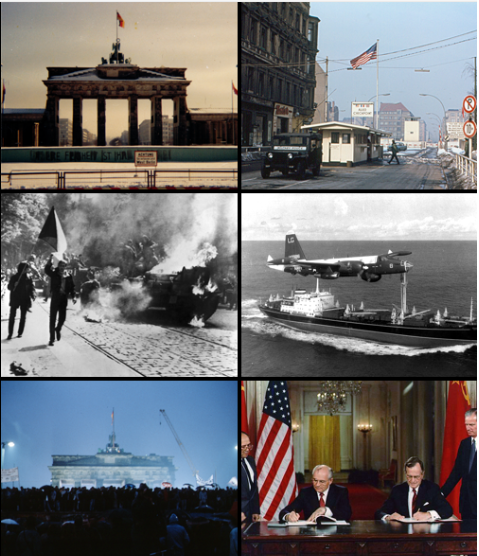
During the Cold War and the frantic race for weapons of mass destruction, the USA and Russia spread fear, violence and nihilism across the world. Even if the cold war is over the destructives factors are still active. Over the last few years, fear and violence gained more and more momentum as instability is growing everywhere.
Personally over the last decade, I have been very active in activities for the elimination of nuclear weapons around the world. I truly believed that if we were to eliminate weapons of mass destruction we could stop fear and nihilism from growing in the human mind.
But also I had a distinct impression that, despite all the goodwill of hundreds of thousands of activists, there were other forces at work in human beings limiting our abilities to understand the contamination of fear, nihilism and violence in the world.
Based on my personal experiences with fear and nihilism and on a psychological approach developed by Silo*, I decided to undertake research to study the social phenomenon of the growing fear and nihilism.
I discovered that the presence of devices of mass destruction in the world kept the intentionality of human consciousness of several generations in a state of total slavery. I called this state, the state of consciousness in danger! I discovered that fear is the real enemy of human beings and not the others!
Since the end of World War II, our civilization has been gripped by a form of collective fear of the other. This context of fear manifests itself into madness currently unleashed through wars, genocides, collective persecutions and the growing militarization of various nations around the world.
This collective madness is now at its peak and possesses sufficient potential and accumulated energy to produce a collective psychic explosion capable of shattering the best-organized societies. In fact, in addition the geopolitical tensions, there is a growing religious phenomenon at work which is following this trend of destruction with the rise of religious fundamentalisms and fanatics.
But there is also a new religious phenomenon that distances itself from violence and fear. It is a religiousness that is centered on the sacred in human being and on the Golden rule as one of the means of freeing oneself from fear and nihilism.
The future is now
Silo and other thinkers emphasize on the fact that it is not by seeking facts external to human life that we will understand the historical structure of the present moment.
The superpowers are very fortunate to be faced with an alternative: either they continue to fuel this madness with the fear the other or they generate conditions to release fear from the human mind and by do so opening to way to liberate the intentionality of the consciousness.
We are about to leave earth and travel to other planets; we are about to establish an artificial intelligence that will far surpass our intelligence.
But for the last century, we have been dragging along behaviors that lead us to a chain of actions and reactions, and to a chain of senses, memory, and consciousness that generates fear of the other and destruction.
If we manage to overcome our deep fears of mass extinction and the fear of the others, we will be able to open new horizons of spaces and times!
About the state of consciousness in danger
During the second world war, genocides, mass murders and the use of nuclear bombs on hundreds of thousands of civilians shocked human consciousness. Subsequently, the Cold War between the West and Soviet Union (USSR) and nuclear proliferation was a major turning point in the historical structure of humanity, and in a way, assigns the meaning of life to human beings.
Faced with an increasingly complex world, faced with threats to the psychophysical structure of the human being through the presence of thousands of weapons of mass destruction, consciousness tends to structurally compensate for this situation through a highly sophisticated system of responses.
The constant threat of nuclear annihilation generated conditions for consciousness to formalize the state of consciousness in danger. We are unable to perceive the nuclear threat. But the psychophysical structure of the human being receives uninterrupted stimuli from the threat.
These stimuli mobilize the activity of the human species’ self-preservation instincts, which in turn fuel the human species’ system of vital tensions.
These instincts, aroused by signals corresponding to pain and pleasura, are mobilized for the defense or even expansion of the entire structure. Then we understand that for over the last century the psychophysic structure of human beings has been mobilized in the defense of the entire subject-consciousness-world structure.
When we are immersed in the state of consciousness in danger, we are not aware of how the system of vital tensions of the human species mobilized by the activities of self-preservation acts on the psychophysical structure, the psyche and the external world.
But on the other hand, I observe that this positioning in relation to the world imposes significant limitations on the operational freedom of consciousness and limits the psychic energy available to develop other behaviors that could enable our individual evolution and the evolution of the human species.
Consciousness is the apparatus that coordinates and structures impulses, working with sensations, images, and memories. This apparatus is not formed at birth, but is articulated as all the body’s sensations are registered by the senses and translated into impulses. This registering apparatus is located in the body and, in turn, is linked to the body’s sensations. Thus, from childhood, the state of consciousness in danger is formalized through impulses originating from stimuli perceived by the external and internal senses.
Thus, I observe that when we are immersed in the state of consciousness in danger, the collective future and the meaning of history are essentially becoming a sequence of reactions, repetition upon repetition, with no qualitative leap that could expand human consciousness and the space of representation*.
This sequence of actions and reactions is constantly repeated throughout human history for the l ast century. It’s an internal chain that exists in the human psyche and is mobilized by the activity of the instincts of self-preservation, which we call sense-memory-consciousness.
This sequence is presented as follows: the sensation of approaching danger, fear of the other, the creation of the enemy and the destruction of the enemy
This chain generates external manifestations through the production of weapons, destruction, and war. Russia and US shared a common responsibility toward the growing fear and violence in the human mind and must generated the conditions in the world to release fear from the human mind to change the course of human history.
__________________________________________________
Source:
Un sens de la vie qui défie la peur de l’extinction massive, Anne Farrell, Henri-Oscar Communication, 2024, Montréal, 400 p.
Notes on Psychology, Paris: Éditions Références, 347 p. (French Edition)
Silo was born in Argentina in 1938. He is the author of several books. The concepts described in my study of consciousness in danger such as: the function of the image carrying charges, the structurality of perception and representation; states of consciousness and the influence of the reverie on the way in which behaviors and the space of representation are formed have their sources in the book Notes on Psychology and in the system of Self-liberation introduced by Silo during the 70s.
Gloden Rule: treat others as you would like to be treated
Space of representation: is a kind of mental screen where images, formed from sensory stimuli, memory stimuli and the activity of consciousness, are projected. In addition to serving as a screen, it is formed from all the internal representations of the cenesthetic sense. The space of representation has markers, a volume and a depth which make it possible to situate, depending on the location of the image, whether the phenomena come from the internal or external world. (source: Amman, 2004, p. 281)



