

Watchdog Group Lists 48 Skin Lightening Products Adulterated With Mercury
15 August 2025, Quezon City. As the eighth anniversary of the global entry into force of the Minamata Convention on Mercury is observed on August 16, the toxics watchdog group EcoWaste Coalition called for strengthened action at all levels to stop the production and trade of hazardous mercury-containing cosmetics for lightening the skin tone.
At the same time, the group released a list of 48 skin lightening products that it had purchased and screened for mercury, a health-damaging chemical not allowed in such products, as part of its continuing advocacy to protect public health and the environment from toxic chemicals such as mercury and its compounds.
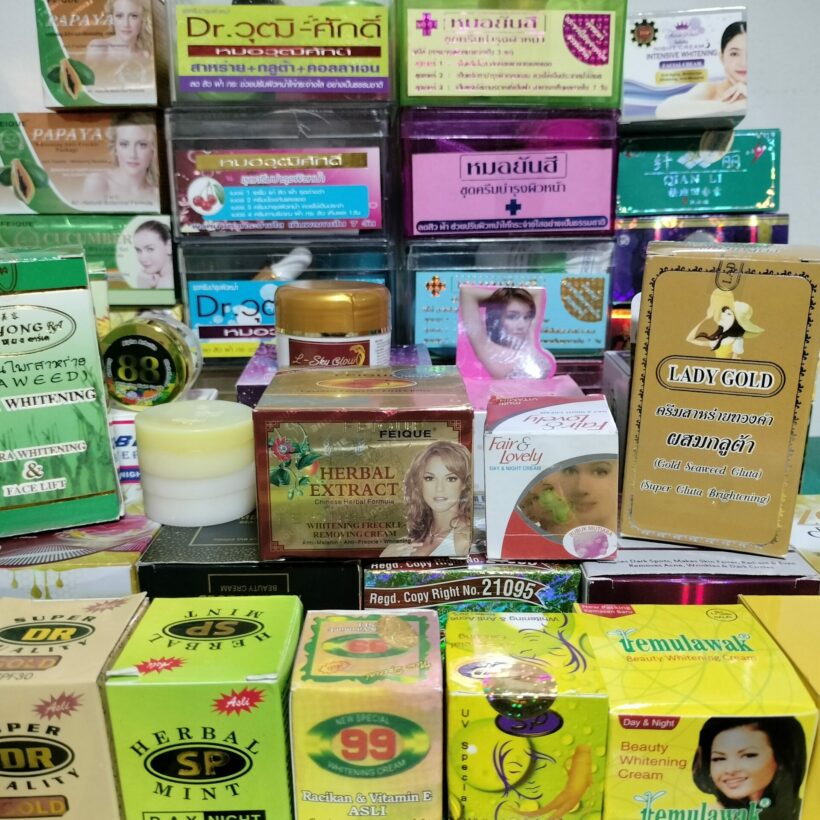
Aside from the ubiquitous Goree Beauty with Lycopene and Goree Day & Night Beauty Cream, banned by the Food and Drug Administration (FDA) since 2017, the EcoWaste Coalition identified 48 unauthorized products from China, Indonesia, Pakistan and Thailand consisting of 29 brands, which are being offered for sale to consumers aspiring for lighter and flawless skin, mainly through e-commerce and social media platforms.
To recall, the Minamata Convention was adopted on October 10, 2013 and entered into force on August 16, 2017. This global treaty aims to protect human health and the environment from the adverse effects of anthropogenic (or human made) emissions and releases of mercury and its compounds. Among other targets, the treaty seeks to phase out mercury-added products such as skin lightening creams and soaps by 2025 (2020 was the original target).
At the fifth Conference of the Parties (COP5), governments decided to eliminate the one part per million (ppm) threshold for mercury content in cosmetics to unequivocally prohibit the manufacture, import and export of skin lightening products containing this highly toxic substance.
“Despite the explicit ban, skin lightening creams with hidden mercury content continue to be produced and traded, posing toxic exposure risks to users and members of their households, including young children, and adding to mercury pollution of the environment,” said Aileen Lucero, National Coordinator, EcoWaste Coalition.
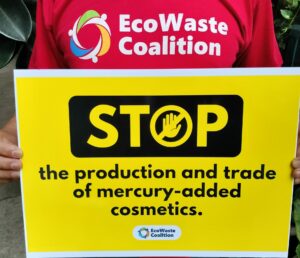
“We call for and support strengthened global and local action to fight the illegal production and trade of mercury cosmetics and address colorism and other socio-cultural issues driving the demand for products to lighten the skin color. We need to put an end to the racist notion that equates beauty, cleanliness and success with being white.”
The group obtained the products mostly from third-party online sellers, and screened them for mercury using an X-Ray Fluorescence (XRF) analyzer. The group then wrote to health product regulators, particularly the FDA, for further investigation and action.
The 48 products analyzed were found to contain mercury up to 44,450 ppm that was detected on a Lady Gold Seaweed/Gluta Super Gluta Brightening made in Thailand.

Among the skin lightening products found adulterated with mercury were:
China-made BL Vterly Day & Night Cream; Feique 2 in1 Lemon Whitening Anti-Wrinkle Face Cream Set; Feique Cucumber Whitening & Freckle-Eliminating Cream; Feique Green Tea Whitening Nourishing Anti-Freckle Set; Feique Herbal Extract Whitening Freckle Removing Cream; Feique Papaya Whitening & Anti-Freckle Eliminating Cream; Feique Papaya Whitening & Anti-Freckle Package; Feique Papaya Krim Yang Membuat Kulit Anda Putih Dan Menghilangkan Noda Anda; Lijing High Effect Whitening & Anti Spot Suit; and Qian Li.
Indonesia-made Dr. Gold Super Quality +SPF30 ; Fair & Lovely Day & Night Cream; La Bella Day Cream ; La Bella Night Cream; L-Sky Glow Skin Light Whitening Cream; SP Herbal Mint Day Night; SP UV Special Ginseng Whitening & Anti-Acne; Temulawak Night Cream Beauty Whitening Cream; Temulawak Beauty Whitening Cream Day & Night; 99 New Special Whitening Cream Racikan & Vitamin E ASLI; and two unlabeled creams in small plastic jars.
Pakistan-made Aima Gold Beauty Cream; Armena Gold Beauty Cream; Faiza Beauty Cream; Goree Gold 24K Beauty Cream; Pure Pearl Beauty Cream; Sandal Beauty Cream; Zartaaj Beauty Cream; and Zoya Gold Beauty Cream.
Thailand-made 88 Whitening Night Cream(5 grams); 88 Whitening Night Cream (20 grams); Aura White Night Cream Intensive Whitening Facial Cream; Dr. Yanhee (purple plastic box container); Dr. Yanhee (green plastic box container); Dr. Yanhee (gold plastic box container); Dr. Yanhee (pink plastic box container); Dr. Yanhee, (transparent plastic box container with blue label); Dr. Wuttisak (blue label); Dr. Wuttisak, (green label); Lady Gold Seaweed/Gluta Super Gluta Brightening; Meyyong Ra (Seaweed) Extra Whitening & Facelift; Meyyong Seaweeds Super Whitening; Polla Gold Super White Perfects; Pumepine Total White Underarm Cream; Q-nic Care Whitening Night Cream; Q-nic Care Underarm Whitening Cream; and Snow White Armpit Whitening Underarm Cream.
According to the World Health Organization (WHO), the “adverse health effects of the inorganic mercury contained in skin lightening creams and soaps include kidney damage, skin rashes, skin discoloration and scarring, reduction in the skin’s resistance to bacterial and fungal infections, anxiety, depression, psychosis, and peripheral neuropathy.”
Women, who are principally targeted for cosmetics that claim to lighten the skin tone, remove age spots, blemishes, freckles, and wrinkles, and treat acne and other skin woes, are highly susceptible to the harmful effects of mercury exposure, especially if they are of childbearing age, the EcoWaste Coalition said.
The group warned that aside from allowing mercury to seep into their skin, people using these adulterated cosmetics are also exposing anyone at home, including infants and children, to mercury vapors, which can be inhaled and thus creating a two-fold exposure scenario through skin absorption and mercury vapor inhalation. Families sharing a space with poor ventilation are at greater risk when they breathe the air and touch objects like towels contaminated with mercury from tainted creams, the EcoWaste Coalition added.
Reference:
https://www.who.int/publications/i/item/WHO-CED-PHE-EPE-19.13



