

by George Banez
Full of confidence and naiveté of inexperience, I traveled to Pune, a historic city in India of the early 90s. An international agency invited practitioners, young me included, to talk about the work of replanting trees to restore forestlands. I flew to Bombay, landing at the airport closest to Pune, a three-hour drive away. Before the home of Bollywood became Mumbai, the booming center of the global data industry, all of India mystified me.
On the taxi ride to Pune, I looked out and saw men walking down the street all dressed in white, not one even wore blue jeans. A woman in a muted sari glided on the khaki-colored dust road as if sauntering in slow motion to the hum of new age music in my ear. The loose tail of the nearly weightless sheer head scarf she wore floated gently behind her pregnant body. Of course, travel vlogs on YouTube were decades away. So, all these sensations were brand new.
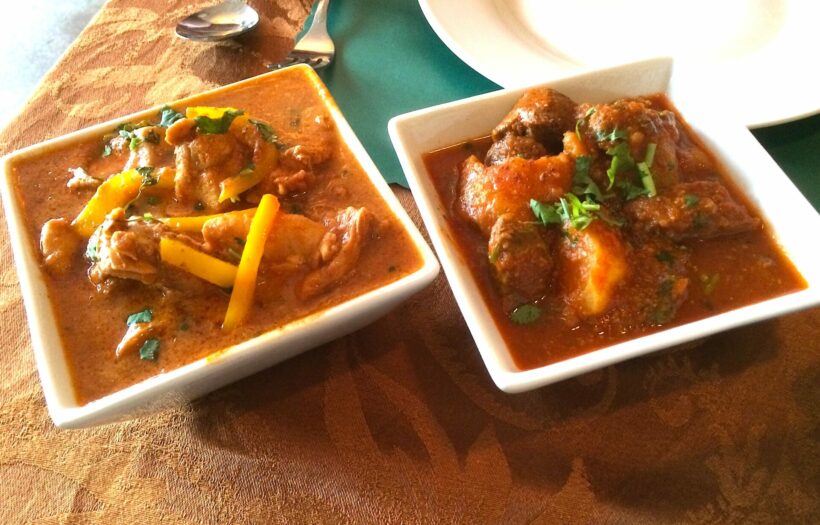
Imagine my frustration and the confused look I got from the wait staff every time I asked for “Chicken Curry.” No one knew what I was talking about. I did not know then that the British invented the spice mix, curry powder. With it, they distilled millennia-old culinary traditions to replicate back home in England the tastes they have acquired for Indian food. When I visited Pune, neither the English word “curry” nor the idea had made its way back to the people I met in India. Or perhaps, no one there wanted to tell me the story. So, I was totally ignorant.
Although reality thwarted my plan to indulge in the “authentic curry” in India, I thoroughly enjoyed hotel food in Pune. I even sampled their decadent chili ice cream. Perhaps, the hotel chef toned down the heat or simply cooked the spices to perfection. I don’t remember any dishes being crazy hot and spicy in Pune. There I became a vegetarian out of curiosity. I noticed that more locals lined up for the spectacular spread on the meatless half of the buffet table. Following advice to pick one side to avoid cross contamination, I dove in headfirst to explore the rich variety of unfamiliar flavors, textures, and aromas on the vegetarian side. I got hooked.
After being told the name, I could identify the Garam Masala spice blend from the waft coming from neighbors cooking dinner. Except for the extremely hot-spicy omelet they served me for breakfast in Bombay, I had nothing but delectable Indian food. And none of them remotely tasted like the curry I thought, and insisted, was Indian. Servers had to offer me their best chicken tandoori to appease my yearning for the non-existent “Indian curry.” Today, Pune is known as the “Oxford of the East” for its excellent educational institutions and, on YouTube, associated with street food in the Varadi style of Maharashtrian cuisine.
“Curry-Rice” Like Japanese Do
I cringe every time I remember my gaffe in India. But I thought I knew “curry” because before visiting Pune I lived in Japan – the land of “Kare-Raisu.” There, in another academic town, I learned to eat “Curry-Rice” like locals do. I did not know that this comforting dish of curry-flavored gravy poured over sticky short-grained rice evolved from the British curry. Apparently, the Japanese Navy in the 1800s needed to combat Vitamin B1 deficiency because their sailors primarily ate rice. So, they adapted the British curry to flavor meat and vegetable sources of thiamine they added to their diet.
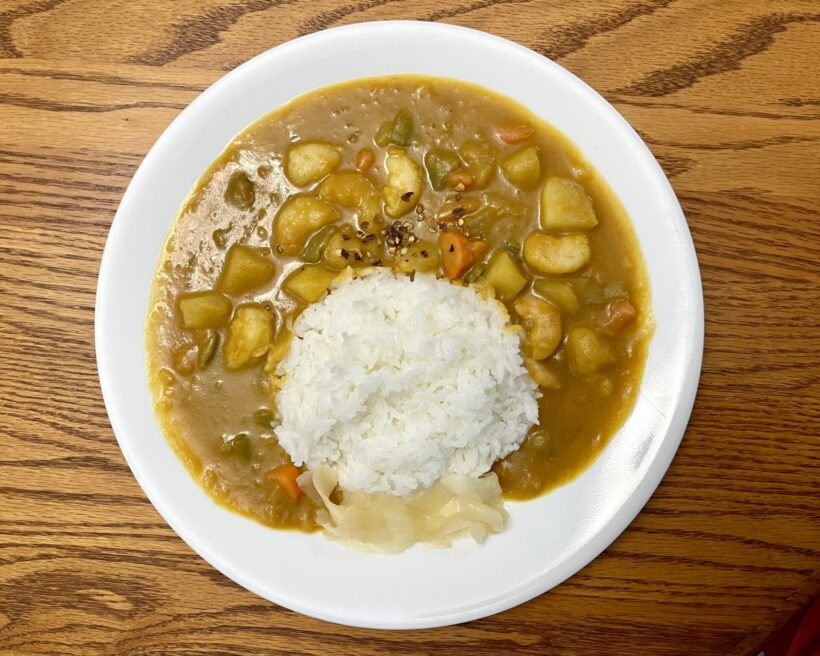
Home-made Japanese Curry.
Founder of S&B Food, Minero Yamazaki, maker of the local curry powder in Japan since 1923, popularized its home use in the 1950s. He developed the instant curry roux bricks that can be dissolved in boiling water, or broth of meat and vegetables, to make curry sauce. Aside from dressing rice or “Katsu,” breaded fried pork cutlets (in “Katsu-Kare”), Japanese curry sauce also amps up noodles (Kare-Udon), breads (Kare-pan), and steamed buns (Kare-man). Japan embraced curry. Once I heard a professor distance theirs from “Indian curries” that he said tasted like medicine to him.
Today, Japan considers curry-rice one of its national dishes. They also sell it to the world. Japanese curry, made with roux, is part of my menu cycle in Florida. And my sister’s millennial kids in Manila eat it regularly too. They know this curry from watching “anime” and reading “manga” or Japanese animation and comics, respectively. So, where should I put the origin of “curry” to gauge authenticity?
Success of Thai Curry
Back when I returned to Japan in 1992, I became very good friends with Thai students. I knew from prior encounters how picky they were with food. Of course, they prefer their own. The friend I spent almost every waking hour of our first year together asked me once to repeat a word. I did not remember mentioning “curry” before. But I realized that he thought “curry” was English for all dishes with richly flavored sauces.
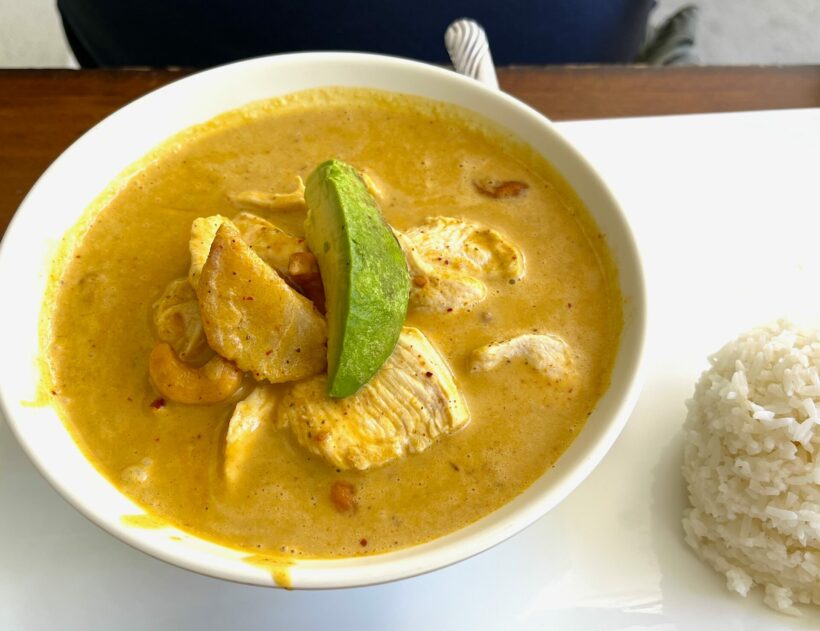
Massaman Thai Curry.
My friend proudly said that Thais have a multitude of “curry” dishes and cannot wait for me to try them. He moved to England before he found the ingredients and time to cook me Thai food. My friend likely never cooked nor was his family ever in the food business. Far from it, he aced engineering in Thailand and earned a Ph.D. in management at Cambridge University. But what my friend and the Thai restaurateurs in the U.S. understood well is the profitability of adopting the name.
According to estimates in 2024, Thai restaurants in the U.S. number close to 7,000. The Thai cuisine market is valued at USD 7-9 billion. As a long-time patron of Thai restaurants, I love Thai curries. They go by names like Red, Green, Yellow, Massaman, and Panang curries. Served with a choice of protein and a side of white rice, Thai curries in the U.S. are soupy and creamy from coconut milk. They remind me of the coconut milk-based “Chicken Curry” from my childhood, not of Japanese curry. None of the Thai curries smack of the British curry flavor either. Yet they evoke the same spice blend of turmeric, cumin, coriander, fenugreek, and chili peppers in British curry powder.
I have yet to return to Thailand. I do not know how closely the U.S. Thai curries resemble any dishes there. But from what I see, the Thais here have successfully kept the core of what makes Thai cuisine different from others, while also offering diners something familiar. Embracing uniqueness, to me now, constitutes “authenticity.” After all, food functions to nourish the body. Accolades, restaurant ratings, or food vloggers’ words like “authentic” matter only when exploiting gastronomy for entertainment and revenues.
Filipino Curry?
Still, it baffled me early this year to see titles of YouTube videos calling the Filipino oxtail peanut stew, “Kare-Kare,” the Filipino version of Indian curry. An analysis of Google Trends showed a spike in interest worldwide on the search term, “Kare-Kare Filipino Indian Curry,” last October 2024. Why? Aside from the flavor of crushed peanuts or peanut butter added to the broth to tenderize oxtail, Kare-Kare is intentionally bland or unseasoned. Kare-Kare is always served with sauteed “Bagoong,” the salty-pungent shrimp paste.
Although the final thickness and color of Kare-Kare screams “curry” and the name sounds like it, this stew does not have a lick of curry powder flavors. And out of all the dishes in Bombay and Pune, the northern Indian restaurant food here in Florida, the treats that a dear friend from Kerala cooked for us every Friday, and the delicious Indian fare in Singapore, I do not remember eating anything that reminded me of Filipino Kare-Kare. It is more similar in taste to the Indonesian savory peanut sauce for “Satay,” skewered grilled meats, or the spicy peanut sauce dressing for “Gado-Gado” vegetable salad.
Recipes cannot be patented. Nothing stops a cook from riffing on someone else’s culinary creation. It is like singing a song someone else composed. Yet even though everybody is free to modify the lyrics and melody of a song like the “Happy Birthday” anthem, change it beyond recognition and a new song emerges. Likewise, mislabeling food on the menu or stretching the limits of fusion food to the point of confusion runs the risk of failing customer expectations. While I have dropped “authentic” from my dining vocabulary, I refuse to endorse deliberate misrepresentation, not even for profit.
About the Author:

George Banez is a writer of Filipino descent and is a retired non-profit professional living in Florida.



