

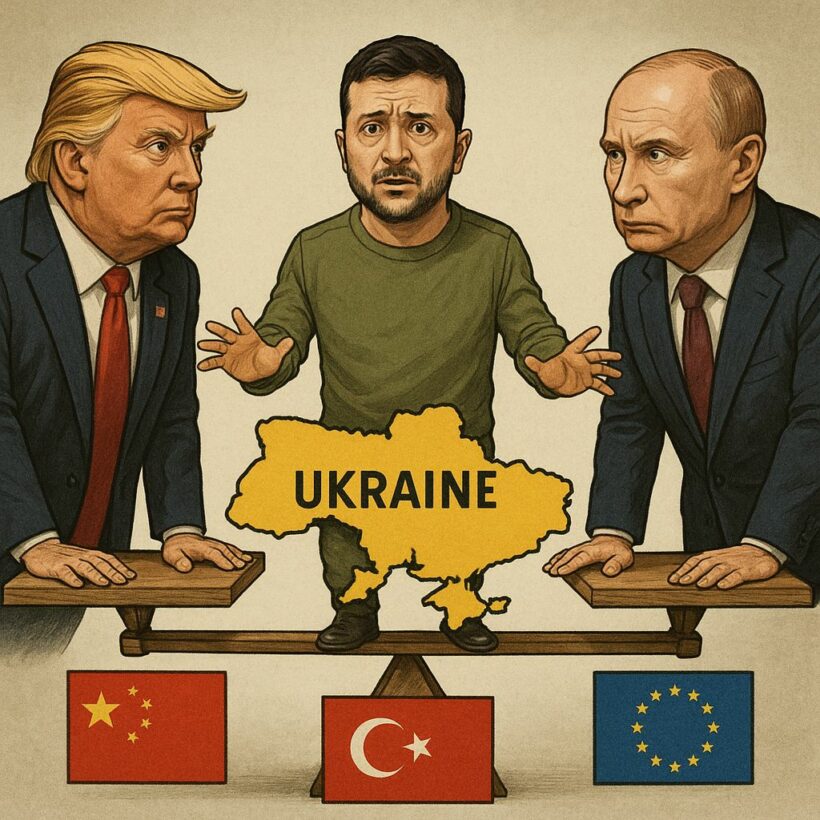
The United States and Russia are navigating rising tensions with the Ukrainian conflict at the center. Trump issued a firm demand, calling for a peace agreement in Ukraine within 50 days or face 100 percent sanctions on Russia and secondary sanctions on allied countries trading with Moscow. He also announced the shipment of Patriot missiles and increased military support to Kyiv.
Putin, meanwhile, remains unmoved. According to sources close to the Kremlin, he has no intention of yielding to economic pressure and will continue advancing in Ukrainian territory until the West accepts his conditions, including withdrawal from the occupied east, recognition of Crimea, and Ukrainian neutrality. Moscow also rules out any meeting with Zelensky as a starting point for negotiations, stating it will only happen as a final step after technical agreements are in place.
Turkey appears as a potential mediator. Erdogan has shown interest in hosting a meeting between Trump and Putin, possibly during the Beijing events marking the end of World War II. The Kremlin does not dismiss the idea but demands it be well prepared and not merely symbolic. Trump insists the meeting will take place and suggests a trilateral summit with Zelensky and Erdogan could pave the way for peace.
Another round of talks between Ukraine and Russia took place in Istanbul, yielding no progress on a ceasefire but resulting in a prisoner exchange of around 1,200 people. Zelensky has emphasized that a direct meeting with Putin could be a turning point if backed by real international support.
Diplomatic channels also progressed in February in Saudi Arabia, where US and Russian delegations met without European or Ukrainian representatives. They laid groundwork for future negotiations, which at the time sparked tensions with European allies. Since then Trump has reiterated that Europe and Ukraine must be part of any genuine peace process, despite having launched the bilateral path himself.
Meanwhile the US Congress is debating additional sanctions. Senator Blumenthal warns that global support for Ukraine depends on its commitment to anti-corruption reforms. Kyiv is already facing mass protests over a new law that weakens the role of independent agencies, threatening its credibility in the eyes of the West.
The dynamic between Trump and Putin reflects the clash between ultimatum and obstinacy. Trump takes a hardline stance and threatens massive and secondary sanctions to force a swift result. Putin sticks to a rigid position and only agrees to negotiate from a place of strength. The current truce is fragile, goals remain far apart, and structural differences continue to act as a barrier.
The most significant moment could come in Beijing this September if Trump attends the events commemorating eighty years since the end of the war. The possibility of a bilateral summit with Putin, in the presence or under the mediation of Xi Jinping, raises both expectation and diplomatic anxiety. Europe watches cautiously and insists there can be no just peace if Ukraine and its allies are excluded. That message has been reinforced by the new European coalition for military support to Kyiv.
So the world waits for the next chapter in these tensions. Will Trump manage to force a shift in Moscow or will Putin impose his logic of victory? The war goes on and the clock is ticking