

by Mesay Berhanu Gemechu
Is it the beginning of the end of Africa’s overreliance on foreign aid?
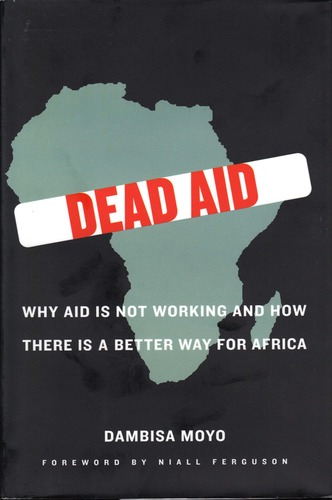
Trump’s decision to end the flow of aid going to the developing world, notably Africa, which has been channeled through the USAID over the past several decades, may have come as a huge surprise to many African countries. Almost none of these countries have been quite well prepared to handle the political, economic, and social ramifications of such a decision in the respective countries. However, the very notion itself masked by the decision may not be an entirely new encounter to the leaders of these African countries only if they had been willing to listen to the advices and warnings which Dambisa Moyo, the Zambian economist, has echoed more than a decades ago since the publication of her book, Dead Aid, in March 2009.
 In this book, Dambisa Moyo argues that foreign aid has been a disaster for Africa. On the basis of the initial economic rationale that laid the foundation for the aid model as it has taken root in the 1950s and 1960s, aid was intended to fill in the gap in the newly decolonized developing countries that was created by the absence of savings required for increased investment and economic growth. However, Moyo argues that the empirical evidence over the past six decades or more has not proven that aid has become successful in bringing about the desired economic development and the associated reduction in poverty.
Although Africa has received more than one trillion dollars in aid over the past 60 years prior to the publication of Moyo’s book, the number of people living on a dollar a day back in the 1970s was only ten percent of the population, whereas one in three Africans still lives below the global poverty line six decades later. According to Hamel, Tong, and Hofer (2019), the number of people living on less than 1.90 dollars a day has reached 422 million people, representing more than 70 percent of the poorest people on the globe.
Moyo’s argument against foreign aid is particularly directed towards the type of aid involving a big billion dollar budgetary support that is being provided to developing countries from governments of advanced economies and their respective institutions. The other types of aid, such as humanitarian aid directed to victims of natural disasters or conflict and charity-based aid provisions geared towards, for instance, supporting girls to go to school, are not included in her criticism though, in her opinion, these types of aid may not also usually bring about a sustainable impact in the long term. Moyo points out in her book that these forms of aid provisions are also often criticized for poor implementation, high administrative costs, and for lack of relevance to the local context.
Moyo advocates for the elimination of the first type of aid that is being provided by governments of advanced economies to poor developing countries like those in Africa, be it in the form of concessional loans or grants. To her, the distinctions are practically irrelevant. “It is these billions that have hampered, stifled, and retarded Africa’s development” (Dead Aid, p. 9). Hence, she strongly argues that both should be eliminated within a limited period for transition, emphasizing the need for a finite transparent exit strategy that may last about five years but may not be the same definite period for all the countries concerned. She further argues that the types of aid that have been proven successful in the Green Revolution in India, the economic transformation of South Korea, and the Marshal Plan in Europe have all worked so successfully because they were provided for a limited time.
On the contrary, the open-ended commitments bestowed on African countries have the opposite outcomes on the economic performances of many countries of the continent because their governments have grown to view aid income as a permanent source of capital to depend on indefinitely. That also marked the failures of the African governments to act on behalf of the African people as they are not obliged to seek alternative ways of financing economic development in their respective territories. In an interview with the Canadian media outlet TVO, Moyo asserts, “the aid model allows African governments to abdicate their responsibilities.” She also affirms that the African governments cannot simply wait for international donors to support health care, education, security, and infrastructure. These responsibilities should firmly be placed on the shoulders of African governments themselves. “The fact of the matter is, this is not an African problem. It is a global problem. We should all be concerned and we should ensure that African governments are front and center leading the charge,” said Dambisa Moyo in a speech at the Jepson Leadership Forum held on November 16, 2009 at the University of Richmond, in Virginia, U.S.A.
The Marriage between Foreign Aid, Corruption, and Conflict
The undesirable impacts of the billions of dollars pumped into poor developing countries in the form of aid include an increasing level of corruption that is counterproductive to the spirit of entrepreneurship essential to drive economic growth. The 2022 Corruption Perceptions Index indicates that only four countries in Sub-Saharan Africa, including Seychelles, Cape Verde, Botswana, and Rwanda, have scored more than 50 on the 100-scale measurement as the remaining 90 percent of the countries in the region scored below 50. The report also highlights that such a level of corruption is also compounded by increased conflict and violence as it undermines governments’ capacity to mobilize adequate resources as well as public support to effectively prevent conflicts. In the meantime, violence and instability fuel corruption ensuring the vicious cycle that many of these countries are caught up with.
Moyo refers to South Africa and Botswana as exemplary in the bold measures they have taken to turn down foreign aid and reduce their dependence on such kind of external support. On the contrary, Rwanda is noted as one of the worst examples of excessive dependence on foreign aid as, according to the World Bank report in 2020, more than 74 percent of the government budget is aid sourced. The 2019 figures from the World Bank show that Rwanda received 1191.1 million U.S. dollars in foreign aid and official development assistance, making it the biggest recipient of such external support globally only after Malawi and Micronesia.
As the state is largely viewed as a source of capital in Africa, the aid model further encourages the motivation for increased civil unrest and the tendency for state capture. According to the 2022 CPI report, five of the ten least peaceful countries in Sub-Saharan Africa including the Central African Republic, Sudan, Democratic Republic of Congo, South Sudan and Somalia, are all found in the bottom 30 countries based on the global ranking for corruption. The conflict and military coup in Burkina Faso and Mali, the decades of conflict in South Sudan and the continued violence by illegal armed groups in the Democratic Republic of Congo, and the instability that has lasted over three decades in Somalia are evident in the report as they are noted among the ten least peaceful countries in Sub-Saharan Africa. They are also featured in the 2020 World Bank among the top twenty African countries as the biggest recipient of foreign aid in the region.
The Role of China in Africa
Dambisa Moyo’s propositions for Africa to avoid aid dependence include increasing trade and foreign direct investment on the continent. In this case, Moyo praises the role of China in Africa in building infrastructure across the continent where the West has failed over the past six decades. Such involvement of the Chinese on the continent has also been viewed favorably by many Africans. The 2019 report by the Pew Research Center on Global Attitudes Survey showed that Africans support Chinese investment in Africa. China has invested not only in natural resources but also in the banking sector and agriculture, and as Moyo underscores in her interview with TVO, “it is not made under the auspices of guilt or pity the aid model has predicated up on.”
Of course, Moyo admits that there are legitimate concerns related to labor standards, the environment, and governance issues. Still, she rebukes the attitude towards Africa reflected in the West, saying, “To tell African governments or to encourage China not to invest in Africa is incredibly selfish and intellectually dishonest while China is lending money to the U.S. or buy private companies in the U.K.”
Instead of merely dumping mosquito nets in Africa to counter malaria which pushed the local producers of similar products out of jobs, Moyo advises that the money could have been better spent on encouraging local production of such nets while tackling the malaria problem on the continent simultaneously. Building alliances with countries such as China that need African products should be the way forward for African economic development rather than barely arguing with Western governments to stop agricultural subsidies to their farmers, which is not entirely in the interest of the Western world. The tariff barriers among African countries sitting next to each other have remained a bottleneck for the economic transformation of the continent as the average tariff in Africa is found as high as 19 percent compared to the 12 percent average in the rest of the world. As a result, intra-regional trade among African countries was just 14.4 percent of the total export volumes on the continent compared to 59 percent among Asian countries, prior to 2021.
Dead Money
Citing the well-known Peruvian economist, Hernando De Soto, who published the book, The Mystery of Capital, in 2001, Moyo also argues that it is not lack of money but the presence of dead money that is a problem for those poor countries in Africa and in other parts of the globe. It is rather a lack of ownership to the land or the property poor people could have, and which they are consequently unable to convert into money to invest that proves to be one of the biggest problems in Africa. Moyo underscores that it is “this disconnect between the assets they hold and their ability to collateralize those assets” that renders the available capital dead instead of live and functioning.
Providing a small amount of money to people through microfinancing schemes involving some kind of collateralization of their own businesses has been demonstrated effective by the Bangladeshi Nobel Laureate, Mohammed Yunus, who was able to raise more than one billion US dollars from poor people in Bangladesh even during the 2008 credit crisis, Moyo explains in her interview with TVO. She also admits that though the initiative has demonstrated that most borrowers can pay back the money with an incredibly low default rate, it may be limited in terms of scalability and how much it moves people out of poverty.
Dambisa Moyo reflects that the greatest pushback to her book came from Western NGOs that have a vested interest in the continuation of the aid model that would serve their interest more than benefit the poor people on the African continent.
‘Thesis of a Rigid Revivalist’
Michael A. Clemens, a research fellow at the Center for Global Development, takes a critical look at Dambisa Moyo’s contribution in his review entitled, Thesis of a Rigid Revivalist. Clemens states that the indictment of the aid system is the most convincing part of the book but the least original contribution, whereas Moyo’s alternative propositions to the aid system is “the most original and least convincing” (Clemens, 2009). He points out that the four alternative ways Moyo proposes in her book to finance development in Africa lack strong empirical evidence to prove that they can bring about improved development outcomes. He further argues that even though Gabon is one of the two counties on the continent Moyo showcases in her book for successfully attracting large-scale bond finance, the country is still found in the bottom 12 percent for control of corruption based on the World Bank’s Governance Matters project. Hence, the author counterargues that it is not just aid that is the source of the problem as Dambisa Moyo asserts in her book, since other forms of finance have not been shown to be effective in addressing the causes of the problem.
Foreign Aid and Economic Growth
Various studies show divergent results regarding the impacts of foreign aid on economic performance in developing countries across the world. One study that was conducted by Tang and Bundhoo in 2017 on ten Sub-Saharan African countries that were the largest recipients of foreign aid between 1990 and 2012 including Ethiopia, the DRC, Tanzania, Kenya, Côte d’Ivoire, Mozambique, Nigeria, Ghana, Uganda, and Malawi reveals that aid does not necessarily have a significant impact on economic growth unless it is supported by the presence of good policy environment and better institutional quality that is free from corruption.
Another study by Abate conducted in 2022 also assesses the size of foreign aid vis-à-vis the levels of institutional quality and economic freedom in 44 developing countries from different parts of the world covering the period from 2002 to 2019. The results of the study show that an increased amount of aid has a negative effect on economic growth in the context of poor institutional quality and low levels of economic freedom.
Yet another study by Rahnama, Fawaz, and Gittings (2017) shows that foreign aid has a beneficial impact on economic growth in high-income developing countries but has a negative impact on the economy of low-income developing countries. In the study, factors such as higher unemployment rate, higher inflation, and higher level of corruption are critical factors that have a negative impact on economic growth.
While the continent is the largest recipient of foreign aid in the world, many African countries still rank at the bottom of such economic measures indicated in the 2022 Human Development Index (HDI) and Gross National Income (GNI) per capita. Out of 55 countries that make up the continent, half of them are found in the low HDI category, and on the global level, the top ten countries at the bottom of the list are all African countries except Yemen.
Put together, the findings of the above studies appear to help explain to a reasonable extent the negative impacts of foreign aid in many African countries where there is rampant corruption and limited economic freedom. This may provide the ground to reconsider Dambisa Moyo’s argument as to why foreign aid has not proven to be a rather effective way to advance the economic transformation of many African countries over the past several decades. The latest injunction introduced by the Trump administration has threatened to halt the flow of aid to the developing world, including many poor African countries. Now, it may indeed be an opportune moment for the leaders of these countries to opt for an alternative path to development that may probably vindicate Dambisa Moyo’s foresight that has fallen on deaf ears over the past years since the publication of her book more than a decade ago.
***************
Mesay Berhanu Gemechu is a graduate of Hankuk University of Foreign Studies (HUFS), Seoul, South Korea in the area of international development studies focusing on Africa. He served as deputy editor-in-chief of Addis Fortune, the largest English weekly in Ethiopia, and he was also the 2023 African Correspondent for Korea-Africa Foundation, representing his home country. Mesay currently lives in Seoul, South Korea. The writer can be reached at: gmesayb24@gmail.com