

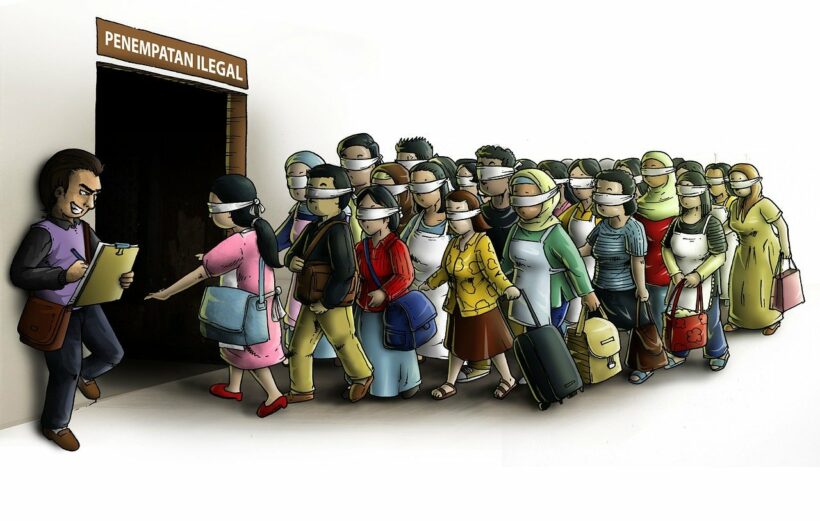
Every 30 July, the world comes together to commemorate World Anti-Trafficking Day, a key date to reflect on this serious problem that affects millions of people around the world. Under the theme ‘Reaching Every Victim of Trafficking’, the International Organization for Migration (IOM) seeks not only to raise awareness of developments and trends in the fight against human trafficking, but also to make an urgent appeal to governments, law enforcement agencies, public service personnel and representatives of civil society. The objective is clear: to assess and optimise efforts to strengthen prevention, identification and support for victims and survivors, and to end impunity.
Growing socio-economic inequalities, coupled with forced displacement due to crises, conflicts and climate emergencies, have increased the dangers and vulnerability of millions of people on the move. This adverse context has exacerbated human trafficking, making the most vulnerable easy targets for traffickers. Drawing on decades of experience and evidence, IOM works closely with key actors, including various United Nations agencies, the private sector and academics, to compile data and conduct research to enable the development of more effective policies and promote greater efficiency in counter-trafficking.
Amidst overlapping adversities such as irregular migration, forced displacement, armed conflict, pandemics and environmental challenges, children and adolescents are particularly vulnerable to human trafficking. On this 10th World Day to Combat Trafficking in Persons, the United Nations Children’s Fund (UNICEF) and the United Nations Office on Drugs and Crime (UNODC) are urgently calling for a shift to a child- and adolescent-centred approach and accelerated action to end human trafficking.
Candice Welsch, UNODC Regional Representative for the Andean Region and Southern Cone, underlines the urgency of implementing strategic and inclusive actions to address this phenomenon and protect vulnerable groups from exploitation. Welsch emphasises that states must prioritise the protection of children and adolescents, strengthen legislation, improve law enforcement and allocate more resources to combat trafficking.
Colombia and the region as a whole have made progress in implementing the International Protocol to Prevent, Suppress and Punish Trafficking in Persons. However, much remains to be done, especially as children and adolescents continue to be disproportionately affected, accounting for 1 in 3 victims. Migrant children are particularly vulnerable to this crime.
Strengthening protection systems and implementing child-sensitive justice mechanisms are crucial to support victims and hold traffickers accountable. Tanya Chapuisat, UNICEF Representative in Colombia, highlights the importance of special legal protection for children and adolescents, and calls on society as a whole to mobilise against child trafficking and sexual exploitation.
The proliferation of online platforms presents additional risks, as children often access these sites without adequate safeguards. Addressing the exploitation of children and adolescents online requires innovative strategies, the involvement of parents and caregivers, and collaboration between technology companies and authorities, as well as strong legal frameworks.
On this World Anti-Trafficking Day, it is crucial to remember that the protection of the most vulnerable is a shared responsibility. We can all contribute to building a culture of zero tolerance and speaking out against child trafficking and sexual exploitation, ensuring that all victims receive the support and justice they deserve.



