

“The global power is no longer negotiated only between great powers. It is executed in the territories where their influences collide.”
- Opening – the conflict on the ground
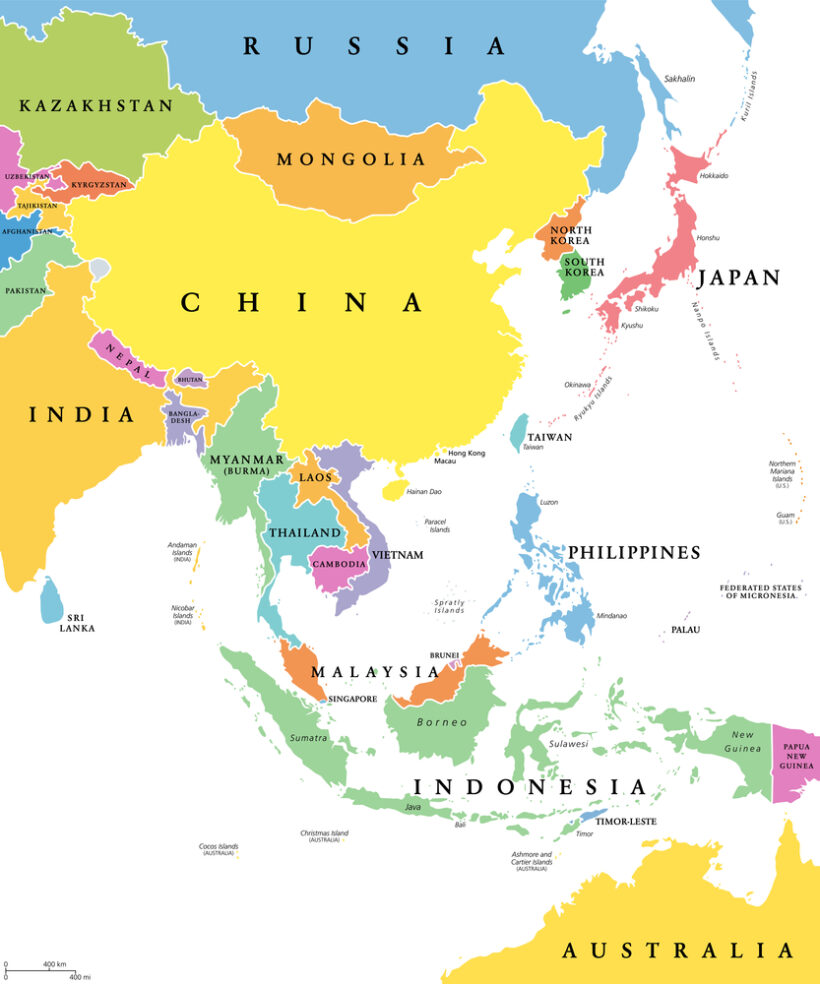
The rivalry between the United States and China is no longer a geopolitical abstraction or a debate between distant powers. It has moved onto the concrete ground where real power is defined. Bangladesh and the Philippines have become critical nodes in this structural competition, where supply chains, maritime routes, and strategic presence intersect in visible ways. What was once analyzed in theoretical terms is now executed in specific economies and key territories. Bangladesh represents an industrial axis integrated into global trade, while the Philippines positions itself as a point of maritime friction in the Indo-Pacific. In both cases, the United States and China do not compete through discourse, but through influence, infrastructure, and control. Geopolitics is no longer interpreted. It is deployed in real time.
- Bangladesh – the invisible industrial node
Bangladesh has consolidated itself as one of the silent pillars of the global economy. Its textile industry, exceeding USD 45 billion annually in exports, supplies key markets in the United States and Europe, integrating deeply into Western supply chains. However, this economic integration coexists with a growing dependence on financing and infrastructure linked to China, especially in ports, energy, and transportation. This dual linkage places Bangladesh in a zone of strategic balance. For the United States, it represents a critical productive partner in the architecture of global consumption. For China, it is a point of expansion within its network of influence in Asia. The tension is not visible in military terms, but it is structural. Bangladesh is not a peripheral actor. It is an essential gear where competition between both powers materializes in production, investment, and dependence.
- The Philippines – the maritime front of the Indo-Pacific
The Philippines has become one of the most sensitive points in the rivalry between the United States and China. Its location in the South China Sea places it at the center of one of the most important maritime routes in the world, through which global trade valued at more than USD 3 trillion annually passes. Unlike Bangladesh, where competition is economic, in the Philippines the conflict takes on a strategic and military dimension. The United States has reinforced its presence through defense agreements and access to bases, while China increases its pressure in disputed waters, expanding its maritime influence. This dynamic transforms the country into a direct line of friction between both powers. The Philippines does not just observe the conflict. It experiences it on its territory, on its coasts, and in its political decisions. Geopolitics here is not abstract. It is a daily operational reality.
- The United States and China – two competing strategies
The competition between the United States and China in Asia does not respond to a single model of power, but to two clearly differentiated strategies. The United States maintains an approach centered on military alliances, naval presence, and defense agreements that seek to secure control of strategic routes and contain Chinese expansion. China, by contrast, prioritizes investment in infrastructure, financing, and the development of logistics networks, consolidating influence through economic dependence. Initiatives linked to the Belt and Road have channeled hundreds of billions of dollars into Asia, Africa, and other regions, including projects in Bangladesh. This contrast defines the dynamics of the conflict. While Washington projects power through security and deterrence, Beijing does so through economic integration and industrial capacity. These two models do not exclude each other. They overlap and compete in the same territories, generating a structural tension that redefines the regional balance.
- Supply chains – the new battlefield
Supply chains have become one of the main instruments of power in the rivalry between the United States and China. Bangladesh represents a key node in global production, especially in the textile sector, while the Philippines is embedded in logistics and maritime networks critical for international trade. Dependence on these systems is not only economic, but strategic. Disruptions in production, transport, or financing can generate cascading effects on a global scale. The United States seeks to diversify and secure its chains, reducing exposure to China, while Beijing reinforces its control over infrastructure and manufacturing. In this context, countries such as Bangladesh and the Philippines are not mere participants. They are support points upon which the global system is articulated. The competition is not limited to territories. It unfolds through networks that sustain the world economy.
Hard figures — supply chains and power (USD)
- Maritime trade in the South China Sea
~USD 3 trillion annually
- Bangladesh textile exports
~USD 45–50 billion annually
- Global infrastructure investment (incl. China BRI)
USD 1 trillion accumulated
- U.S.–ASEAN bilateral trade
~USD 450 billion annually
- Asia’s share in global manufacturing
50% of the world total
- The global system in transition
The rivalry between the United States and China is not an isolated episode, but part of a broader transformation of the international system. The order that emerged after the Cold War, based on globalization, economic integration, and Western predominance, is being replaced by an environment of structural competition. Bangladesh and the Philippines reflect this transition on the ground. Both countries operate within a system where interdependence no longer guarantees stability, but instead exposes vulnerabilities. The fragmentation of supply chains, the emergence of economic blocs, and the reconfiguration of alliances show that the world is entering a more complex phase. Asia has become the epicenter of this change, not only because of its economic weight, but because of its strategic relevance. In this new context, geopolitics ceases to be an external dimension. It becomes a central component of the functioning of the global economic system.
- Bangladesh and the Philippines – strategic balance between two powers
Bangladesh and the Philippines are not passive actors in the rivalry between the United States and China, although they operate under strong structural constraints. Both countries have developed balancing strategies that seek to maximize benefits without fully aligning with a single power. In the case of Bangladesh, its integration into Western supply chains coexists with a growing reception of Chinese investment and financing, generating an interdependence that limits its room for maneuver, but also expands its development options. The Philippines, for its part, faces a more volatile environment. Its geographic proximity to disputed areas in the South China Sea and its historical link with the United States place it in a more exposed position, forcing it to navigate between security and sovereignty.
This balance is not static. It is subject to constant pressure, both external and internal. Decisions regarding infrastructure, defense, or trade acquire an immediate geopolitical dimension. In this context, both countries do not only respond to global competition. They also shape it. Their ability to manage these tensions will define not only their economic trajectory, but also their position within the emerging international system.
- The conflict that defines the 21st century
The competition between the United States and China can no longer be understood as a contained rivalry between two distant powers. It has shifted to territories where the real conditions of global power are defined. Bangladesh and the Philippines clearly illustrate this transformation. In them converge production, trade, strategic routes, and political decisions that transcend their borders. What happens in their economies and territories is not peripheral. It is structural.
The international system is entering a phase where interdependence no longer implies stability, but exposure. Supply chains, critical infrastructure, and strategic alliances have become instruments of competition. In this scenario, countries that manage to balance these pressures will be able to capture opportunities. Those that do not will become trapped in dynamics of dependence.
The conflict between the United States and China will not be decided only in Washington or Beijing. It will be defined in spaces such as Dhaka and Manila, where geopolitics translates into concrete decisions. It is not a future confrontation. It is an ongoing process that is redesigning the map of global power. And on that map, the margins have ceased to be secondary. They have become the center.
“The new map of power is not drawn in capitals. It is built in territories where powers do not negotiate… they compete.”
Bibliography
- International Institute for Strategic Studies
The Military Balance. Annual analysis of global military capabilities and strategic balance among powers.
- Center for Strategic and International Studies
U.S.–China Global Competition Reports. Evaluation of the structural rivalry between the United States and China across multiple regions.
- Brookings Institution
Order from Chaos – Asia Program. Studies on the geopolitical impact of competition among major powers in Asia.
- World Bank
World Development Indicators. Structural data on economic development in key countries such as Bangladesh and the Philippines.
- Asian Development Bank
Asian Development Outlook. Regional economic perspectives and structural dependence in Asia.
- United Nations Development Programme
Human Development Report. Social indicators and inequality in emerging economies.
- Council on Foreign Relations
Global Conflict Tracker. Monitoring geopolitical tensions and global flashpoints.
- Lowy Institute
Asia Power Index. Measurement of the relative power of the United States and China in the Indo-Pacific region.
- Carnegie Endowment for International Peace
China Global Influence Reports. Analysis of China’s economic and political expansion in developing countries.
- SIPRI
Military Expenditure Database. Global military spending data and rearmament tren



