

If the US becomes one of Belarus’ top potash clients after removing its sanctions on this resource, then its role as the main source of foreign currency for Belarus might accelerate their rapprochement, which the US envisages eventually weakening the Russian-Belarusian Strategic Partnership.
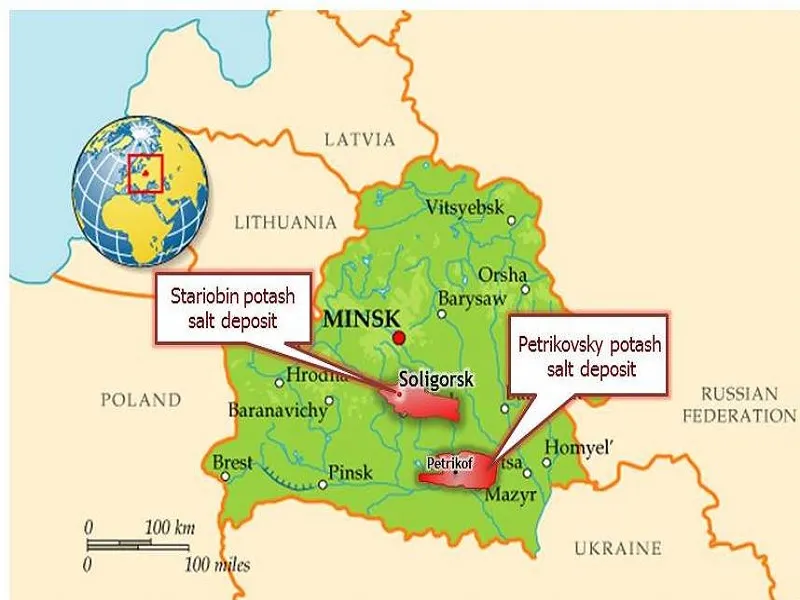
Average consumers across the world have probably never purchased anything from Belarus, but among the agricultural industry, its potash – a high-quality fertilizer – is globally renowned. Not only is it very effective, but it’s also plentiful, with Belarus accounting for 15.9% of total production. This makes it the world’s third-largest producer. The West imposed sanctions on Belarus’ most strategic export after summer 2020’s failed Color Revolution, but the US just removed its sanctions in late March.
This followed Special Envoy John Coale’s latest trip to Minsk, where he secured yet another round of prisoner releases, arguably as a quid pro quo for more sanctions relief following the lifting of restrictions on national airliner Belavia last November after a prior such round. He then said that the US would like to see Belarus export its potash to the US via Lithuania, which would align with Trump’s new policy of helping farmers affected by the Third Gulf War’s disruption of the global fertilizer market.
Publicly financed Radio Free Europe/Radio Liberty reminded everyone that the EU extended its sanctions against Belarus for another year, thus obstruction Coale’s plan of its potash being exported to the US via Lithuania. Being rerouted through St. Petersburg would take more time, and sporadic Ukrainian drone strikes could abruptly halt port usage at any given time, so they suggested that he US might opt for neighboring Canada’s potash instead since it’s closer and is also the world’s top producer.
Nevertheless, the US might be willing to pay a relatively higher cost for Belarusian potash not only for its farmers’ sake, but for the ulterior purpose of exerting influence over Belarus’ most strategic export by becoming one of its top clients. By removing sanctions and hypothetically paying more for its potash than its existing clients across the Global South are, and the US can certainly outbid them if need be, the US would then become the main source of foreign currency for Belarus.
The context within which this play is being made concerns the US-Belarusian rapprochement over the past 15 months under Trump 2.0. Although both parties insist that this isn’t occurring at Russia’s expense, Russia has legitimate reasons to question the US’ intentions in actively seeking to diversify Belarus’ political and economic ties from their present Russian-centricity. The tangible progress made in the US-Belarusian rapprochement sharply contrasts with the lack of progress in the US-Russian one.
There are also legitimate reasons to question Belarus’ intentions after President Alexander Lukashenko suspiciously announced that he plans to attend the next Peace Board meeting despite Trump humiliating his representatives who sought to attend the inaugural one in his place by denying them visas. Coale also revealed that the US is preparing for a future Trump-Lukashenko Summit. From Russia’s perspective, Lukashenko might be getting too chummy with the US, all while Russian-US ties further deteriorate.
If the US’ play for Belarus’ most strategic export succeeds, then its role as the main source of foreign currency for Belarus might accelerate their rapprochement, which the US envisages weakening the Russian-Belarusian Strategic Partnership even if only in the realm of perceptions at first. Each side’s interests in this remain “plausibly deniable” since they’re only discussing strategic resource cooperation, but Russia knows better than to take them at their word, so it’s assumedly monitoring this very closely.