

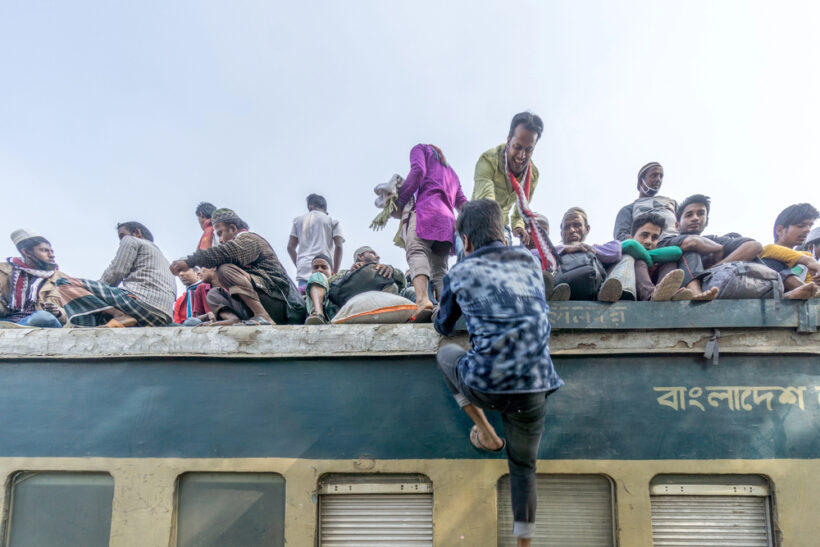
Bangladesh is about 4000 kilometres away from Iran, feeling the direct heat of its alliance with Israel and the USA. Both politically and economically, Bangladesh is feeling the impacts of the Middle East crisis. On the 26th day of the ongoing conflict involving Iran, Israel, and the United States, when discussions about a possible peace agreement are finally gaining momentum of truce, countries across South Asia, including Bangladesh, are already feeling the visible and invisible impacts of the war in their everyday lives. The effects are not limited to policy circles or economic reports; rather, they are being discussed everywhere—from casual tea-stall conversations to people adjusting their plans for Eid travel by motorcycle due to rising fuel prices and overall uncertainty in the market. As energy-import-dependent economies, South Asian countries are particularly sensitive to fluctuations in global oil prices, supply disruptions, and geopolitical instability in the Middle East. This situation clearly shows how a distant war can quickly influence daily social life, consumer behaviour, and economic confidence in Bangladesh and the wider region.
By Md. Al-Amin
Political perspectives, The ongoing conflict involving Iran, Israel, and the United States is creating notable political implications for Bangladesh, particularly in shaping its diplomatic positioning and foreign policy priorities. As a Muslim-majority country and an active member of the Organisation of Islamic Cooperation (OIC), Bangladesh faces growing expectations to express solidarity with broader concerns of the Muslim world, while at the same time maintaining constructive relations with Western partners, especially the United States. The situation also requires Bangladesh to adopt a cautious and balanced stance in multilateral platforms such as the United Nations (UN), where diplomatic language and voting behaviour must reflect both national interests and international responsibilities. Domestically, the conflict has intensified political discussions regarding the country’s foreign policy direction, as public opinion and religious sentiments continue to influence expectations from the government. Moreover, Bangladesh must remain strategically careful in managing its regional diplomacy by considering the positions of major actors like India and China, ensuring that its long-standing policy of balanced and independent diplomacy remains intact amid evolving geopolitical tensions.
From an economic perspective, Bangladesh feels the real impact of this ongoing war. The Iran–Israel conflict is creating multidimensional economic pressures on Bangladesh, particularly through rising energy import costs, slower global shipping routes, and shortages of raw materials for import-dependent industries. Ongoing instability in the Middle East has pushed global oil prices upward, which is contributing to higher inflation and increased production expenses in Bangladesh, ultimately exerting negative pressure on the country’s GDP growth. At the same time, Bangladesh is likely to face serious challenges in its overseas labour market in the Middle East, where uncertainty and reduced economic activity could disrupt manpower exports and significantly lower remittance inflows. Altogether, these developments pose a substantial risk to Bangladesh’s economic stability and external sector performance.
One of my villagers, Mr. Alamgir Hossain says, “He recently made his passport to go to Qatar, for this sake he gave one lakh taka to a person who already stayed in Qatar to get the visa. The man assured him to get the visa within fifteen days. He left his Garments job back to his home but now he feels real trouble.”
According to Bangladesh Garment Manufacturers and Exporters Association President Mahmud Hasan Khan, “Bangladesh, as an export-oriented country, must be prepared to confront the economic consequences of the ongoing Iran–Israel conflict, particularly in the ready-made garments sector.” He emphasised that global conflicts typically weaken consumers’ purchasing power in major export markets, which may lead to reduced spending on non-essential items such as apparel, ultimately affecting Bangladesh’s garment exports. In addition, rising global fuel prices due to Middle Eastern instability are expected to increase domestic production costs, since Bangladesh is heavily dependent on imported energy. As a result, higher manufacturing expenses and declining external demand could create significant pressure on the country’s export performance and overall economic stability. Usually, it’s seen in the oil pump that there is no real pressure. During the Eid holidays, many bikers travelling to rural areas have been facing severe fuel shortages, turning what should be a joyful journey into a frustrating experience. Despite waiting in long queues for hours at local filling stations, many are unable to get sufficient fuel. For instance, Mr Azizul, a manager at Chowdhurani Filling Station, (Rangpur) mentioned that although they received around three thousands liters of fuel today and distributed it among customers, the overwhelming demand far exceeded supply. One biker, Mintu, shared his frustration, saying that after standing in line for four hours, he was only given fuel worth 200 taka, which is far from enough to continue his journey to Dhaka. Another traveller, Md. Limon reportedly had no choice but to turn back due to the shortage. This situation highlights the lack of adequate fuel management during peak travel periods, causing significant inconvenience and distress among Eid travellers.
In a nutshell, nothing in today’s World remains precise in a place; it scatters acutely around the corner of the World. Consequently, Bangladesh has to feel the heat of Iran’s crisis, hasn’t it?
Md. Al-Amin is an educator. He completed his post-graduation from the Department of International Relations at Rajshahi University,Bangladesh. His research interests are Diplomacy, Foreign policy, Border conflicts, and Security issues.



