
Lowest Female Participation in 25 Years of Bangladesh
Ahead of International Women’s Day 2026, a disturbing picture of women’s position in Bangladesh’s politics and society has emerged. In the recently held 13th National Parliamentary Election, the rate of female candidates plummeted to a mere 3.93%, marking the lowest level in 25 years. Against this backdrop, policymakers and civil society leaders have issued a unified demand: women require more than just “opportunity”—they need a violence-free environment and significant state investment.
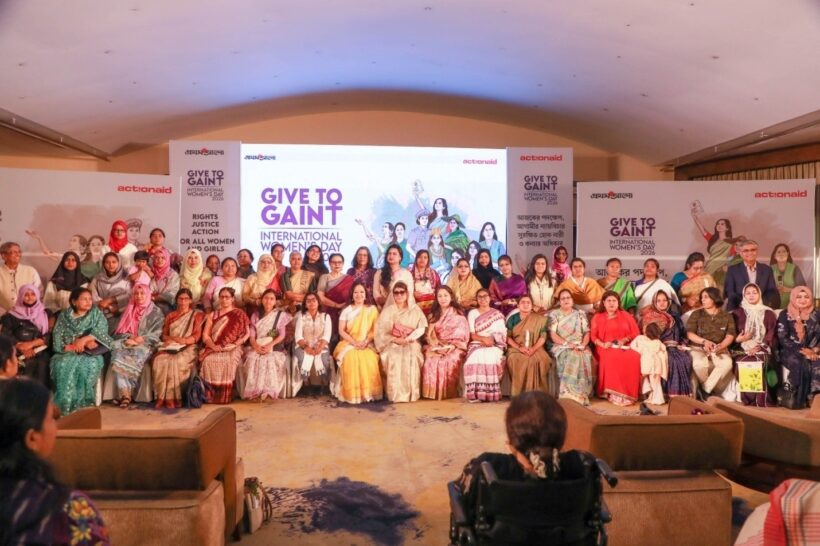
At a special dialogue titled ‘Women’s Leadership and Protection’ held on Thursday (March 5) at a hotel in Dhaka, speakers expressed grave concern over the shrinking space for women. The event was organized by ActionAid Bangladesh and Daily Prothom Alo to mark International Women’s Day 2026.
The dialogue centered on the global theme ‘Give to Gain’ (Invest in Women) and the national theme ‘Today’s Action, Tomorrow’s Justice: Protect the Rights of Women and Girls.’ Participants called upon the state and political parties to increase investment in creating a ‘level playing field’ by ensuring security, social dignity, and structural support for women.
Data presented at the dialogue highlighted a severe crisis in gender equity, with alarming statistics of a regression in democracy
- Electoral Debacle: Only 7 women were elected in the 13th National Election, a figure as low as the 8th National Election held back in 2001.
- Surge in Violence: Incidents of rape increased by 52.3% in 2025 compared to 2024. In January 2026 alone, at least 272 women and children fell victim to violence.
- Institutional Failure: 39% of universities in the country have yet to form sexual harassment prevention committees, identified as a major institutional lapse.
Former MPs and political leaders demanded immediate structural reforms. Rumin Farhana, MP, stated: ‘We are willing to accept a strong woman as a daughter or a sister, but not as a comrade-in-arms. This patriarchal mindset must change.’
Dr. Tasnim Jara, a physician and political activist, identified online harassment as a primary deterrent for young women entering politics. She emphasized that a functional judiciary and an active Election Commission are essential to combat ‘cyber bullying’ and ensure a fair playing field.
Nayab Yusuf Ahmed, MP, highlighted the plight of marginalized women: “Many women at the grassroots are unaware of the rights they are being deprived of. Their vulnerabilities are exploited to keep them confined. We must stand up to solve these issues ourselves.”
Farah Kabir, Country Director of ActionAid Bangladesh, lauded female candidates as the ‘bravest people’ in the country, noting that ensuring their dignity and safety remains a bigger challenge than the number of seats won.
Prominent speakers- including Rasheda K. Choudhury (former caretaker government advisor), Matiur Rahman (Editor, Prothom Alo), and representatives from the British High Commission and UNDP- emphasized four pillars for progress:
- State Investment: Increasing budget allocations to enhance women’s safety and social status.
- Legal Enforcement: Strict implementation of laws against gender-based violence and cyberbullying.
- Political Party Reform: Moving beyond “symbolic” representation to ensure effective female participation in decision-making levels.
- Labor Rights: Ensuring equal wages and safety for women in the agricultural and RMG (garment) sectors.
A highlight of the dialogue was an interactive forum theater titled ‘Chena Porobash’ (Familiar Exile), performed by the troupe Palakar. This artistic protest used performance to depict the harsh realities of child marriage, workplace harassment, and the struggles of female candidates on the campaign trail. During the ceremony, 20 courageous female candidates who contested the 13th National Election were honored with special awards.
The consensus among speakers was clear: to reflect the essence of ‘Give to Gain,’ the state machinery must act now. The decline in women’s political participation is not merely a ‘woman’s issue’- it is a symptom of the declining democratic health of the nation.