

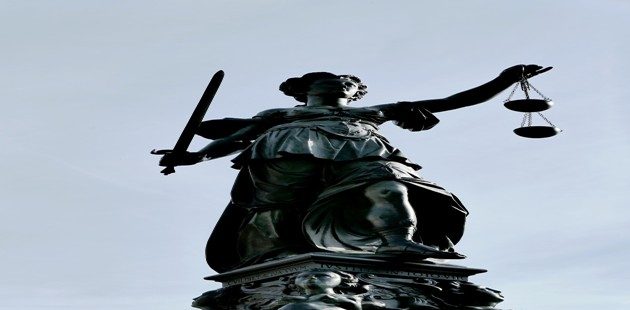
In recent years, a growing number of observers across the world have begun to question whether the principles of international law are applied equally to all nations. The ideals of human rights, sovereignty, and the rules of war are frequently presented as universal standards meant to guide global conduct. Yet the realities of contemporary geopolitics increasingly suggest that these principles are often interpreted through the lens of power and strategic interests rather than justice and consistency.
The contradiction is not entirely new. It echoes a famous allegory from Animal Farm written by George Orwell. In the novel, the animals initially proclaim a revolutionary principle: “All animals are equal.” But as power gradually concentrates in the hands of a few, the slogan is quietly altered into a more revealing statement: “All animals are equal, but some animals are more equal than others.” Orwell’s satire was aimed at political hypocrisy, yet the phrase resonates strongly in the international arena today.
Another simple story illustrates this pattern of selective reasoning. It tells of a lamb drinking water from a river while a fox stood nearby watching it. The fox, hungry and eager for an excuse to attack, accused the lamb of making the water dirty. The lamb politely replied, “Sir, the water is flowing from your side toward me. How could I possibly make it dirty?” Realizing that his accusation had failed, the fox quickly changed the charge: “If not you, then perhaps it was your mother who dirtied the water.” At that moment, the lamb understood the hidden intention behind the accusation and fled for its life.
This parable captures a disturbing truth about power politics: accusations are sometimes not made to establish justice but to justify actions that have already been decided.
Students of international relations are taught that even wars are governed by certain rules designed to protect civilians and limit destruction. These laws of war represent humanity’s attempt to preserve a minimal moral order even in times of conflict. However, recent events have raised serious doubts about whether these principles are applied consistently.
The devastating conflict in the Gaza Strip following military actions by Israel has caused immense human suffering and humanitarian concern. Images of destroyed neighborhoods, displaced families, and civilian casualties have circulated across the globe, prompting widespread debate about the effectiveness of international humanitarian law. Yet strong political and diplomatic support for Israel from the United States and several European governments has continued with relatively little change.
Critics argue that similar actions by other states might trigger far stronger responses from the international community. Past conflicts involving countries such as Iraq and Libya led to military interventions, sanctions, and extensive international condemnation under the banner of protecting global norms. When allies are involved, however, the language often shifts toward “security concerns,” “strategic necessity,” or the right to self-defense.
The inconsistency becomes even more visible in debates about territorial sovereignty. Western leaders frequently emphasize the sanctity of borders and the importance of international law, yet geopolitical discourse sometimes reveals a different logic. Discussions surrounding territories such as Greenland—which Donald Trump once suggested the United States might purchase—demonstrate how strategic ambition can overshadow the principles that global powers claim to defend.
At a deeper geopolitical level, these contradictions are reshaping global perceptions of the so-called “rules-based international order.” Many countries in Asia, Africa, and Latin America increasingly view this order not as a neutral system of law but as an instrument shaped by the strategic interests of powerful states. When the rules appear strict for adversaries but flexible for allies, the legitimacy of those rules inevitably erodes.
The long-term consequences may be profound. If international law continues to be interpreted selectively, the world may gradually move from a rules-based order to a power-based order where states rely less on institutions and more on military strength, alliances, and strategic deterrence. In such a world, smaller nations will feel increasingly insecure, global institutions will lose credibility, and conflicts may become more frequent. The survival of international law therefore, depends not merely on writing treaties or delivering speeches about human rights, but on demonstrating that the same standards apply to all nations equally. Without such consistency, the principles that once promised justice may increasingly resemble the cynical wisdom of Orwell’s allegory—where equality exists in theory, but in practice some remain “more equal than others.”



