

The number of deployed and ready-to-use nuclear weapons increased significantly last year, according to a report published Thursday, which describes this situation as a “worrying development” in a context of escalating armed conflicts.
In total, nine nuclear-armed states possessed 12,187 nuclear warheads at the beginning of this year, according to the Nuclear Weapons Ban Monitor report.
Nine states possess nuclear weapons: Russia, the United States, France, the United Kingdom, China, India, Pakistan, Israel, and North Korea.
They possessed 12,187 nuclear warheads at the beginning of this year, according to the Nuclear Weapons Ban Monitor report, published by the Norwegian People’s Aid (NPA) in collaboration with the Federation of American Scientists (FAS).
This overall figure represents a meager reduction of 144 compared to the beginning of 2025, but at the same time, the number of available nuclear weapons has steadily increased in recent years, reaching approximately 9,745 last year, according to the report.
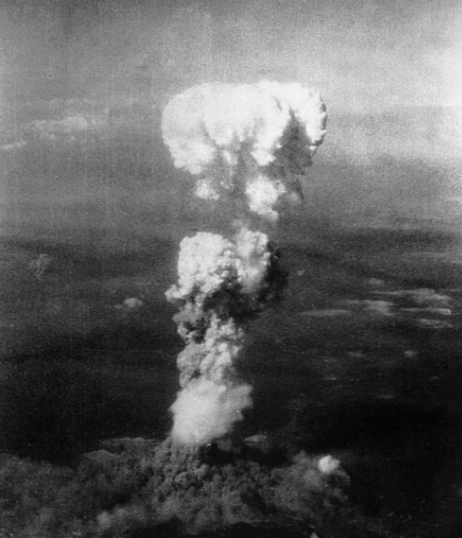
This means that with these weapons, the world possesses the equivalent of 135,000 warheads with the power of the one used by the United States in Hiroshima, Japan, in 1945. That single bomb killed some 140,000 people, the report notes.
And 40% of these available warheads, or 4,012 of them, were deployed on siloed ballistic missiles, mobile launchers, submarines, or bomber bases last year, the report indicates, representing an increase of 108 compared to 2024.
The continued annual increase in the number of deployed warheads is a worrying development that increases the risks of rapid escalation, miscalculations, and accidental use, says Hans Kristensen, a key contributor to the report and director of the Nuclear Information Project at the FAS.
This makes the world more dangerous for all of us, he emphasizes, as quoted in a statement from the International Campaign to Abolish Nuclear Weapons (ICAN), of which the NPA and the FAS are members.
According to the report, this trend is all the more worrying in the context of escalating conflicts in Europe, Asia, and the Middle East, which sometimes involve nuclear-armed states.
The document also mentions “the erosion of the long-standing disarmament, non-proliferation, and arms control regime, particularly with the expiration last month of the New START treaty, the last agreement concluded between Russia and the United States, the two main nuclear powers.
The experts also detail the points of contention within the international community on this issue, with a growing number of countries adhering to efforts aimed at a total ban on nuclear weapons. By the end of 2025, 99 countries had acceded to the 2017 Treaty on the Prohibition of Nuclear Weapons (TPNW), either as parties or as signatories.
Meanwhile, nuclear-armed states—none of which have signed the treaty—are investing heavily in modernizing and expanding their arsenals. And 33 so-called “umbrella states” of allied countries possessing nuclear warheads “actively support and reinforce these policies,” the statement points out.
States that claim nuclear weapons ensure their security, particularly in Europe, must understand that there is no shelter under a nuclear umbrella, warns Melissa Parke, director of ICAN, a coalition of NGOs based in Geneva, Switzerland, and winner of the 2017 Nobel Peace Prize, quoted in the statement.
______________________________________________
Source: Journal La Presse