

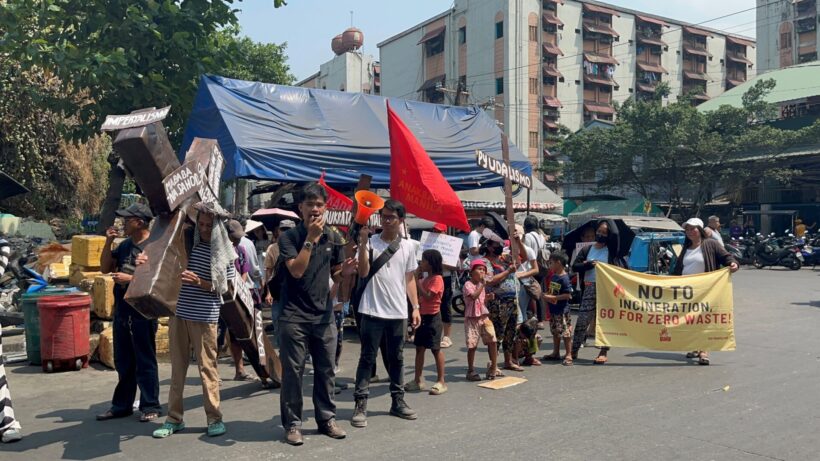
Manila, Philippines — Environmental and urban poor rights groups renewed calls for a shift toward just, sustainable energy and waste solutions following a series of Lenten protest actions dubbed “Kalbaryo ng Manggagawa at Maralitang Manilenyo” held on March 28, 2026.
Organized by Bagong Alyansang Makabayan (BAYAN), the actions highlighted the everyday “kalbaryo” or suffering faced by Filipinos, particularly informal urban settlers and communities affected by harmful environmental projects such as the proposed waste-to-energy (WtE) incinerator in Smokey Mountain, Tondo, Manila. If built, the project is expected to generate harmful air emissions reaching several kilometers, pollute Manila Bay through wastewater discharges, and produce large volumes of hazardous ash.
The event featured a Lenten procession from San Pablo Apostol Parish Church in Tondo to Smokey Mountain, with workers and urban poor communities dramatizing their struggles through symbolic cross-carrying and cultural performances.
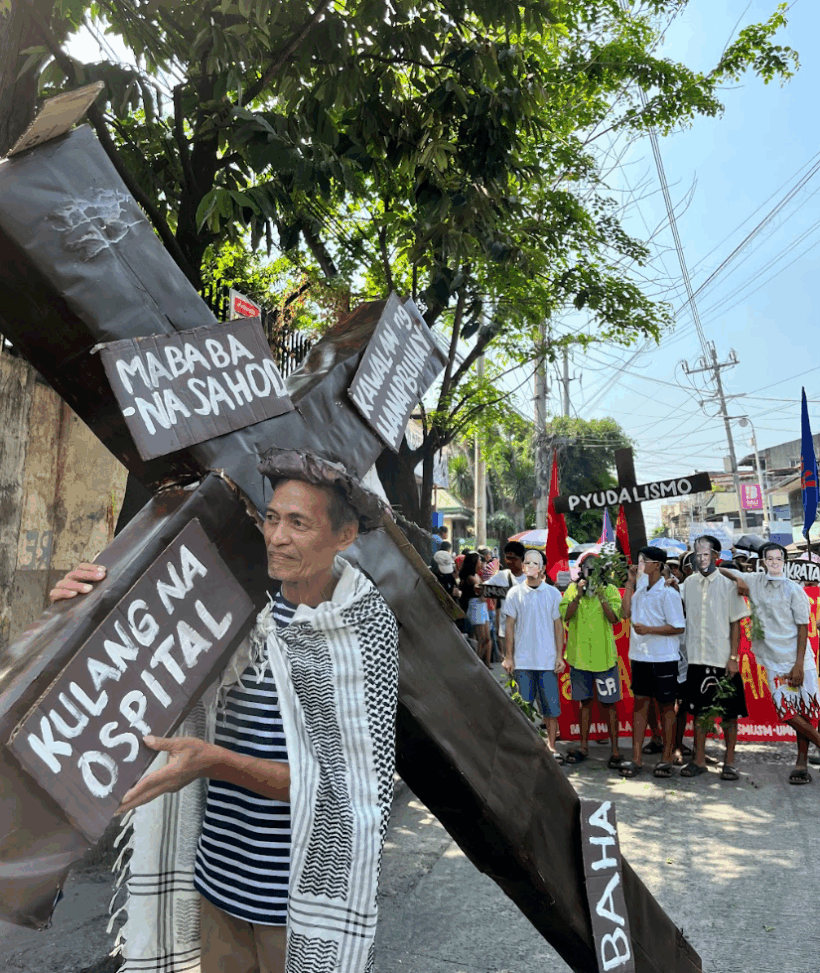
“Naging saksi ako sa lahat ng nangyari sa aming komunidad—mula sa banta ng demolisyon hanggang sa WtE project—na nagdulot ng takot, pagkawatak-watak ng pamilya, at kawalan ng katiyakan sa aming tirahan,” said Anora Madrid of Samahan ng Magkakapitbahay sa Smokey Mountain (SMUSM). [English Translation] “I have witnessed everything that has happened in our community, from demolition threats to the WtE project, causing fear, family separation, and uncertainty in our homes.”
The groups linked these local struggles to unfolding global crises. With escalating tensions in West Asia involving Iran and the United States, disruptions in the global oil and petrochemical supply chain are expected to drive up the costs of fossil fuel-based products, especially plastics. Industry estimates warn of possible price increases of up to 80 to 100 percent for plastic raw materials, further exposing the long-term unsustainability of burning fossil-based waste. The groups said prioritizing WtE incinerators, which rely on a constant supply of plastic waste, is anti-poor as it diverts public resources to costly and inflexible technologies that may eventually become unviable due to feedstock constraints.
“Mas lalo pang pinapahirapan ang taumbayan ng pagtaas ng langis at presyo ng bilihin, kaya hirap na hirap kaming mag-budget para sa pamilya,” said Ate Uday of Gabriela Manila. [English Translation] “The rising oil prices and cost of basic goods are making life harder for ordinary people, especially mothers who struggle to budget for their families.”
They added that the Philippines’ recent declaration of a national energy emergency under Executive Order No. 110, s. 2026 should prioritize people-centered solutions. Instead of investing in incineration, the government must allocate resources toward social services, food security, housing, and job generation.
This shift is not only socially just but economically sound. According to a study by the Global Alliance for Incinerator Alternatives, green jobs such as repair, recycling, and remanufacturing can generate over 200 times, 50 times, and 30 times more jobs compared to landfills and incinerators.
The call comes amid growing global alarm over the climate crisis. The United Nations has warned that key climate indicators are now “flashing red,” with record levels of heat trapped in the Earth’s system in 2025 and impacts expected to persist for thousands of years.
“Waste-to-energy incinerators are fossil-fueled technologies relying on plastics and waste imports that have brought staggering losses and damages to our environment, climate, and society, with harmful emissions documented worldwide. We strongly urge our leaders to support frontline communities who have long championed people-centered climate and waste work through resource recovery, segregation, and recycling, all of which are resilient to fossil fuel-based crises like those experienced today,” said Brex Arevalo, Climate and Anti-Incineration Campaigner of the Global Alliance for Incinerator Alternatives (GAIA) Asia Pacific and co-convenor of the Manila Anti-Incinerator Alliance (MAIA).
Different sectors, from workers to youth and grassroots organizations, echoed the call for urgent action.
“Sa kasalukuyan, marami sa amin ang nawalan ng trabaho at lalong nahihirapan dahil sa pagtaas ng presyo ng mga bilihin, kaya kailangan naming makiisa at lumaban para sa aming kabuhayan at karapatan,” said Ka Eldefonso Bello of the Unyon ng mga Manggagawa sa Harbour Centre (UMHC). [English Translation] “Many of us have lost our jobs and are struggling with rising costs, which is why we must unite and fight for our livelihoods and rights.”
“Karamihan sa mga estudyante ay mula rin sa maralitang komunidad, kaya ang laban ng mga manggagawa at maralita ay laban din naming mga kabataan,” said Vincent Sanchez of the League of Filipino Students – Universidad de Manila (LFS–UDM). [English Translation] “Most students come from poor communities, so the struggle of workers and the urban poor is also the struggle of the youth.”
“Busabos ang kalagayan ng mga manggagawa, at ang panawagan namin ay regular na trabaho, sapat na sahod, at katiyakan sa paninirahan para sa lahat,” said Ka Edong Gado of Manila Workers’ Unity (MAWU). [English Translation] “Workers remain exploited, and we call for regular jobs, living wages, and secure housing for all.”
“Ang kalbaryo ng mamamayan ay simbolo ng pagpapahirap sa maralita, kung saan ang mga manggagawa ang patuloy na pumapasan ng bigat ng kahirapan at karahasan sa lipunan,” said Macoy Cabangon of Bagong Alyansang Makabayan (BAYAN) – Manila. [English Translation] “The people’s ‘kalbaryo’ symbolizes the suffering of the poor, where workers continue to carry the burden of hardship and systemic violence in society.”
The Kalbaryo ng Manggagawa at Maralitang Manilenyo actions brought together voices from communities, workers, and youth, underscoring a unified call for policies that uphold human rights, environmental justice, and people-centered development.
###
Photos by: Robi Kate Miranda, Global Alliance for Incinerator Alternatives)
Press contact:
Robi Kate Miranda, Communications Officer for Campaigns, GAIA Asia Pacific, robi@no-burn.org
The Manila Anti-Incinerator Alliance (MAIA) is a coalition of community organizations and advocates opposing incineration and false solutions, and advancing zero waste, environmental justice, and the rights of urban poor communities.
MAIA’s position is firm, unified, and grounded in community-led resistance. MAIA reiterates its demands:
-
Uphold the national ban on incineration as stated in the Ecological Solid Waste Management Act and Clean Air Act.
-
Immediately stop violent evictions and ensure on-site, in-city housing in Smokey Mountain.
-
End intimidation, fencing, and harassment by private security and barangay personnel.
Click this link for the community petition: https://c.org/NsrxPwFJmG



