
by Janice Chalutag Naweywey
I thought a million times about what the topic would be for my concept paper. While reading the given example of Ma’am Sheryl Langwas about the “Tikim”*, “Watwat” came to mind. “Watwat is a common word in our language, and it is always a food on every occasion, like weddings and fiestas, and even in our cultural practices. While doing the cultural practices like “Manmanok,” which is butchering the pig when someone is seriously sick or even a blessing of a house, there is always “Watwat.”
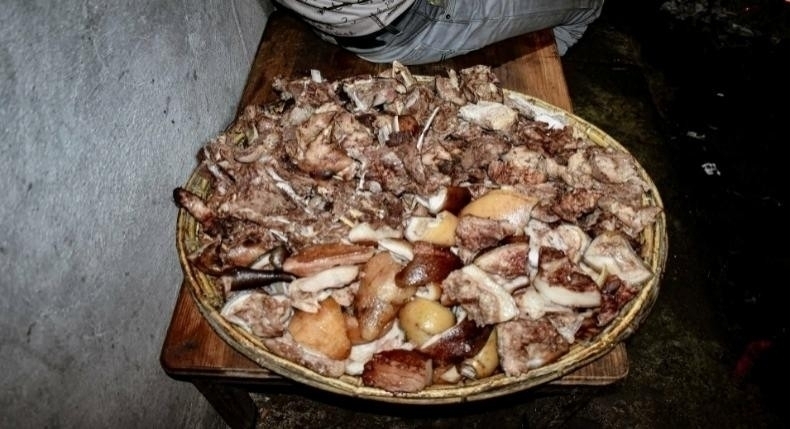
“Watwat” is the meat of the animals that are butchered during the occasion or event in our culture. This word is well-known in Northern Philippines, most especially in the Cordillera Region.
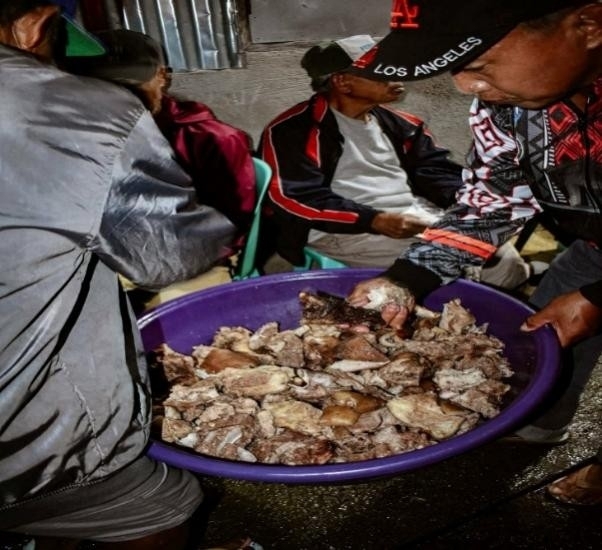
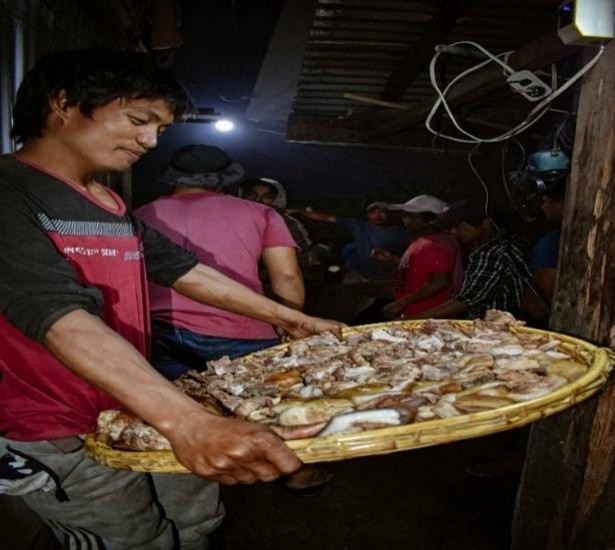
Performing one of the Igorot traditions– the “Karang”, the engagement of the couple. Watwat is usually practiced as an early dinner for people gathered together.
In the Philippines, maybe some are not knowledgeable about “watwat”. `Literally, it only refers to the slice of meat of animals. But it has a deeper explanation for the people of our community. It has a meaning in the tradition and culture of the Cordillerans. For all of us, it is a basic need because it is a meat we eat for survival and a food for everybody. But fortunately, it became an expression of the generation saying “WATWAT IS LIFE”, that there is always a “watwat” in our life. They would say “Watwat is life” when there is smoke in one house, meaning they are cooking “watwat” that would be all, for everybody. In our community, people would always say “Entako makiwatwat” meaning let’s go and eat in that house because they cook a lot of meat for everybody. Saying “entaku makiwatwat” is an expression of one of the Filipino values, the value of sharing. Everyone is asked to go and eat together with all the people of the community, and it is a sign of welcoming all visitors as the host of the occasion.
“Watwat” means the sharing, gathering, bonding, socialization, and learning of all the people in the community. But a deeper meaning would be the connection of the families and the people embedded in their rich culture and tradition as a community. “Watwat” symbolizes family ties and traditions, which include sharing the blessings we have with the Cordillerans, most especially with the Northern people who value the family so much. It helps to preserve the cultural practices and traditions of the Igorots.
The traditional preparation of the “watwat” for cooking is a big slice boiled with salt as a seasoning because of the culture and rituals embedded in it. The salt we put while cooking symbolizes the connection of the people to their land. The host, one family, is sharing the “watwat” because they have something to celebrate– a wedding, blessing, and other indigenous practices, so they would invite all relatives to come to their house and celebrate with them. An example of a celebration would be a wedding. There are plenty of animals to be butchered to make a “watwat” during this celebration, for the food to be served. But the deeper meaning would be a connection, communication, socialization, and learning of all the people who would gather for the celebration. “On all occasions, there is always communication and socialization to make the celebration enjoyable. There is always an exchange of ideas and thoughts that contribute to the learning of all individuals. When we talk of weddings, this is the most important celebration of the couple which requires a lot of money for the preparation of everything, like food, the “watwat”, among other needs during the celebration.
Before eating, they would inform all, saying “Mangan taku”, so everyone would prepare to eat. They always ask a blessing from “Kabunyan” (God) so that their food would be blessed, and they also pray for a bountiful harvest from their hard work on the farm as a community. The “watwat” to be served is placed in the “liga-o” and the elderly would serve it to the people paired with plain rice. We have a cultural way of serving the food, most especially during weddings. They would give it one by one while you are queuing, waiting for your watwat. As Igorots, we don’t necessarily eat at the table. Once we received our “watwat,” we could eat immediately in any corner.
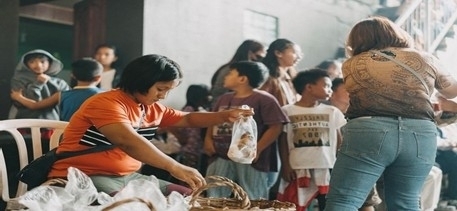
Distributing the watwat to people queuing.
“Watwat” is very significant in our community, traditions, and cultures because it is the basic food in all gatherings and occasions blended with our beliefs as Igorots. Folks can’t perform our culture and tradition without the “watwat”. Traditionally, “watwat” can be used as a medicine for the sick person, served before performing our belief, which is the “Manmanok”. This is done when someone is seriously ill and they would perform a prayer to “Kabunyan” asking “Kabunyan” to heal the sick person. By performing the “Te-er”, which is the rest day of the people of the community, the old folks bring the cooked “watwat” to the sacred Mountain in our place, which we called “Papat-tay” to offer prayers from “Kabunyan” asking for the success of the “Te-er” that the people are performing. “Watwat can be a tool as well for the people to see their success in our community. An example is a politician who would go and file for his candidacy, and that politician would butcher a chicken to see the “agco” if it is good or not. If it is good, that would be their inspiration to perform their plans.
In general, there is “watwat” in our community, rich in our culture and traditions, that shows sharing, bonding, learning and socialization of the people in our community. I would say it is the best practice to preserve the culture, traditions, and rituals of the Igorot that our ancestors taught us. In my opinion, the children before were respectful, kind, and responsible because of all these cultures and traditions where the children are taught to be responsible and kind by all the elders of the society. Through the strong influence of our traditions, children were afraid of doing criminal cases like rape compared to the present.
At the moment, there are fewer people who share their blessings like the “watwat” because the cost of living has risen and it has become expensive. The prices of the animals have become unaffordable, most especially the carabaos. The time-honored practices of the Igorots are slowly diminishing, turning the Cordillera into a modernized world where culture and traditions are less observed, which means no more gatherings and other community fiestas that teach our children good morals and values.
About the Author:
 I am a graduate student, taking a Master of Arts in English at Baguio Central University. I was born on the 8th of June, 1988, and am currently living in Baguio City. I graduated from elementary school in Sadanga Central School in 2001, and secondary level at Sadanga NTVSTHS in 2005. I finished my tertiary in MPSU Mountain Province State University in 2010. I am married to John G. Naweywey, and we are blessed with our 1-year-old daughter, Johanna.
#################
Cordillera Tikim refers to the rich, traditional culinary heritage of the Cordillera Administrative Region in the Philippines. The cuisine features distinct smoked meats (kiniing), preserved pork (etag), and unique chicken dishes like pinikpikan, reflecting the indigenous Igorot culture.