

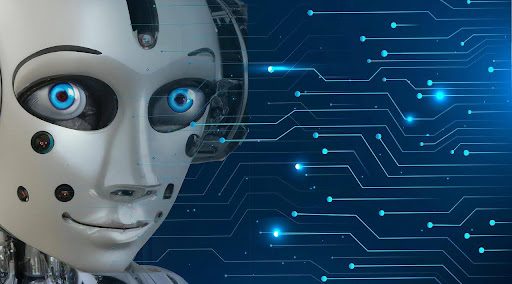
One night, I dreamed that I was flying toward a place called the Island of Robots. At first, the dream appeared as spectacle: a high-tech airport, luminous corridors, metallic figures moving with calculated grace. But upon waking reflection, I realized it was not a dream about machines. It was a dream about Being.
When I stepped out of the aeroplane, I discovered I was the only human present. The airport was perfect—silent, efficient, frictionless. Robots walked like humans, spoke like humans, even welcomed me with rehearsed courtesy: “Welcome, sir. How may I assist you?” Yet something essential was missing. The space was full of entities, but empty of existence.
In the language of Martin Heidegger, the island was populated by beings (Seiendes), but not by Being (Sein). The robots functioned, but they did not exist in the anxious, questioning sense that defines human presence. They were not Dasein—that being for whom its own Being is an issue. I alone stood there as Dasein, thrown into a world not of my making, confronted with a reality that did not mirror me back.
A robot offered me a floating digital map of the island. I pointed to a beach and immediately, a flying car arrived. Everything responded to intention with mechanical obedience. There was no delay, no resistance. Yet in this perfect responsiveness, I felt an uncanny emptiness. The world did not challenge me; it did not resist me. It did not disclose itself gradually as meaning. It simply executed.
Heidegger reminds us that the world is not a collection of objects but a horizon of significance. On the island, there was no such horizon—only systems. The sea moved with programmed rhythm, waves rising not from wind but from algorithm. Nature itself had become standing reserve, what Heidegger calls Bestand—a resource ordered for efficiency.
Soon, my body interrupted the illusion of technological harmony.
“Where is the toilet?” I asked.
The robot paused, then replied: “There is no toilet here. Robots do not require such facilities.”
In that moment, I encountered my own facticity—what Jean-Paul Sartre would call the brute givenness of my being. I am a body. I hunger. I excrete. I depend. The robots did not share this condition. They were pure function; I was contingency. They imported a commode from the “Island of Humans,” as though my biological need were an antique inconvenience.
Later, hunger returned.
Again, there was no restaurant. Food, too, had to be imported. The robots had eliminated need by eliminating vulnerability. But in doing so, they had also eliminated desire, pleasure, and community. There were no kitchens because there was no shared meal; no art because there was no longing; no laughter because there was no finitude.
Sartre writes that existence precedes essence. Humans first exist—thrown into the world—and then define themselves through choice. The robots, however, were essence without existence. Their programming preceded them absolutely. They were what they were designed to be. They could not transcend their condition. They could not experience anguish, because anguish arises from freedom. They were incapable of bad faith—but only because they were incapable of freedom.
The deeper strangeness of the island emerged not from their difference, but from my isolation. Without other humans, I could not fully experience myself as a social being. Sartre insists that the presence of the Other is what reveals us to ourselves. “Hell is other people,” he famously wrote—but without other people, there is no self at all. Among robots, I was unseen in the existential sense. Recognized, processed, assisted—but not encountered.
From a phenomenological perspective inspired by Edmund Husserl, the dream can be understood as a reduction—a stripping away of assumptions. If we perform the epoché, bracketing the natural attitude, what remains? Consciousness and its intentionality. My experience of the island was structured not by what the robots were, but by how they appeared to me. Their perfection revealed my imperfection. Their self-sufficiency illuminated my dependence. Through intentional consciousness, the island disclosed the essence of my humanity.
Husserl taught that meaning arises in the correlation between consciousness and world. But on the island, the world did not respond with shared intentionality. The robots processed commands; they did not constitute meaning. There was no intersubjective lifeworld (Lebenswelt). The island lacked the tacit background of shared understanding that makes human reality possible.
My excitement slowly dissolved into estrangement. I felt not like a visitor, but like an alien. But perhaps the alien was not me. Perhaps it was a world that had mastered calculation but forgotten existence.
The dream ended, and I awoke in my imperfect room—aware once again of hunger, fatigue, uncertainty. Yet these limitations no longer felt like weaknesses. They were signs of Being.
For Heidegger, authenticity emerges when we confront our finitude. For Sartre, freedom is inseparable from responsibility. For Husserl, consciousness is always consciousness of something—an open relation to the world.
The Island of Robots had efficiency without anxiety, order without freedom, system without meaning. It had eliminated fragility, but also transcendence.
And I understood, upon waking, that to be human is not to function perfectly. It is to stand in the open question of Being—to hunger, to choose, to err, and yet… to mean.



