

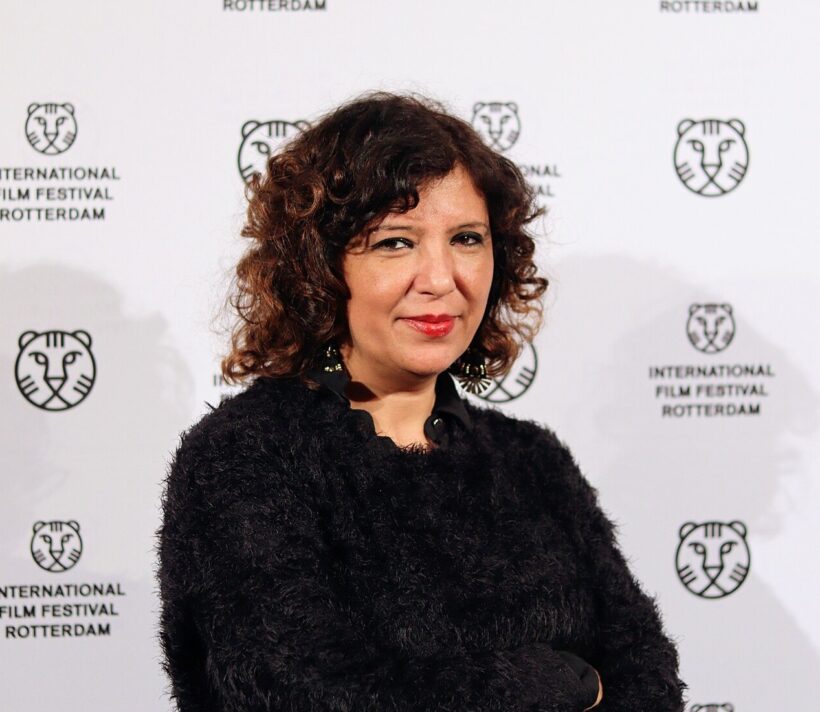
Tunisian director Kaouther Ben Hania did not accept the “Most Valuable Film” award given to her film, “The Voice of Hind Rajab,” as a gesture of protest and condemnation of the presence of Noam Tibon, a retired Israeli major general and protagonist of the Canadian documentary about October 7, The Road Between Us, which won an award at the Toronto Film Festival.
“What happened to Hind is not an exception. It is part of a genocide,” said the director. “Tonight in Berlin, there are people who have given political cover to that genocide by reframing the mass killing of civilians as self-defense, as complex circumstances. Denigrating those who protest. Tonight, I will not take this award home. I will leave it here as a reminder. And when peace is pursued as a legal and moral obligation, rooted in responsibility for genocide, then I will return and accept it with joy,” she concluded.
Kaouther Ben Hania’s sensational gesture came after two other episodes of protest: Indian writer Arundhati Roy declared that “art cannot remain silent about genocide” and announced that she would not attend the Berlin Film Festival after jury president Wim Wenders argued that cinema should “stay out of politics.”
His tough stance was followed by an open letter signed by more than 80 directors and actors, including Javier Bardem and Tilda Swinton, condemning the Berlin International Film Festival for its “institutional silence” on the genocide in the Gaza Strip and for its complicity with Israel.



