

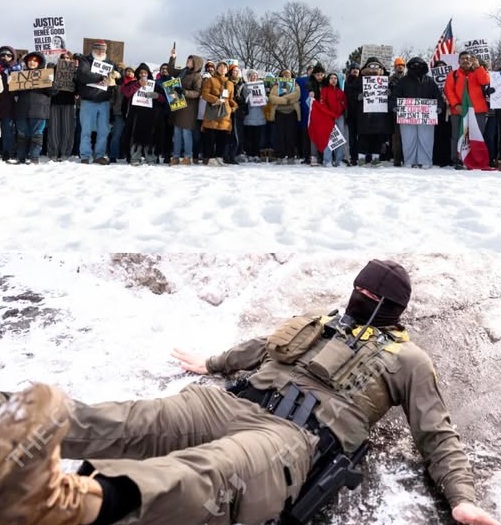
The Facebook page The Other 98% tells how the freezing winter in Minneapolis has become a valuable and surprising ally for the local population determined to resist the brutality of federal immigration agents by any means necessary, even the most creative.
In Minneapolis, the showdown between ICE and the local resistance has taken an unexpected turn; it’s not just about politics, but also about temperature. While federal agents are deploying in force, protesters are turning ice and winter conditions to their tactical advantage.
The streets around federal buildings are slippery due to freezing moisture. Snow, mud, and intentionally created ice patches have made it difficult for armored vehicles to move and even more difficult for ICE personnel to move on foot. Videos circulating online show agents struggling to maintain their balance and slipping on icy sidewalks, while well equipped residents remain steady without falling.
Federal officials even accused activists of pouring water to create dangerous conditions, calling such acts a federal crime, proving that winter in Minneapolis is an integral part of the resistance.
The protests have been massive and prolonged, drawing thousands of people in sub-zero temperatures to condemn federal tactics and demand justice for Renee Good’s death. Demonstrations in Powderhorn Park and marches along Lake Street have brought together crowds with signs, slogans, and chants of solidarity in an atmosphere that should make most agencies think twice before sending agents into the field.
Beyond the spectacle of agents in camouflage gear sliding across sheets of ice, this moment reveals something deeper about the clash: a conflict between a highly militarized federal apparatus and a community rooted in lived experience.
Many protesters arrived equipped with insulated clothing, boots with crampons, and the kind of knowledge of winter that comes from years of cold weather in Minnesota, rather than federal training manuals. This difference—winter resilience versus bureaucratic law enforcement—is playing out in real time on the city streets.
It is also provoking a legal and political backlash. A federal judge in Minnesota has barred ICE and Department of Homeland Security agents from arresting peaceful protesters or using crowd control tactics such as tear gas unless there is a reasonable cause, a decision prompted by pressure from civil liberties groups challenging what they call unconstitutional conduct.
Meanwhile, the state of Minnesota and the cities of Minneapolis and St. Paul have collectively sued the federal government, arguing that the massive crackdown, which has already led to thousands of arrests, violates constitutional rights and demanding that it end.
At the same time, the federal response has not softened. Earlier this week, an ICE agent shot a Venezuelan man, wounding him in the leg during a traffic stop and once again sparking widespread outrage.
What is happening in Minneapolis reminds us that power is not only law or force, but also territory, memory, and belonging to a place. ICE arrived with authority and weapons. The protesters arrived with winter boots, and in a city built to withstand the cold, this imbalance is significant.



