By Sharmin Rahman Sumi (Dhaka Bureau)
The Chattogram Hill Tracts have emerged as a premier destination on the country’s tourism map, yet the surge in footfall is exposing deep-seated structural gaps and security vulnerabilities.
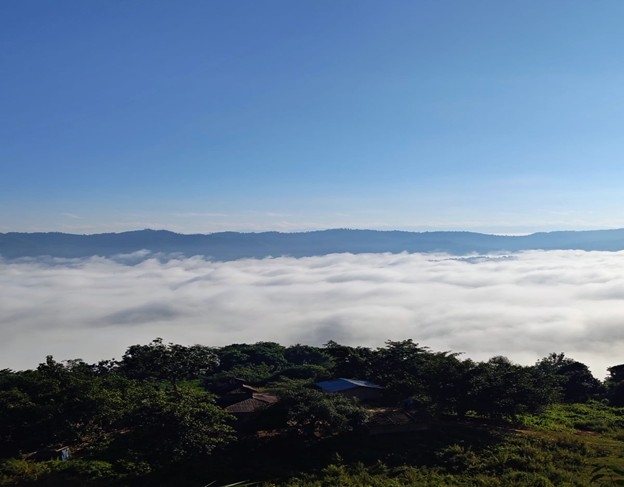
The rolling hills, mist-shrouded peaks, and vibrant indigenous cultures of Rangamati, Bandarban, and Khagrachhari continue to draw record numbers of domestic travelers.
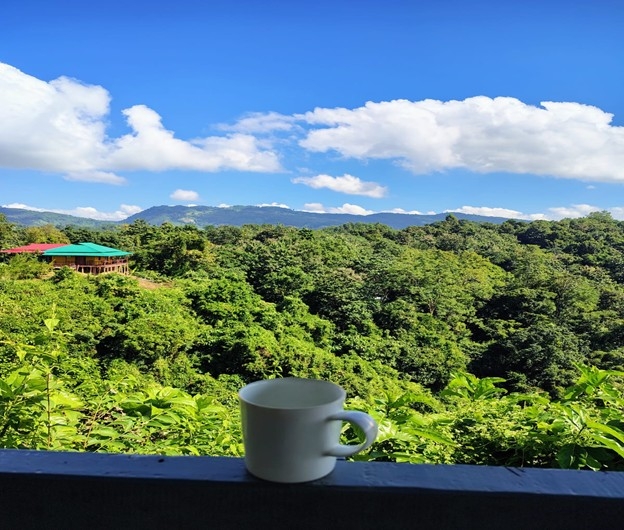
The exquisite natural beauty of the Belaichari hilly region profoundly attracts tourists. Photo: Sharmin Rahman Sumi.

Traditional Machang houses of the local hill people. Photo: Sharmin Rahman Sumi.
However, on-the-ground observations reveal that the rapid expansion of the sector is a double-edged sword, struggling to balance economic growth with sustainability and essential service delivery.
Economic Vitality and Local Empowerment
The tourism boom has injected significant liquidity into the local economy. Iconic landmarks such as Sajek Valley, Nilgiri, Alutila Cave, and the breathtaking Nafakhum Waterfall are witnessing unprecedented crowds, particularly during the peak winter season and public holidays.

The sky-touching Dulahazara Park. Photo: Sharmin Rahman Sumi.

The heart-captivating moonlight on the bosom of Kaptai Lake. Photo: Sharmin Rahman Sumi.
‘Tourism has unlocked revenue streams that were previously non-existent,’ said a local vendor in Sajek. This economic ripple effect is most visible among indigenous communities, where roadside stalls featuring local fruits, hand-woven textiles, and traditional crafts are providing sustainable livelihoods for women and youth.
The Security Dilemma and Operational Setbacks
Despite the economic upswing, the sector remains hypersensitive to the region’s volatile security landscape. Frequent travel advisories, sudden movement restrictions, and checkpoints- often implemented for safety- frequently lead to mass cancellations and logistical nightmares for tour operators.
While stakeholders acknowledge the necessity of security protocols, they point to a lack of ‘contingency planning’ and inconsistent communication from authorities. This unpredictability creates a climate of uncertainty, discouraging long-term investment and affecting the overall perception of the region as a safe travel destination.
Infrastructure Deficit: A Blow to Visitor Experience
The most glaring challenge remains the inadequate infrastructure at popular sites. Despite the ‘panoramic appeal’ of the hills, basic amenities such as a reliable water supply and hygiene facilities are chronically lacking.
Field visits highlight a distressing absence of public toilets and sanitation stations. A recent case study of Chandranath Hill near Sitakunda- a major trekking point- revealed a total lack of public sanitation, forcing visitors into unhygienic conditions. Such ‘service gaps’ are not only a deterrent for tourists but also pose a health risk to local workers and vendors.
The Way Forward: Toward a Sustainable Model
Experts argue that for the CHT to reach its full potential, the government must shift toward a ‘community-based tourism’ model that prioritizes environmental conservation alongside infrastructure development. Bridging the gap between the region’s natural promise and its operational reality remains the most critical task for the authorities.
The Author and Photographer: Sharmin Rahman Sumi. Panel Editor, Pressenza- Dhaka Bureau.