

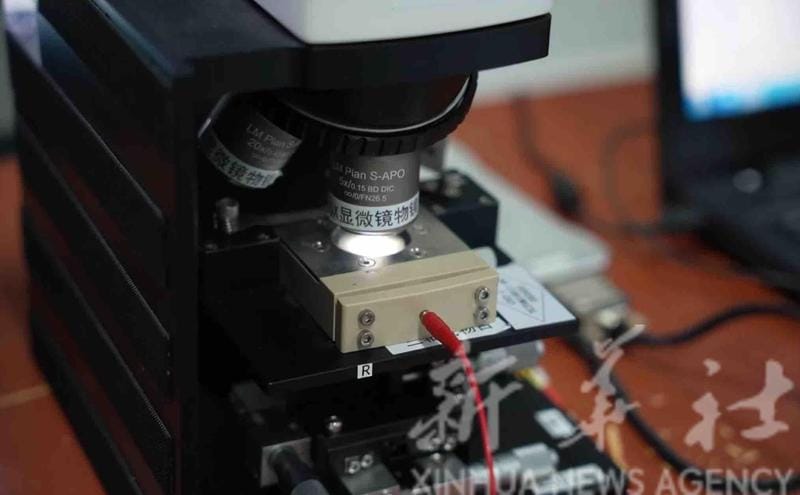
China’s Tiangong space station has been the setting for an innovative experiment on lithium-ion batteries, conducted by the three astronauts of the Shenzhou-21 mission, according to the Dalian Institute of Chemical Physics of the Chinese Academy of Sciences. This study takes advantage of the unique microgravity environment to unravel internal mechanisms that are almost impossible to observe on Earth.
Terrestrial challenges in batteries
Lithium-ion batteries are fundamental in space missions due to their high energy density, which measures how much energy they can store per unit of weight or volume, and their reliability in extreme conditions. Inside them, the electrolyte—a liquid or gel solution that conducts ions between the anode (negative electrode) and the cathode (positive)—plays a key role, as it enables the flow of lithium ions during charging and discharging. On Earth, gravity complicates this process: it generates convective currents that constantly mix with the electric fields produced by the battery, distorting the natural distribution of chemical substances in the electrolyte and affecting both power (ability to deliver energy quickly) and lifespan (number of charge cycles before degradation).
Advantages of microgravity
In Tiangong’s near-weightless vacuum, these gravitational effects disappear, allowing for the first time to isolate the pure influence of electric fields on the electrolyte. This reveals how ions and solvents distribute without interference, providing precise data on the interaction between gravitational and electric forces that were previously inseparable in terrestrial experiments. The result is a clear view of fundamental electrochemical processes, such as ionic migration and the formation of concentration gradients.
Future implications
The findings promise to overcome current limitations in orbital batteries, optimizing their performance in hostile space environments. Additionally, they will guide the design of a new generation of safer batteries—with lower risk of overheating or leaks—and higher energy density, essential for prolonged explorations such as missions to Mars or lunar bases. This advance not only benefits space but could also influence terrestrial applications like electric vehicles and renewable energy storage.