

Zero waste advocacy group reiterates “kalakip ng debosyon ang malinis na Traslacion”
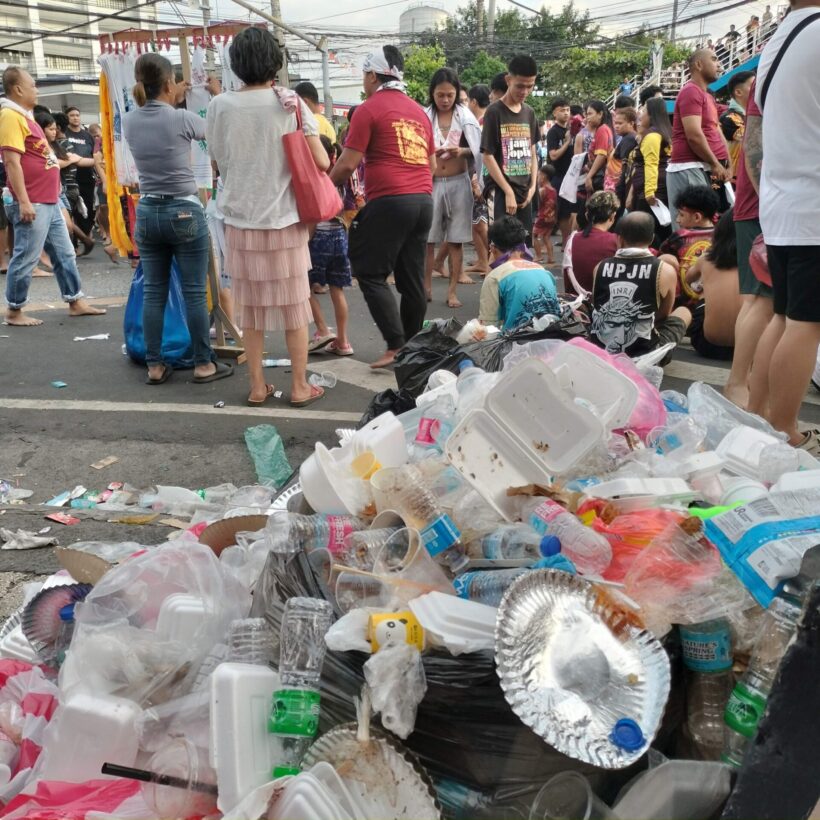
10 January 2026, Quezon City. Traditional littering has again defiled public spaces in the City of Manila, particularly in Luneta and Quiapo, as huge crowds gathered yesterday to venerate the Black Nazarene during this year’s Traslacion.
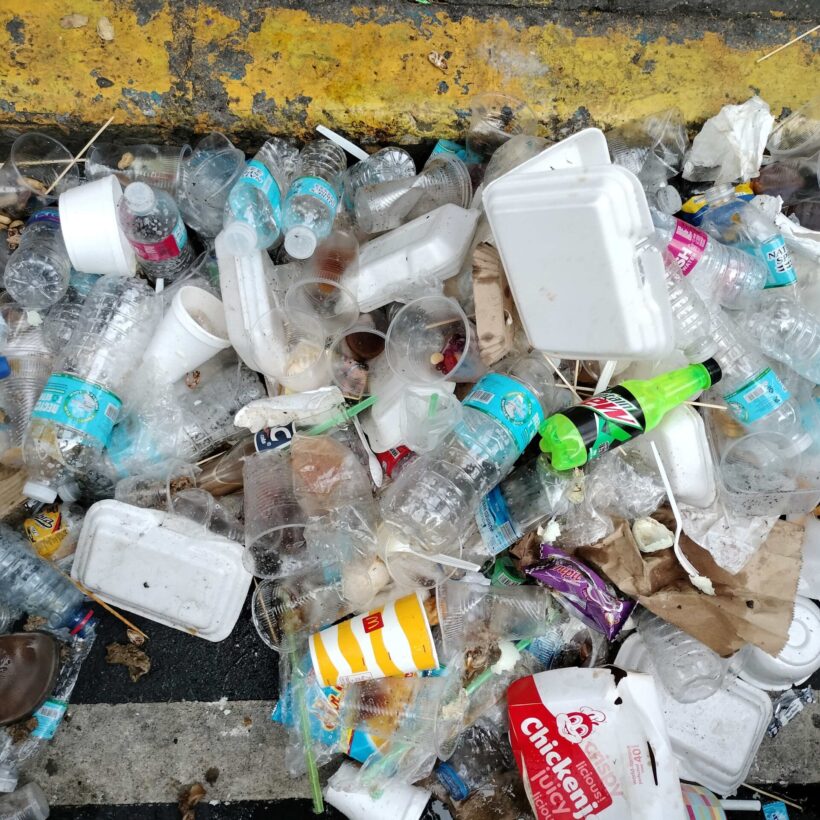
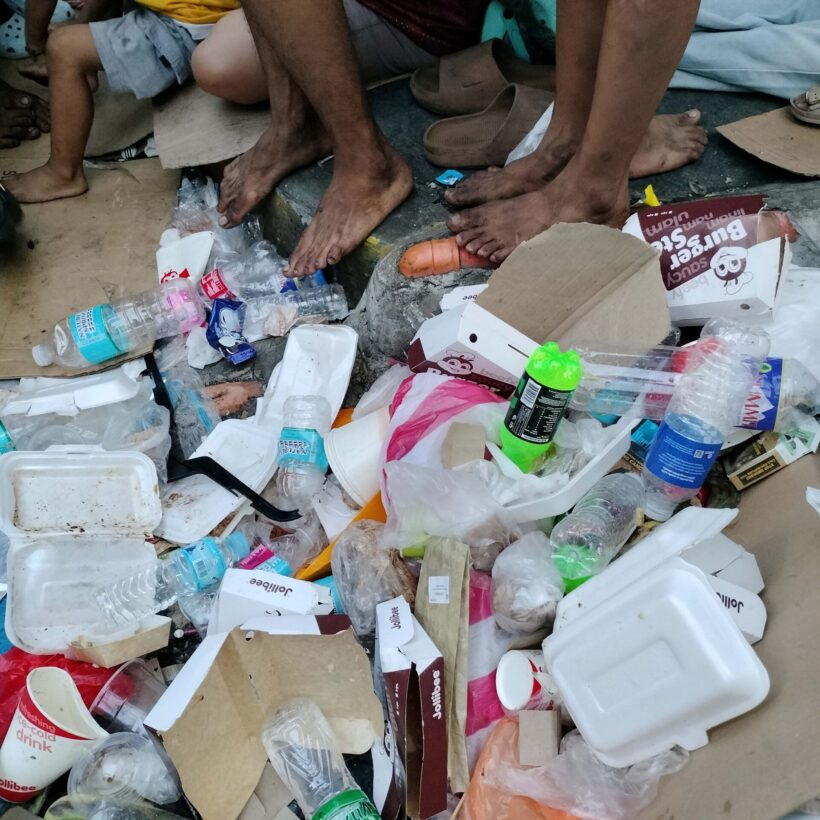
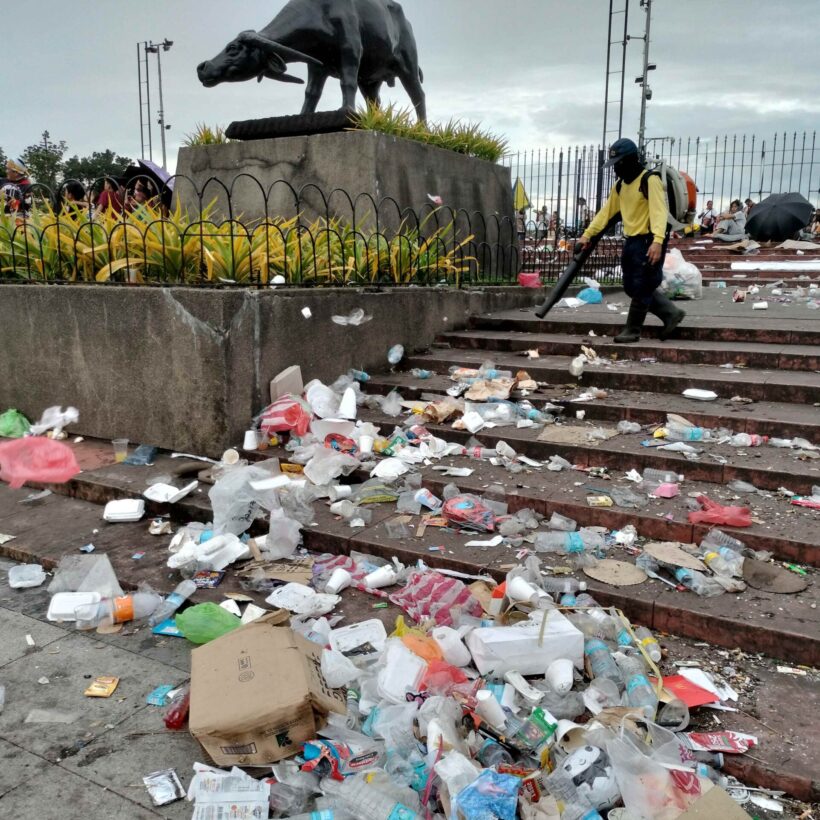
Widespread littering marred the mammoth procession re-enacting the transfer of the revered image of Nuestro Padre Jesus Nazareno from Luneta to Quiapo, generating familiar sights of garbage in every nook and corner, just like in previous celebrations, the EcoWaste Coalition observed.
“Our repeated pleas for a waste-free conduct of Traslacion have gone unheeded,” said Ochie Tolentino, Zero Waste Campaigner, EcoWaste Coalition. “Such a blatant disregard for our environment is unacceptable, especially given our current reality of climate emergency, pervasive pollution, and biodiversity loss, or what is termed as the triple planetary crisis.”
“However, we also witnessed some commendable acts that have helped in preventing and reducing the fiesta trash and pollution,” she said.
“We remain optimistic that the situation will change in future Traslacions as the devotees learn to put this year’s theme ‘He must increase, and I must decrease’ (John 3:30) into practice,” she declared.
From an environmental point of view, “He must increase,” the EcoWaste Coalition said, can mean humans decrease their sense of entitlement and dominion over Mother Earth and increase collective respect for God’s creation.
On the other hand, “I must decrease” can be interpreted as decreasing the throw-away culture and lack of concern for the environment by making conscious choices to lessen one’s demand on nature, and living a purpose-driven existence that upholds the human right to a clean, healthy, and sustainable environment for the benefit and sustenance of all generations, the group said.
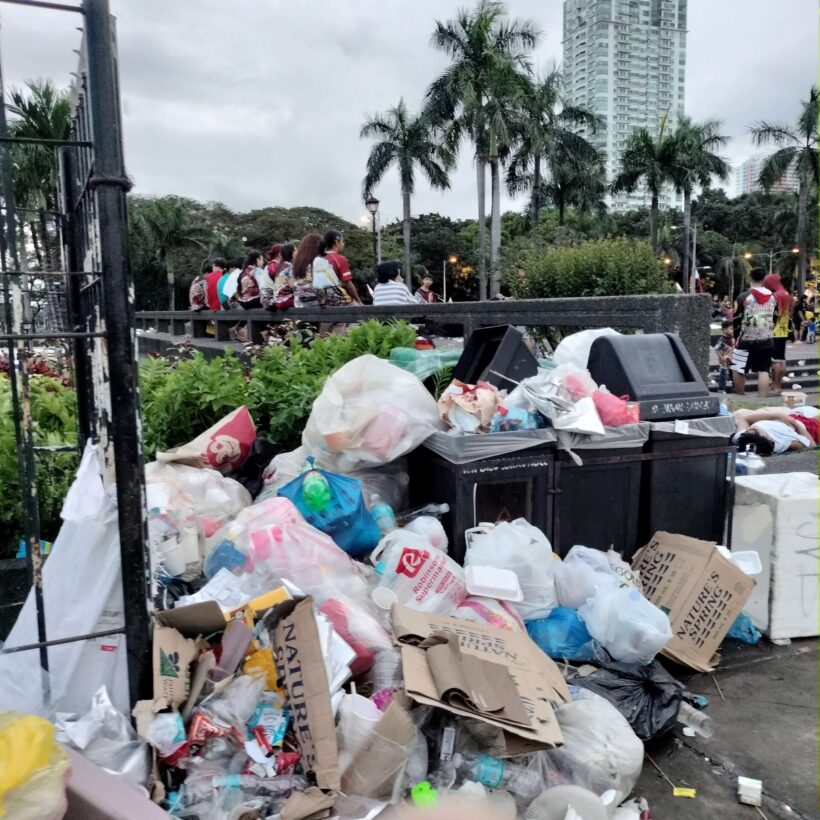
At the Quirino Grandstand and the open area where the faithful gathered for the “Pahalik,” “Misa Mayor” and other liturgical activities, the EcoWaste Coalition’s Basura Patrollers found assorted garbage scattered for cleaning personnel from the National Parks Development Committee (NPDC), Manila Department of Public Services (DPS), and the Metro Manila Development Authority (MMDA) to deal with.
Carelessly left for the assigned cleaners to pick up were boxes, cardboards, foils, plastic tarpaulins, and newspapers used for seating or sleeping; food and beverage packaging such as 3-in-1 coffee sachets, cup noodles, paper and plastic cups and tubs; food wastes, cigarette butts and vapes, lost slippers, and plastic bags containing mixed rubbish.
A specific problem for the cleaners, as well as for the waste pickers, was the use by some men of empty PET bottles for urination, many of which were found abandoned next to overflowing waste bins and in garbage piles.
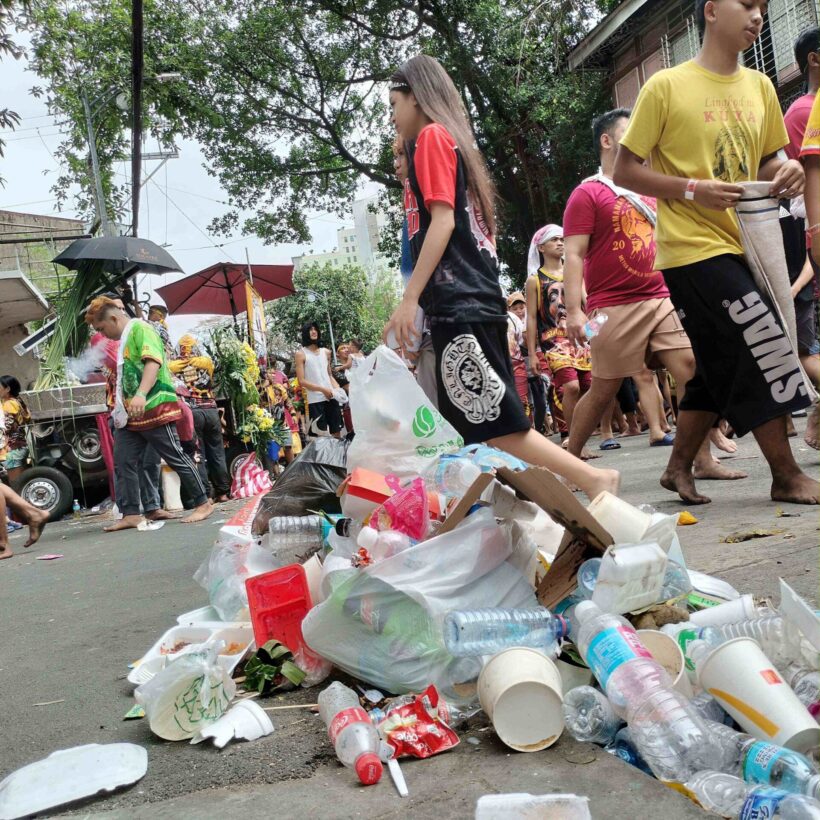
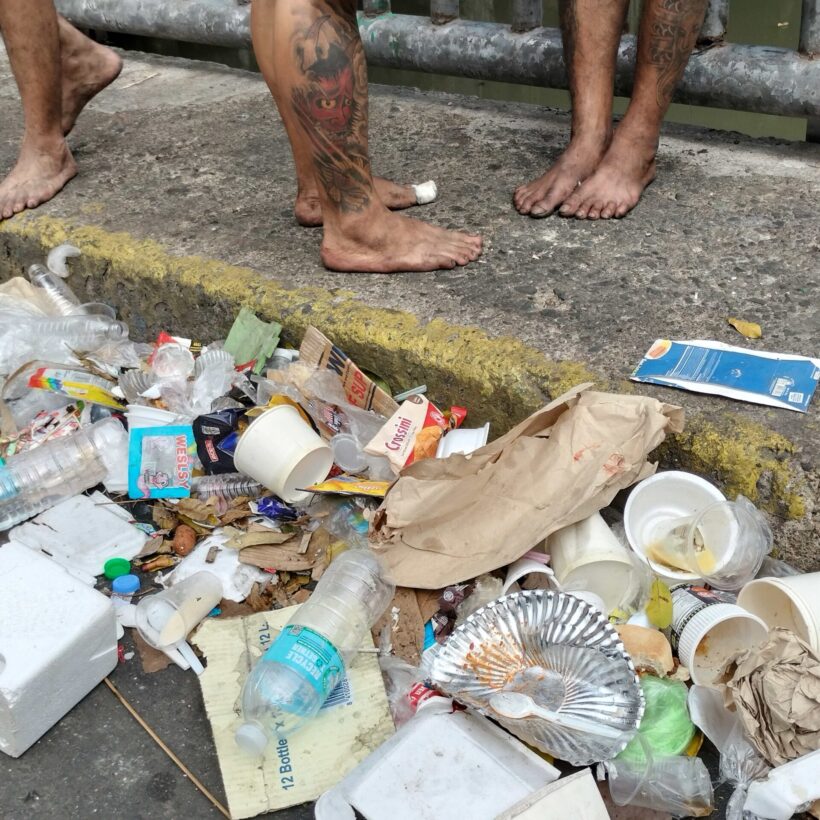
At Quiapo, the Basura Patrollers also found the processional route and adjacent streets strewn with litter, particularly single-use plastic water bottles, paper, and plastic food packaging waste, bamboo skewers, and food leftovers, including those given in “pa-karidad,” an act of sharing free meals and drinks, especially to the “mamamasan” and other devotees.
In many instances, the Basura Patrollers saw garbage piling up in street corners and gutters where the “mamamasan” rest and wait for their “pagsalang” to touch or pull the ropes of the “andas” (carriage).
Considered littering hotspots were the open field in front of the Quirino Grandstand; Roxas Boulevard from T. M. Kalaw St. to Katigbak Drive; T. M. Kalaw St.; Carlos Palanca St. from Plaza Lacson to Quinta Market; both sides of Quezon Boulevard from Quezon Bridge to Recto Avenue; Carriedo St.; R. Hidalgo St. from Lacson Underpass to Plaza del Carmen; Concepcion Aguila, Arlegui, Z.P. de Guzman, Bilibid Viejo, Casal and adjacent streets.
On the positive side, the EcoWaste Coalition gave a thumbs-up to several acts that prevented and reduced pollution during the Traslacion 2026, such as the following:
— repainting of the arches and gutters in Plaza Miranda by the Manila Department of Engineering using certified lead-safe paints;
— non-use of wasteful plastic banderitas at the Minor Basilica and National Shrine of Jesus Nazareno, and the minimal use of such plastic buntings by local communities;
— very few “happy fiesta” plastic tarpaulins by national and local politicians;
— use of eco-friendly coconut cloth banners by the LGU in place of plastic tarpaulins laden with toxic cadmium;
— provision of water dispensers in some barangays;
— collection of discarded PET bottles by waste pickers to be sold to junk shops;
— LGU imposition of a ban on the sale and use of firecrackers;
— sale of cheap Mindanao-style packed rice dishes wrapped in banana leaf, which reduces the use of non-compostable and non-recyclable polystyrene food containers and disposable cutlery, and the
— immediate street sweeping and flushing of the processional route by government waste and sanitation workers to remove litter and other pollutants.
The EcoWaste Coalition thanked all formal and informal waste workers who spent long hours picking up the mixed litter left by the devotees and vendors, stressing that everyone should follow the “no trace” and “clean as you go” principles, and take their “basura” with them for proper segregation, reuse, recycling, or disposal.
In closing, the EcoWaste Coalition emphasized the importance of its clarion call for waste prevention and reduction, reiterating “kalakip ng debosyon ang malinis na Traslacion.”
The only time there was zero littering was in 2021, 2022, and 2023 when the Traslacion had to be canceled due to health and safety concerns brought about by the COVID-19 pandemic, the group noted.



