

(Moscow Bureau) – Under a signed bilateral agreement, China has completed and will hand over, in February 2026, the new headquarters (building) located in Abuja, Nigeria, to the Economic Community of West African States (ECOWAS).
It is a significant part of Beijing’s strategy to project China’s policy influence through gifting prestigious presidential palaces and parliamentary buildings considered ‘unique’ in its historical relations with Africa.
Reports show that since 2000, Beijing has bankrolled the construction or renovation of nearly 200 government complexes.
Several of such projects were funded through various streams, including loans and donations. Classical examples include the African Union (AU) building estimated at $200 million in 2012, and the Africa Centres for Disease Control and Prevention (Africa CDC) headquarters in Addis Ababa, Ethiopia.
Zimbabwe’s parliamentary building and Ghana’s Ministry of Foreign Affairs and Regional Integration’s building are also classic examples.
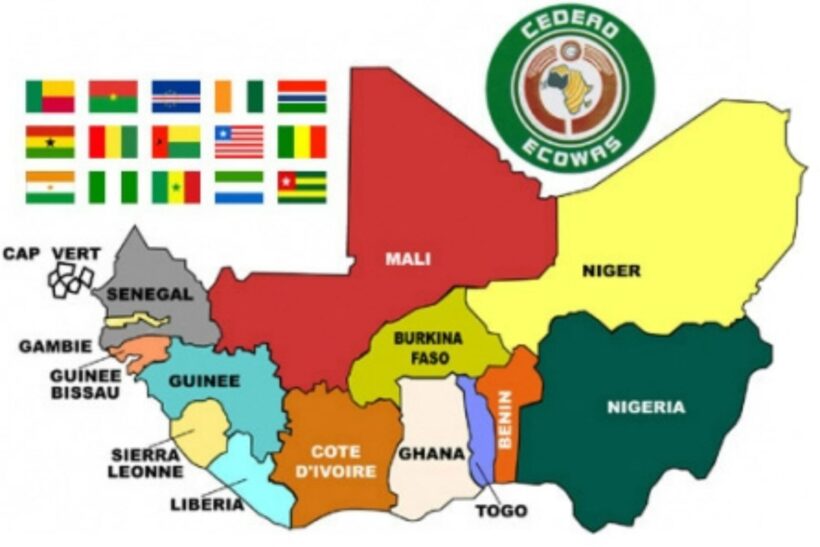
In December 2022, China signed an agreement with the regional economic bloc, Economic Community of West African States (ECOWAS), to build its office headquarters. The project costs approximately $32 million.
The new centralized building will enhance productivity among staff and reduce operational costs as the ECOWAS Commission currently operates from three locations in Abuja.
China will hand over the new ECOWAS building, its new secretariat with modern facilities, as a complete gift, which is arguably described as an additional weighty achievement for the continent.
In practical terms, China has displayed exceptionalism in its collaborative relations with Africa. In sharing Africa’s future, it consistently addresses its sustainable development issues, appreciably winning friends and supporting the continent’s growing population.
On December 4, Chinese Ambassador to the Federal Republic of Nigeria, Yu Dunhai, visited the site to review progress and interacted with the President of the ECOWAS Commission, Dr. Omar Touray. In a statement, Yu hailed the building as a “landmark project of bilateral cooperation” and a strong example of South-South cooperation.
In an interview with South China Morning Post, David Shinn, a China-Africa expert and professor at George Washington University’s Elliott School of International Affairs, said China’s gifting of the ECOWAS headquarters in Abuja or the African Union headquarters in Addis Ababa was a clear case of “buying influence with African governments” and that portrays Beijing does excellently more than any other external donor government.
Shinn emphasized these projects were inherently different from those based on loans or even grants that focused on capacity building in health and education or improving food security.
In an official statement, African leaders expressed their high appreciation for the ECOWAS headquarters in Abuja and underlined China’s commitment to supporting the project’s realization. The statement noted its strategic value, and showed a powerful form of influence in that region of Africa.
Undoubtedly, the project will enhance the operational capabilities of the regional organization and strengthen the entire China-Africa partnership.
In accordance with the agreement concluded between the ECOWAS and the Government of China, the building was undertaken by the Shanghai Construction Group. The new complex building is one of the best-equipped new headquarters—accommodating the ECOWAS Commission, Community Court of Justice and the ECOWAS Parliament in Abuja.
The organization was set up to foster regional unity among its member states, under the ECOWAS Treaty signed on 28th May 1975 in Lagos, Nigeria.



