

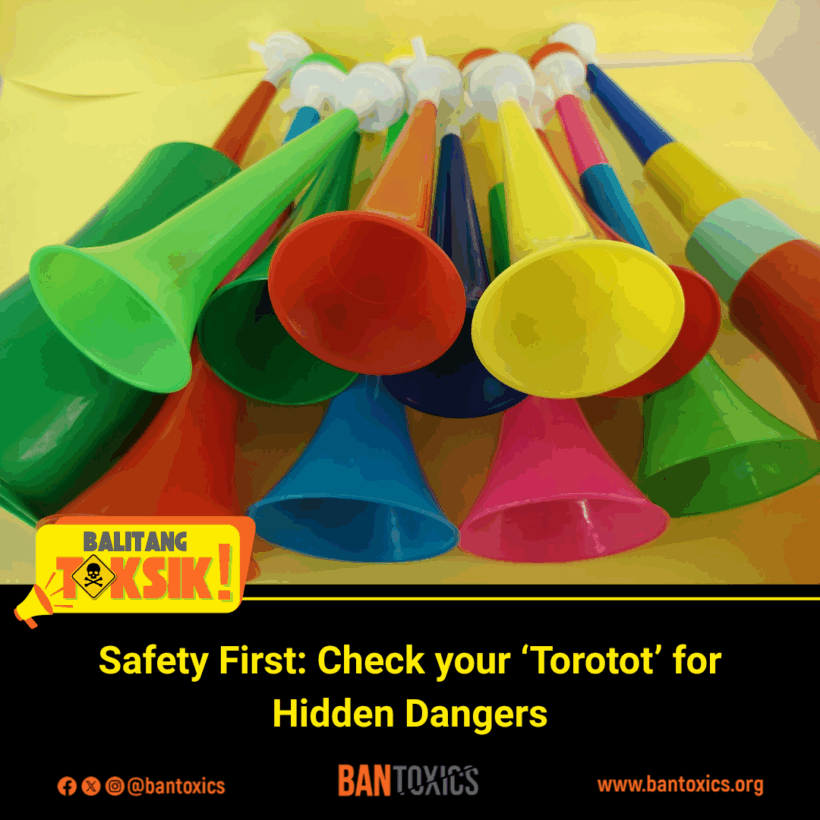
With Christmas and New Year just around the corner, toxics watchdog BAN Toxics reminds the public to be extra cautious when buying plastic hornpipes or “torotot,” as some may contain harmful chemicals such as lead and mercury, known neurotoxins that can severely affect a child’s brain development.
While torotot are often promoted as a safer alternative to firecrackers, the group, which advocates for safe toys for children, emphasized the need for the public to be aware that plastic hornpipes may contain harmful chemicals and urged parents and caregivers to closely supervise children while using and playing with them.
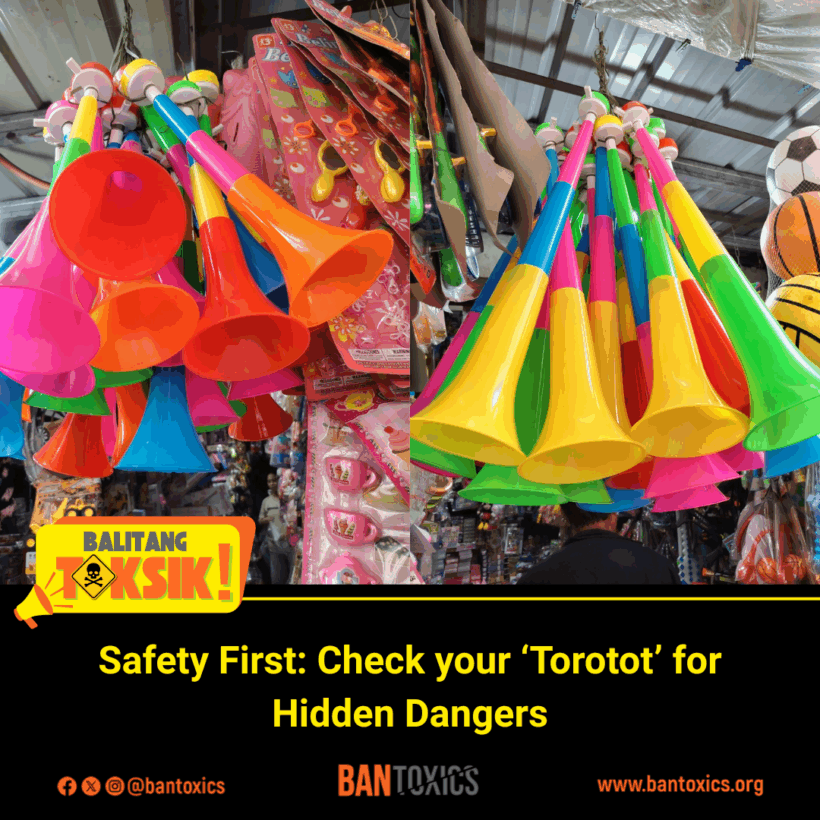
In its latest market monitoring, BAN Toxics purchased 12 samples of colorful plastic torotot from ambulant vendors and toy stores in Baclaran, Pasay City, and Divisoria in Manila. The torotot were priced at P15 for small ones and up to P40 for larger ones.
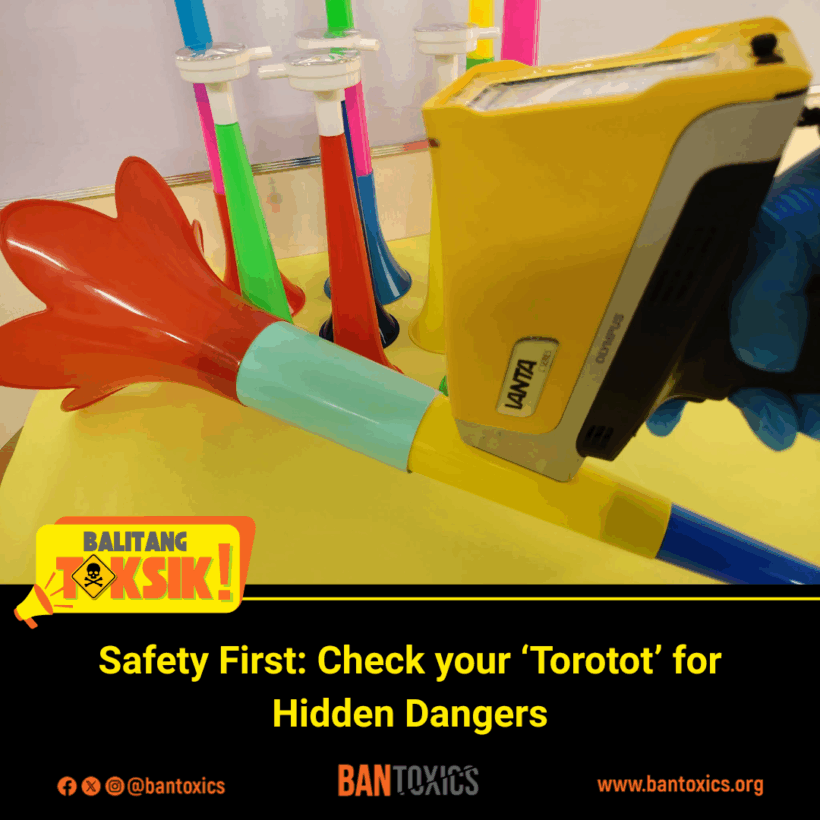
Using a Vanta XRF Chemical Analyzer, the samples tested positive for lead at levels of up to 980 parts per million (ppm) and mercury at up to 190 ppm, above the regulatory limits for safe toys. Other hazardous chemicals detected included barium, bromine, chlorine, and chromium. The group also noted that none of the samples were properly labeled, as required under Republic Act No. 10620, or the Toy and Game Safety Labeling Act of 2013.
Potential hazards associated with torotot include choking hazards from small parts, laceration hazards from sharp plastic edges, chemical hazards from color pigments, and possible hearing damage from blowing the hornpipe directly into the ear.
“Let us be mindful and practice safety first when buying and using torotot or similar plastic noisemakers for our children,” said Thony Dizon, Advocacy and Campaign Officer of BAN Toxics. “Parental supervision and guidance are important to ensure their health and safety.”
BAN Toxics also advised the public to be vigilant when buying children’s products, recommending that they always check the labels, inspect the colors and materials used, and ensure proper labeling as mandated by law.
Republic Act 10620 mandates that all toys and games, whether locally or internationally manufactured, imported, donated, distributed, or sold in the Philippines, comply with the safety labeling and manufacturer’s marking requirements set forth in the Philippine National Standards (PNS) for toy safety. Similarly, the DENR Chemical Control Order for Lead and Lead Compounds prohibits the use of lead in the production and manufacturing of toys.
The WHO factsheet on lead poisoning states that “lead can affect children’s brain development, resulting in a reduced intelligence quotient (IQ), behavioral changes such as decreased attention span and increased antisocial behavior, and lower educational attainment.”
Last December 12, BAN Toxics launched its annual school-based toxics-free and waste-free “Iwas Paputok” campaign. About 2,000 students, parents, teachers, representatives from the Philippine National Police, Bureau of Fire Protection, and community members joined the call for “Iwas Paputok, Iwas Disgrasya, Iwas Polusyon,” promoting a cleaner, safer, and toxics-free approach to celebrating the holidays.
A noise barrage and lively display of creative, eco-friendly noisemakers—such as homemade tambols, bamboo or wooden clappers, shakers made from recycled bottles and cans with pebbles inside, tambourines from bottle caps, and used cooking pot lids—marked the countdown to the campaign launch. The event reinforced the message that holiday celebrations can be joyful without relying on harmful firecrackers.
BAN Toxics emphasized the importance of moving away from traditional firecrackers and fireworks toward a safer, non-polluting way to celebrate the New Year. “Shifting to a toxic-free and waste-free yuletide celebration not only protects the environment but also safeguards public health, especially that of children.”
Media contact:
Thony Dizon, Advocacy and Campaign Officer
BAN Toxics 0917-8322616



