
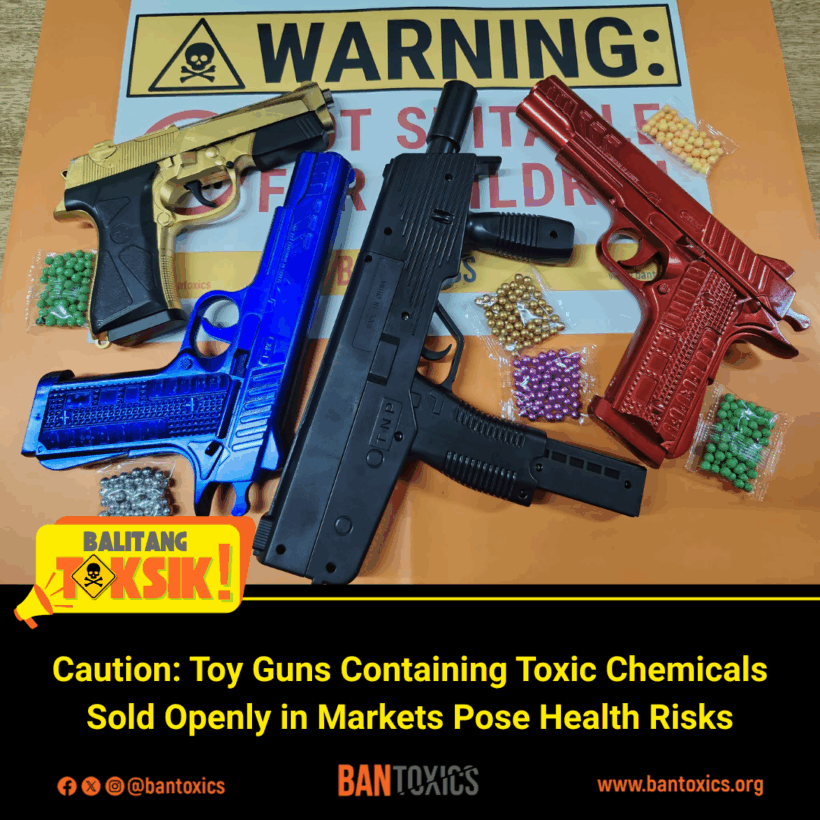
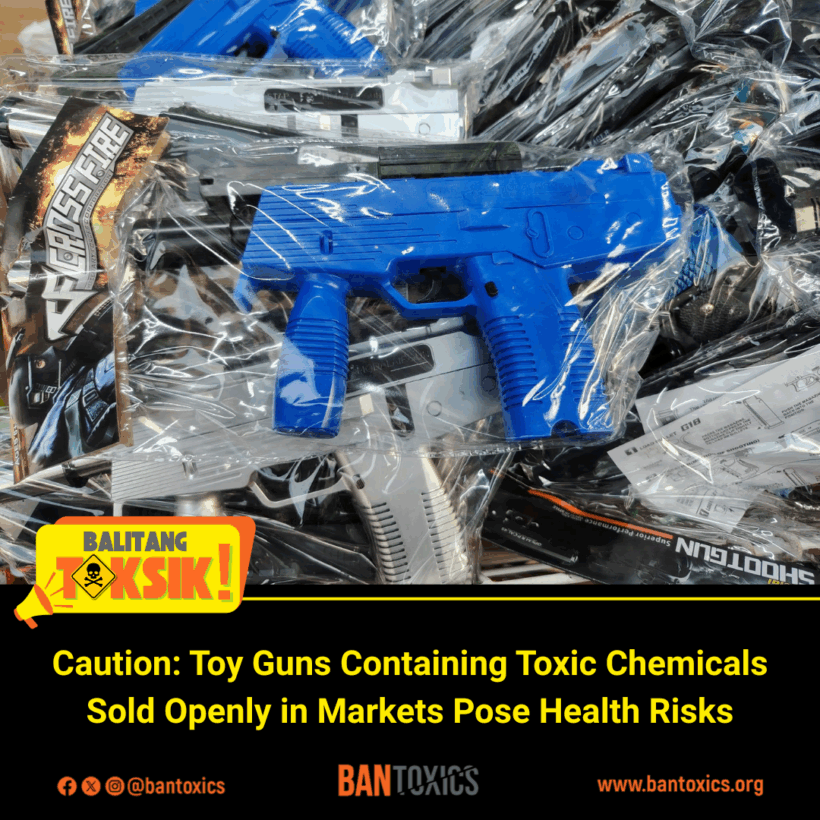
Toxics watchdog group BAN Toxics raises the alarm over the sale of dangerous firearm replicas, known as “pellet gun” toys, sold in ambulant stores in Baclaran, Pasay City, and Divisoria, City of Manila, and urges the FDA and LGUs to ban their sale and use to prevent injuries, hazards and chemical exposure among children.
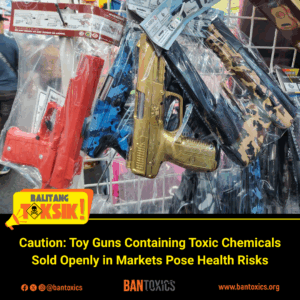
In a recent market surveillance, the group monitored and purchased 5 samples of colorful firearm-replica pellet guns, such as .45-caliber pistols and Uzi machine guns, including a pack of plastic pellets as bullets. Prices ranged from ₱100 to ₱350 per toy.
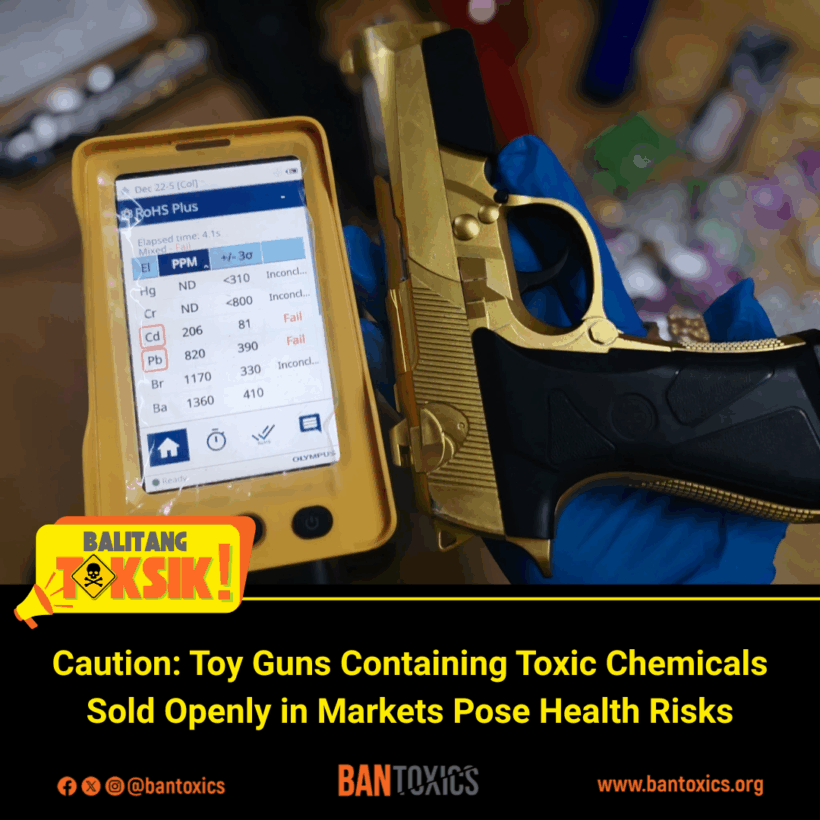
Using a Vanta C Series handheld XRF analyzer, the group found that all samples contained dangerous levels of toxic lead, reaching up to 820 parts per million (ppm), and cadmium, up to 206 ppm. Other chemicals detected included barium and bromine. All samples contained one or more toxic metals above regulatory limits, increasing the potential harm from multiple exposures to these hazardous substances.
The group further noted that most of the toy guns are being sold without proper labeling, including the absence of manufacturer information, limited warning labels (only choking hazards), missing instructional materials, and lack of market authorization from the FDA, constituting a direct violation of Republic Act No. 10620, or the Toy and Game Safety Labeling Act of 2013.
RA 10620 mandates that all toys and games, whether locally or internationally manufactured, imported, donated, distributed, or sold in the Philippines, comply with the safety labeling and manufacturer’s marking requirements set forth in the Philippine National Standards (PNS) for toy safety. Likewise, the DENR Chemical Control Order for Lead and Lead Compounds prohibits the use of lead in the production and manufacturing of toys.
According to the World Health Organization, lead exposure is particularly hazardous to children’s developing brains and can result in reduced intelligence quotient (IQ), shortened attention span, impaired learning ability, and an increased risk of behavioral problems. Even small amounts of lead exposure can cause developmental delays, learning difficulties, and behavioral problems in children.
“Toy-like weapons, such as pellet guns and other similar toys, should be banned from manufacturing, distribution, sale, and use to prevent chemical exposure, as they pose a clear and imminent danger to children’s health,” said Thony Dizon, Advocacy and Campaign Officer of BAN Toxics. “Parental supervision is advised to ensure the safety of children from physical harm caused by dangerous toys.”
BAN Toxics urges the Food and Drug Administration (FDA) to issue a public health advisory against the sale and use of unregulated and unnotified pellet guns and similar dangerous toys, which directly violate Republic Act No. 9711 or the FDA Act of 2009 due to their chemical and physical hazards to children.
The group also urges Local Government Units to pass ordinances banning the sale and use of dangerous toys to safeguard children’s health and safety, confiscate all firearm replicas with plastic pellet ammunition to prevent physical injury, and conduct community awareness campaigns to promote safe toys for kids within their jurisdictions.
LGUs that have already banned the use and sale of firearm replica toys include Benguet province, Angono and Taytay in Rizal province, San Pablo City in Laguna, Naga City in Camarines Sur, Baybay in Leyte, Cebu City, Zamboanga Sibugay, and Brgy. Pinagsama in Taguig, Makati, Malabon, Marikina, and Valenzuela in Metro Manila.
“We urge the public to exercise due diligence when selecting gift toys and to refrain from buying dangerous and hazardous toys. The safety of our children should be our concern and not taken for granted,” the group added.
Media contact: Thony Dizon, Advocacy and Campaign Officer
BAN Toxics, 09178322616