

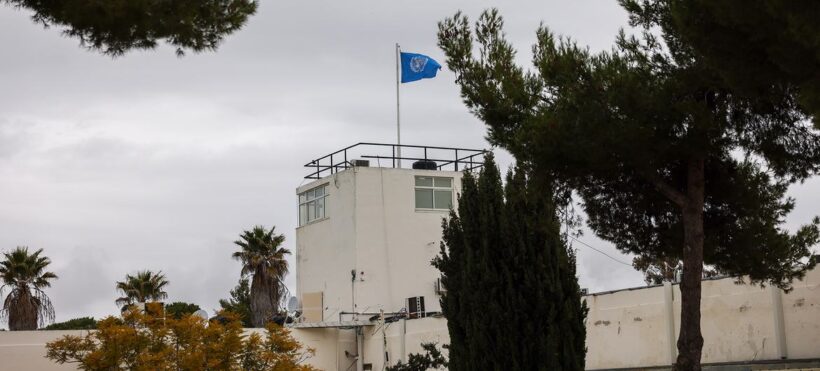
In the shadowed streets of Sheikh Jarrah, East Jerusalem, Israeli police stormed the UNRWA headquarters on December 8, 2025, lowered the blue United Nations flag, and hoisted the Israeli one—seizing property and cutting off communications. This was no mere raid: it was a symbolic affront to the collective inviolability of 193 nations, a searing reminder that the UN, emblem of postwar pax, bleeds under the weight of unchecked hegemonies. As Philippe Lazzarini decries a “flagrant display of contempt” and António Guterres demands immediate restoration, the world responds with muted outrage: Jordan calls it a “blatant violation,” Palestine invokes the UN Charter, and faint echoes from the Jerusalem Governorate ripple through the digital expanse. But where are the world’s voices—the outcry from China, the BRICS bloc, or the unified clamor that ought to resound?
Global Reactions: A Murmur in the Void
A fractured planet replies with fragmented whispers. Palestinian authorities denounce the escalation against the UN, reporting blocked guards and seized phones—a prelude to systematic dismantlement. Jordan and Arab observers tie the raid to Israel’s recent ban on UNRWA over alleged ties to Hamas, a pretext Israel recites like a mantra. On platforms like X, activists and independent media amplify the alarm: a “raid on UN sovereignty.” China, true to its script, had condemned previous incursions on UNRWA schools (May 2025) and Gazan blockades, urging a ceasefire—but today remains silent on this specific dagger thrust. The BRICS, that multipolar counterweight, has issued no collective statement, though Russia and Beijing routinely chastise Israel at UN sessions. Europe murmurs through outlets such as Público and El Debate, while Europa Press quotes Guterres; Al Jazeera and Common Dreams speak of “international condemnation,” yet no sanctions follow. The United States, perennial wielder of the veto, maintains complicit silence. Fifteen responses—from Lazzarini to the Palestinian Governorate, from Telesur to Reuters—pile up like fallen leaves: verbal indignation, zero action.
Immense gravity: Equivalent to a multilateral assault
An attack on a UN facility is not akin to striking a single embassy governed by the 1961 Vienna Convention as a sovereign enclave. It is the desecration of a collective sanctum, safeguarded under the 1946 Convention on the Privileges and Immunities of the United Nations—an absolute inviolability, a territory representing all member states, the alter ego of 193 sovereignties. Symbolically, it constitutes an assault on the entire world, warranting collective defense under Article 51 of the UN Charter. In practice, however, nothing happens: the Security Council is paralyzed by Washington’s veto, while the General Assembly’s resolutions lack binding force. Recall the Cold War era—1956, Suez: the UN deployed emergency forces, and both the US and USSR constrained Israel and its allies through economic pressure. Or the early 21st century—2003, Iraq: even amid failure, the UN could still impose inspections and enforce resolutions with teeth. Today’s inaction underscores the thesis: the UN is being systematically degraded by hegemonies—Israel, shielded by Washington’s fifty pro-Israel vetoes—reducing it to irrelevance, an empty shell invoked merely to justify alternative multipolar forums such as BRICS.
Hegemonic Deformation: Toward Dissolution
This is the crux of the catastrophe: an institution born from the ashes of two world wars, intended as humanity’s supreme arbiter, is being reduced to a megaphone for the powerful. Israel does not act alone; it repeats the pattern—raids in Sheikh Jarrah (August 2025), in schools (May), bombings of UN facilities in Gaza (2024)—with impunity that corrodes the Charter. Hegemonies distort its function: U.S. vetoes shield Tel Aviv, while China and Russia watch, nurturing parallel arenas. Were the UN still endowed with the strength of its earlier decades—with capacity for sanctions, armed peacekeeping, economic boycotts—this assault would have triggered Israel’s isolation: arms embargoes, funding freezes, a retooled Resolution 242 with real force. In their absence, the argument hardens: the UN is not dying of obsolescence but of deliberate sabotage—a prelude to its eclipse amid rival blocs that dismiss it as a Western puppet. The rightful consequences are clear: forced restitution, reparations, a case before The Hague, temporary suspension of Israel from UN forums. History will judge: will multilateral resolve rise again, or will it perish, devoured by hegemonic anarchy?



