

The international situation at the end of 2025 is marked by a fragile truce in Gaza, reached after months of indirect negotiations mediated primarily by Egypt, with the support of the United States, Qatar and Türkiye. This ceasefire does not arise as the result of a structured peace process or a comprehensive political agreement, but rather as a containment mechanism in the face of the risk of a broader regional escalation and the absolute humanitarian collapse of the Strip. The truce responds less to a genuine will to resolve the conflict than to the urgent need to manage a crisis that had become unmanageable even for Israel’s traditional allies. In this context, Egypt’s role has been highlighted by international analysts as decisive, not because of ideological affinity with Palestine, but due to its real capacity for political, diplomatic and security pressure, combined with a regional weight that Israel cannot ignore.
This situation reveals a historical constant: truce and peace processes in the Palestinian-Israeli conflict only advance when actors capable of exercising an effective counterweight to the structural asymmetry between Israel and Palestine intervene. The current Palestinian precariousness —territorial, military, institutional and economic— prevents any negotiation under conditions of equality. Without credible external pressure, agreements become mere conflict-management patches, designed to temporarily reduce violence without altering the power relations that produce it.
The historical trajectory of negotiations confirms this with clarity. The Oslo Accords of 1993, presented at the time as the beginning of an irreversible process toward a two-state solution, were born flawed by a profound asymmetry. Palestine was recognized as an interlocutor, but not as a sovereign state. Fundamental issues —borders, Jerusalem, refugees, settlements— were postponed indefinitely, while Israel consolidated on the ground an occupation that became increasingly fragmented and permanent. Oslo did not fail due to a lack of dialogue, but because it was built without coercive mechanisms or international guarantees capable of forcing Israel to comply with substantive commitments.
The Camp David Summit of 2000 deepened this pattern. Presented as a historic opportunity, it ultimately showed that, without real pressure on Israel, the concessions demanded from the Palestinian side were disproportionate and politically unviable. The collapse of that negotiation was not an accident, but the logical outcome of a process in which one party negotiated from a position of military occupation and the other from dependence and fragmentation. The same occurred with the Road Map of 2003, the Annapolis Conference of 2007 and the negotiations promoted by the United States between 2013 and 2014. In all cases, the absence of an effective counterweight allowed Israel to delay, reinterpret or fail to comply with agreements without real consequences.
Even the so-called Abraham Accords of 2020, celebrated as a regional diplomatic breakthrough, confirmed this logic of structural exclusion. By normalizing relations between Israel and several Arab states without resolving the Palestinian question, a regional order was consolidated in which Palestine was further weakened, deprived of leverage and turned into a secondary variable of larger geopolitical interests. Peace, once again, was redefined as stability for Israel, not as justice for Palestine.
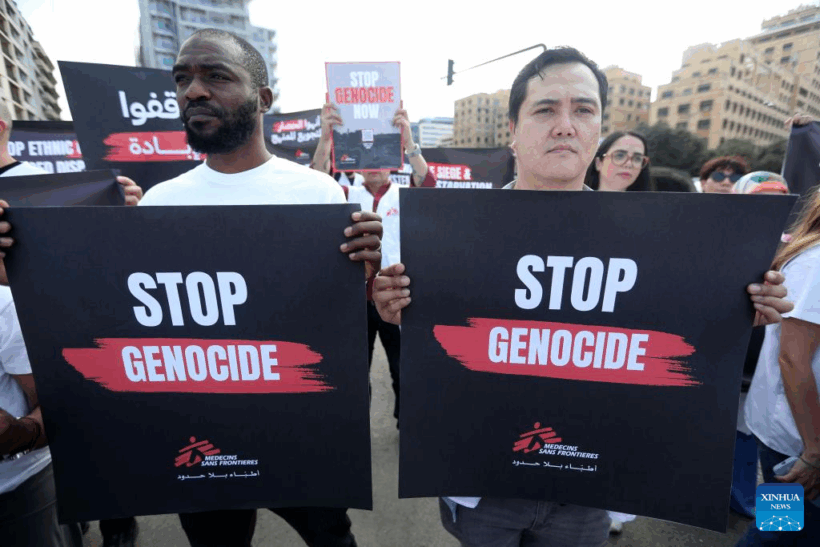
The Israeli military invasion initiated in October 2023 following Hamas attacks on its territory, and extended throughout 2024 and 2025, pushed this framework to its limit. The scale of devastation in Gaza, the number of civilian victims and the accelerated erosion of international humanitarian law placed Israel under unprecedented pressure, both diplomatically and judicially. The fact that the Israeli prime minister is now subject to judicial proceedings and the resulting prosecution for war crimes and crimes against humanity does not, however, alter the core of the problem: international legitimacy is contested on multiple levels, and legality does not automatically translate into the ability to impose political conditions on the ground.
It is at this point that the central thesis of this essay is sustained. A truce or peace process can only be viable —even if imperfectly— if it is led or backed by leaders and states whose interests, military capacities and regional alliances constitute real pressure on Israel. This is not a matter of moral affinity or solidarity discourse, but of correlations of force. Egypt, in the current context, has managed to play a relevant role precisely because it combines strategic territorial control, recognized military capacity, functional diplomatic relations with Israel and regional legitimacy. Its mediation does not arise from neutrality, but from balance.
This logic is neither new nor exceptional. In the history of armed conflicts, durable peace processes have always required some form of coercive counterweight that limits the dominant actor’s ability to unilaterally impose its conditions. In the Palestinian-Israeli case, the absence of such a counterweight has allowed Israel to manage the conflict in its favor, alternating periods of negotiation with phases of territorial expansion and collective punishment.
As long as Palestine is not fully recognized as a sovereign state, with clear borders and effective international guarantees, any agreement will remain provisional. And as long as there is no constant military counterweight —whether through credible international forces, regional alliances or binding security commitments— peace cannot be durable. Experience shows that mere international supervision, without enforcement capacity, is insufficient.
This does not imply denying the importance of international law or judicial processes against those responsible for war crimes. It implies recognizing their limits when they are not accompanied by power structures capable of transforming norms into political realities. Legal legitimacy is necessary, but not sufficient. Effective legitimacy, in this conflict, is built at the intersection of law, power and deterrence.
In conclusion, the history of Palestinian-Israeli negotiations shows that peace does not fail due to excess Palestinian radicalism nor due to the absence of diplomatic proposals, but because of the persistent refusal to correct a structural asymmetry. Without real pressure on Israel, peace processes are reduced to mechanisms for managing violence. Only when actors capable of exercising sustained counterweight —political, military and strategic— exist will it be possible to open the path toward a peace that is not merely a pause between wars.



