

By GM Forhadul Mozumdar (Dhaka Bureau)
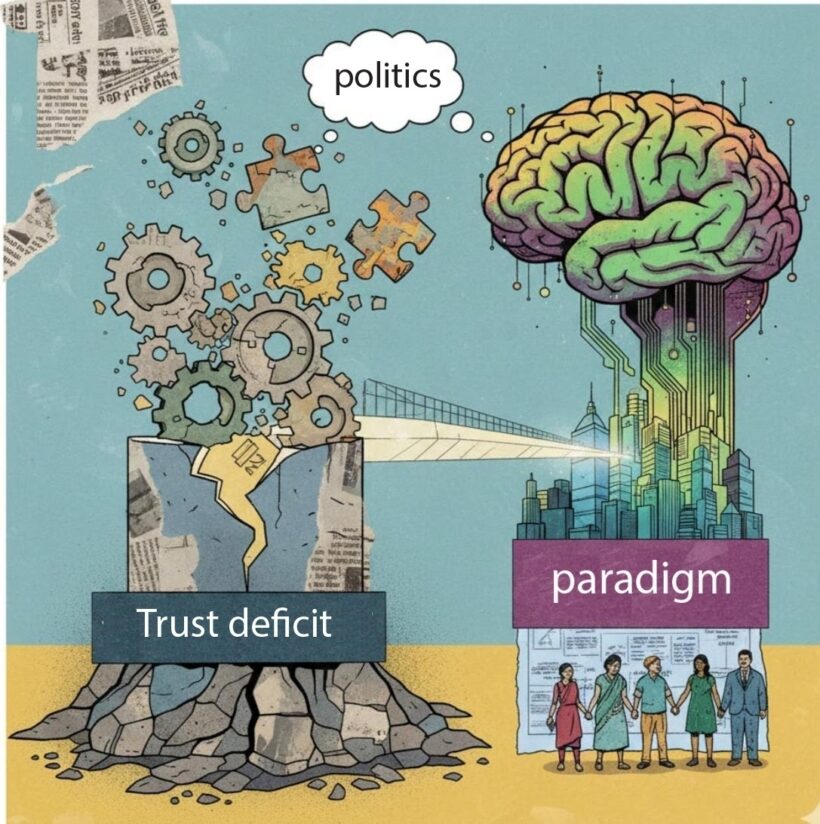
The most prominent crisis emerging in Bangladesh’s politics today is the crisis of trust. The public is experiencing deep frustration across three key areas: the promises of political parties, the accountability of leadership, and the morality of state governance.
In a democratic system, the core strength of politics is public trust. When this strength erodes, all pathways to advancing the state gradually become paralyzed.
The Gap Between Party Politics and Public Sentiment:
A significant reality of current politics in Bangladesh is that political parties are prioritizing strategy and power-centric competition over ethics and principles. Policy-driven discussions regarding the problems of the common people- such as employment, the cost of living, agrarian crises, and the quality of education- are steadily diminishing. As a result, the general public feels that national politics is no longer relevant to their lives but is instead a struggle for power among specific interest groups.
Lack of Dialogue and the Politics of Conflict:
Over the past few decades, political polarization in Bangladesh has reached a point where dissenting voices are often viewed as enemies rather than opponents. The traditions of dialogue, compromise, and consensus have largely vanished. Yet, in any democratic society, a culture of mutual discussion is the primary tool for political development. In the absence of dialogue, division is born, and from division comes conflict.
The New Generation and Political Expectations:
The new generation in Bangladesh is entirely dissatisfied with the old political language and traditional leadership styles. They demand transparency, tech-driven services, clean administration, swift decision-making, and opportunities based on merit. To them, ‘the country’ does not just mean infrastructure development; it means justice, freedom, and the guarantee of security. If politics cannot keep pace with these expectations, public apathy toward politics will continue to grow.
The Way Forward: Necessary Reforms:
To reform the conventional politics of Bangladesh, the first step must be ensuring the practice of internal democracy within parties, where transparent leadership competition and freedom of expression exist. For a return to principle-based politics, there must be clear plans to solve existing problems rather than just slogans.
A culture of dialogue must be established, reinforcing the idea that opposition does not mean enmity. Political parties must take a firm stand against corruption and misrule. When the law is applied based on party identity, the state weakens; therefore, there must be a total political commitment to impartiality. Above all, the new generation must be integrated into the political process to foster innovative ideas. Given the demands of the modern era, political and socio-economic development—and a brighter future for the nation- is impossible without new leadership.
Finally, Politics is not an isolated field; it is a part of our daily lives. Therefore, improving the quality of politics means improving the quality of our future. What is needed now is a collective effort from individuals, parties, and the state to rebuild trust. Trust will be the primary capital for the politics of tomorrow.
About the Author:
 GM Forhadul Mozumder: Contributor, Pressenza- Dhaka Bureau.



