

By Rita Bhowmick (Dhaka Bureau):
Many Birangonas (female war heroes/victims) who were subjected to brutal torture by the Pakistani occupying forces and their collaborators (Razakars) during the Great Liberation War could not return to their families. Due to negative societal reactions, their relatives did not accept them normally. Moreover, many tortured women voluntarily hid themselves due to social stigma. Through various events, some of them were even forced to seek refuge in brothels. Some of these Birangonas, defeated in the battle of life, are still alive. However, they have not received state recognition or come under the freedom fighter allowance scheme. Recently, three such Birangonas were found during an investigation into women tortured during the 1971 war.
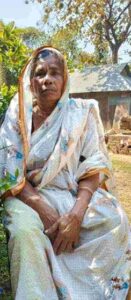 One of them is Aysha of Goalanda, Faridpur. In the first week of April ’71, Pakistani forces attacked Goalanda. She moved with her family to her aunt’s house in Madaripur. In mid-April, Pakistani forces attacked there too. At just eleven years old, she was brutally tortured by the Pakistani invaders in Madaripur. She could never return home. Through various circumstances, she ended up in the local brothel. She gave birth to a daughter there. Later, she moved to the brothel in Tangail. She is old now and cannot move much. Still, for the sake of survival, she helps a sex worker in the Tangail locality by taking her two children to and from school.
Recalling her memories, Aysha said she became separated from her parents in Madaripur while fleeing the Pakistani forces. Exhausted, she hid in a bush with a few other girls. Driven by hunger, they gathered what they had to cook. She and three other girls were returning to the bush with firewood when Pakistani forces caught them.
She recounts- ‘They took me to the Pakistani camp and tortured me so much, I felt like nothing was left in my body. When I asked for water, they would say, ‘Do you want to drink urine?’ With great difficulty, I escaped and took shelter in a house. An old man and his wife nursed me back to some health. The two boys of that house lied to me and took me somewhere else and raped me again. After that, the two rapists took me to another brothel and abandoned me. Later, another person brought me to a brothel. Here too, the invaders had burnt down the houses. The person who cared for me in a temporary tent and nursed me to health, I later learned was a sex worker. I thought both my worlds were gone; I had no one left on earth. So, I stayed there.’
Regarding her current situation, Aysha says, ‘The sex workers can’t take their children to school. I get two meals a day for taking these children to and from school. In addition, I receive oil, soap monthly, clothes during Ramadan, and 500 Taka at the end of the month. They increase the money a little during Ramadan. I live with the two children in Santosh, Tangail.’
Regarding the Birangona freedom fighter allowance, she says, ‘I don’t know if the government gives the Birangona allowance. No one told me. Also, no one has provided any help or assistance. But when it’s time for voting, they tell us to vote even though we are in a brothel. That’s not a fault. After the voting is over, no one asks about us. Local government representatives give ration cards to so many people, but not to us. They don’t help us even when we go for judgment or arbitration. They can’t stand the sight of us.’
A. Rahman, the wartime commander of the Muktibahini in Kalkini, Madaripur, in ’71, when asked about Aysha’s torture by Pakistani forces, said, ‘The Pakistani forces attacked Kalkini, Madaripur, in mid-April. The number of Hindu people in this area was high. Initially, there was an attempt to resist the Pakistani forces with local weapons. But the invaders entered the area and killed villagers, both Hindu and Muslim, whoever they found. They captured women and subjected them to brutal torture. That day, among many women, a girl named Aysha was also subjected to heinous torture. She was taken to the camp and raped. She had come from Goalanda to Kalkini with her family for safe refuge.’
The freedom fighters came to know about the incident of Birangona Aysha at that time. Another brave freedom fighter, Mohammad Abdul Based, directly participated in the war against the Pakistani forces in Kalkini, Madaripur. This brave freedom fighter identified Aysha in Santosh, Tangail. Regarding that incident in 1971, Abdul Based says, ‘Aysha’s story is true. I was fighting against the Pakistani forces in Madaripur in ’71. The Pakistani forces suddenly attacked Kalkini, Madaripur. They were not satisfied with just destroying villages. They captured several girls and raped them in their camp. Aysha was among them. The villagers were also witnesses to the brutality of the Pakistani forces. The news of this incident spread throughout the village. I met Aysha in Tangail about 40 years later. Although aged, I could recognize her by her face.’
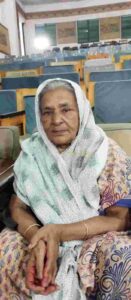 Another Birangona of ’71 is Anwara Begum. She cannot walk and is mostly sick. She also had a happy family. Her husband was a court clerk. She lived with her husband and 8-year-old son in Patulipara, Tangail. After being raped by Pakistani soldiers, she ended up in the Tangail brothel.
Anwara told the Pressenza representative, ‘I heard that Pakistani soldiers had camped in the old jail, near the District Administration office beside Bindubasini School, and at the Court in front of the Municipality. Everyone said the invaders wouldn’t come to the village. Meanwhile, the Pakistani Army entered the village, caught Kristodasi, and caught me as I tried to flee through a lane. They took me to the Pakistani Army camp. They attacked my hand with a bayonet and beat me. They subjected me to brutal torture. After three days, my friend Dolly and Bihari Halder spoke in Urdu and had me released from the military camp. There were no doctors, no pharmacies open. An old Hindu doctor was found. He came three times to treat me. He cared for me with warm water and medicine. My stomach was swollen. I was bedridden for two and a half to three months. I couldn’t get up.’
After treatment, Anwara was taken to Nagarpur. The policeman who took her was a collaborator, a Razakar. Anwara was tortured there too. A man sold her to a brothel for 10 Taka. At one point, Anwara left the brothel and started selling bread and rice. She is spending her days in great hardship with her son, daughter-in-law, and two grandchildren.
Brave freedom fighter Mir Mohammad Abdul Based of Patulipara, Tangail, participated in the 11th Sector during the Liberation War. Regarding Anwara Begum, he says, ‘Returning home from the battlefield, I learned that a neighboring housewife, Anwara Begum, had been caught and raped by Pakistani soldiers in their camp. She had fallen ill due to the inhuman torture by the Pakistani invaders. She was not accepted at home because she was raped. Finally, she found refuge in the brothel. Because she became a sex worker, the freedom fighters did not take any initiative even though she was a Birangona.’
Anwara said, ‘I have submitted my documents to the Ministry of Liberation War Affairs to receive the Birangona freedom fighter allowance.’ Hasi, General Secretary of the Nari Mukti Sangathan (Women’s Liberation Organisation), says, ‘We hear about the Birangonas of the ’71 Liberation War from Naripokkho (a women’s rights organization). We asked people if the Pakistani forces had taken anyone away or if anyone had been subjected to brutal torture. Then we found the two of them. Ayesha’s application has not been submitted yet, and although Anwara’s application was submitted, her name has not been listed yet.’
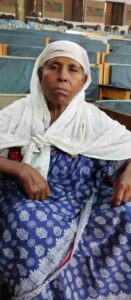 Mini Begum of Ward No. 5, Amtali Village, Khulna District. She was 22 years old and a mother of one child at the time. Mini Begum says, “In the months of Kartik-Agrahayan (around October-November), the Razakars found out that we were cooking rice for the freedom fighters and helping them. That day, around 11 or 12 in the morning, Janu, Banu, Sufia, Helena, and I, along with five others, went to take rice for the freedom fighters. The path went under a fallen tree in a bamboo garden. Before we could deliver the pot of rice, the Razakars brought the Pakistani forces, blew a whistle, and said, ‘Halt.’ The Razakars told the six military men, ‘Sir, over there, over there, good girl, good girl.’ Immediately, they grabbed my hair, threw me to the ground, and subjected me to brutal torture. The invaders shot and killed my husband. The Razakars wanted to take me back to the Pakistani forces. I wanted to hide somewhere for fear of the Pakistani soldiers. A man offered to shelter me but took me to the Banisanta brothel in Khulna.”
Brave freedom fighter Mojibor Rahman of Bhojonkhali village, Banisanta Union, says, ‘During the ’71 Liberation War, I stayed in the freedom fighter camp in the Sundarbans. There were no cooking arrangements there. The wives and daughters of Banisanta would cook rice for us and bring it near the jungle. From there, the freedom fighters would take it to the camp. The Razakars informed the Pakistani soldiers that these girls were helping the freedom fighters. They were advancing with cooked rice on the day of the incident. Later, I learned that those girls were subjected to brutal torture by the Pakistani soldiers. I heard the names Mini, Sufia, and Bhanu. The incident is true. Sufia and Bhanu have passed away. Mini Begum is still alive. She was tortured for helping the freedom fighters. She should be given recognition for this sacrifice.’
Sudeb Kumar Roy, Chairman of Banisanta Union, Dacope, Khulna, said, ‘The incident of Mini Begum being raped by Pakistani soldiers in ’71 is true. The freedom fighters whom she helped with food have confirmed the truth of the incident.” Rajia Begum of the Nari Jagaroni Sangha (Women’s Awakening Organisation) of Banisanta, Khulna, says, “Naripokkho instructed us to find out where the Birangonas of 1971 were. I didn’t know what a Birangona was before. They said they were those who were subjected to brutal torture by the invading forces during the war. I understood the matter. There were four Birangonas in the brothel. Three Birangonas, including Kamala and Bhanu, have died. Only Mini Begum is alive. She has admitted to us that she is a Birangona. However, she has not applied for the Birangona allowance.’
Ferdous Azim, member and program coordinator of Naripokkho, says, ‘Birangonas are not just damaged by one incident. They have been victims of neglect and humiliation throughout their lives. From that perspective, they deserve to live in a dignified place. That is why we are looking for the Birangonas. The Birangonas who have lived their lives in brothels should also be found and listed by the government. ‘Bir Nibash’ (shelter for heroes) should be allocated for them to live in a healthy environment.’ She further says, ‘Many people do not want to reveal themselves. The primary task is to provide them with financial assistance. It is the government’s responsibility to provide them with free healthcare. The government has various schemes. But access to these schemes is very difficult for these Birangonas. If they were included in the gazette and received government cards, they would get free medical services.’
Gita Das, President of Naripokkho, says, ‘We want those who became Birangonas due to inhuman torture to be among us. They should be honored in various places. They should be able to speak out from the front row. Their names should be included in the gazette. It is also the responsibility of all of us to demand an apology from Pakistan.”
Israt Chowdhury, Secretary of the Ministry of Liberation War Affairs, says, ‘If the list is not correct after verification, it leads to court cases. Many cases are stalled this way. Then the list gets canceled. These issues exist. In this case, the Birangonas who have not been listed in the gazette still have the opportunity to apply. They must apply using the prescribed form or a plain paper. The Birangona’s national identity card photocopy, the investigation report confirming the Birangona status by the local freedom fighters and chairman, and the Upazila (Sub-district) officer must be submitted to the National Freedom Fighter Council (JAMUKA). Because the National Freedom Fighter Council has the full responsibility of verifying the Birangona list. The Ministry of Liberation War Affairs does the subsequent work after verification. Tasks like gazette publication, providing certificates, and arranging allowances are done by the Ministry of Liberation War Affairs.’
The number of Birangona freedom fighters included in the gazette, who were tortured by the Pakistani forces and their collaborators, is 500. But we gained independence in exchange for the honor of 200,000 mothers and sisters. The Birangonas among them who became sex workers for survival also have the right to be included in the list.
The Author:
 Rita Bhowmick: Senior Reporter and Contributor, Pressenza- Dhaka Bureau.