
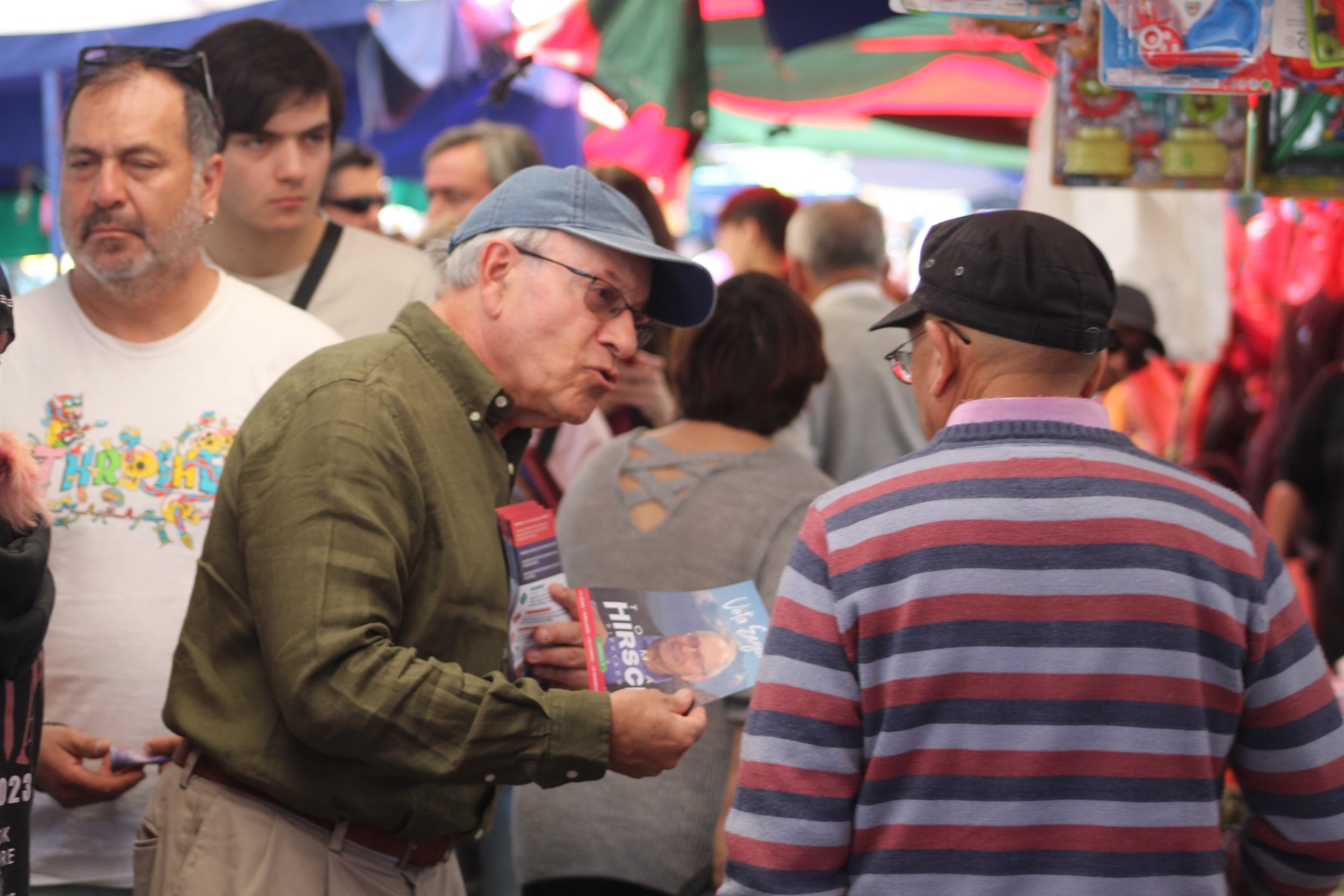
Context for International Readers: Tomás Hirsch is currently campaigning for re-election as a Deputy for District 11 in the Chilean parliamentary elections, scheduled for November 16, 2025. This district encompasses the municipalities (comunas) of Las Condes, Lo Barnechea, La Reina, Peñalolén, and Vitacura, and elects six seats in total. Hirsch is the sole left-wing representative in a district historically dominated by the right. This is his third time running for the office.
We spoke with Tomás Hirsch in the midst of his busy campaign for re-election as Deputy for District 11 this coming November. This is already the third time he has run for the office.
Pressenza: Could you summarize the main projects you championed in your first term? And which were the most significant in your second term?
Tomás Hirsch: At this point, it’s difficult for me to differentiate clearly between the first term and the second, which we are now completing. They have certainly had their differences. In the first term, we were learning about parliamentary work, establishing ourselves in the District, making contact with social organizations, with groups from the environmental sphere, housing, senior citizens, youth, teachers… It was a period where we were establishing these links and building a joint work plan. But even back then, we were presenting projects that are, perhaps, part of the essence of Humanism. Projects related to deepening Democracy, generating greater spaces for citizen participation, recovering Fundamental Social Rights or strengthening them where they already exist but are weak. We presented projects to promote and facilitate communal Plebiscites. Also in that period, we began working strongly on investigating situations of tremendous gravity that we detected in our District, situations of corruption involving the then -Mayor of Vitacura, the then -Mayor of Lo Barnechea, and later, situations we learned about in Las Condes.
On the other hand, and perhaps most significantly, that first term was clearly marked by the “estallido social” at spanish (the social uprising of 2019), in which we were very active. We were protagonists who participated alongside the organizations and activists of our people. Later, we had a very active role in denouncing human rights violations and, for that reason, we were promoters of the constitutional accusation against former President Piñera, his then-Minister of the Interior, Andrés Chadwick, and other officials who were clearly involved in the repression of the protests and Human Rights violations.
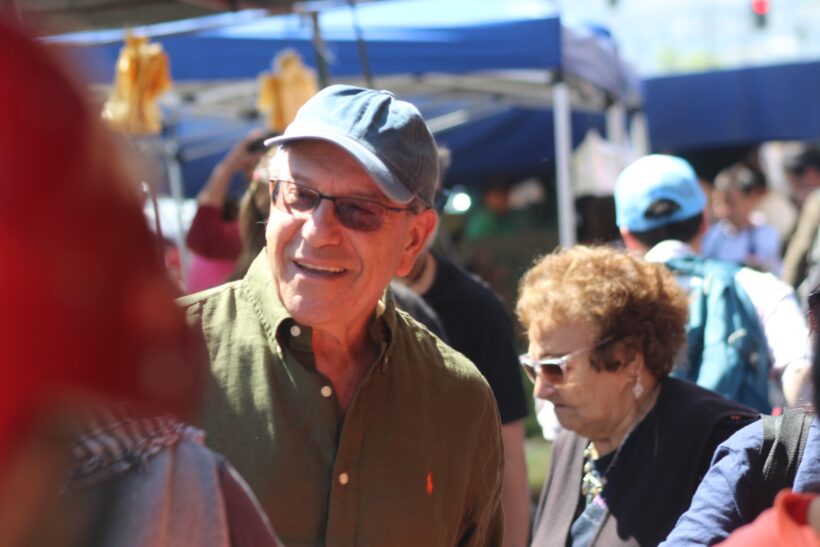
Tomás Hirsch on his Candidacy for Chile’s Congress
Another important action in that first term was to constitute and chair the Special Investigating Commission on the San Ramón Fault. This is a topic that is sometimes talked about little in Santiago, and yet it represents a tremendously dangerous latent threat in the event of an earthquake, especially in the Pre-Andean foothills and the Eastern zone of Santiago, due to this fault that crosses the entire city from North to South, putting the lives of around 200 to 300 thousand people who live near it at risk.
And in turn, already in that first term, although it has been an essential part of my work in the second term, we focused on the fight for housing. I would say this struggle has become the priority issue of this Deputy’s office. We joined the Housing Commission, we began to prioritize a large number of projects linked to housing, we chaired the Housing Commission for almost two years, we joined the Advisory Council of the Emergency Housing Plan, and we have worked permanently with dozens of Housing Committees in our District, considering also that Peñalolén is one of the municipalities with the most organized Housing Committees in the Metropolitan Region and probably in the country. We have presented innumerable bills aimed at guaranteeing the right to decent housing, but also understanding it as part of the development of a city on a more human scale. And for that same reason, we have worked to promote projects related to the environment, transportation, access to public services; in short, it’s a significant number of projects we have championed.
Finally, I want to say that we understand parliamentary work as a task developed in three fields: legislating, where we have presented around one hundred and fifty bills so far; representing, where we work actively with dozens, perhaps hundreds, of organizations in the District; and overseeing, where we have placed emphasis on monitoring the use of public resources, especially by Municipalities, Mayors, but also by different government institutions and instances.
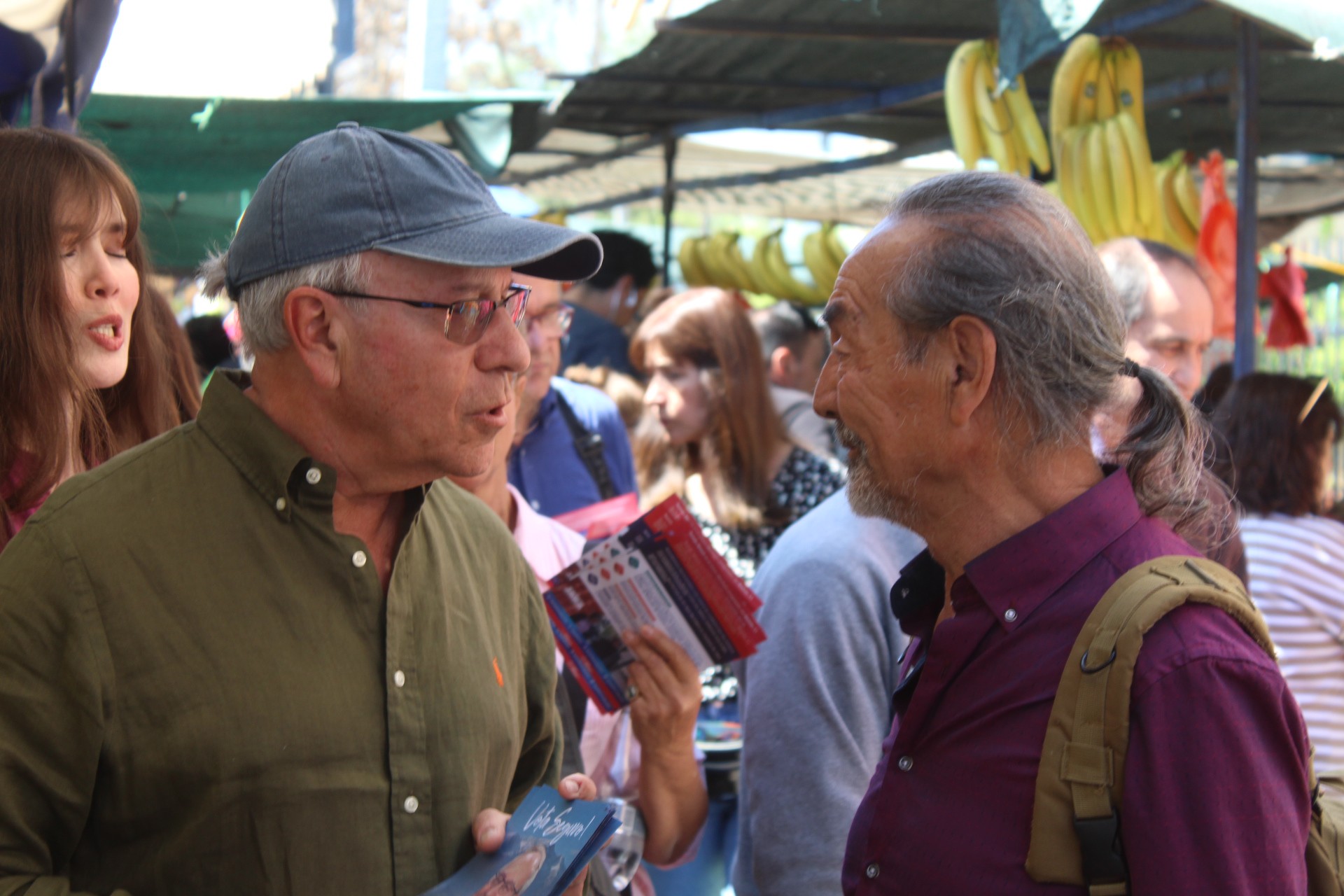
Tomás Hirsch on his Candidacy for Chile’s Congress
Pressenza: If you are re-elected again, and with all the experience you now have, what actions will you try to push forward most forcefully from Congress?
Tomás Hirsch: I am running for re-election because we believe it is important to give continuity to the work we are carrying out in the District, to the link we now have with dozens of social organizations, organizations of women, youth, senior citizens, organizations linked to the environmental crisis, and especially with the world of housing. For that same reason, in this third term, I aspire to strengthen the organization of the Housing Committees and, furthermore, accompany that strengthening by promoting a series of bills that allow us to give continuity and depth to housing programs, opening different options and alternatives for social housing, as well as for social integration projects.
Secondly, something very dear to us for this third term is to work for the expansion of the Metro network, in particular towards Villa La Reina, hopefully achieving a station at the corner of Laura Rodríguez Street (a street named after the first Humanist Deputy in the world) and then continuing the Metro network towards Peñalolén, towards the heart of Peñalolén, until reaching Consistorial with Avenida Grecia. And on the other hand, while this is the expansion of Line 3, to seek the expansion of Line 7, the new Metro line, so that it reaches the heart of Lo Barnechea, to the town of Lo Barnechea itself, responding to a deeply felt demand from both these sectors of the District, which are the only two municipalities in Santiago that currently do not have Metro service.
On another front, we want to work on the bill that allows for a better connection for citizens, particularly in the Eastern zone, our District, with the Pre-Andean foothills and the Andes Mountains. We believe it is necessary to strengthen the right of citizens to be able to enjoy what the mountains represent, the environment, and that this also implies better conservation of the flora and fauna of the Metropolitan Region.
Certainly, in this third term, in which we hope to work intensively, we will focus on improving access to health and education for those in precarious situations in our District, with a bill that would oblige the many private clinics located here—perhaps the best in the country—to accept a percentage of patients from the District at zero cost. And the same with the universities in this District. We believe it is very important to link them appropriately in this way and give District families the right to better healthcare and education.
This is just a sample of the many projects we aim to promote in this third term. On another front, we will maintain our relentless fight against corruption. It is regrettable that our District has seen an alarmingly high number of corruption cases involving right-wing Mayors, and we pledge to continue holding them accountable.
Finally, and looking beyond the District, if the next government is —as we hope—, the Government of Jeannette Jara, we will be very committed to ensuring it is a Government that advances in deepening Social Rights and structural transformations towards a more just, more human society.
And if, on the contrary, the next Government is headed by the far right, we will stand with the people defending these rights so that there is no way to roll back the rights that have already been achieved.
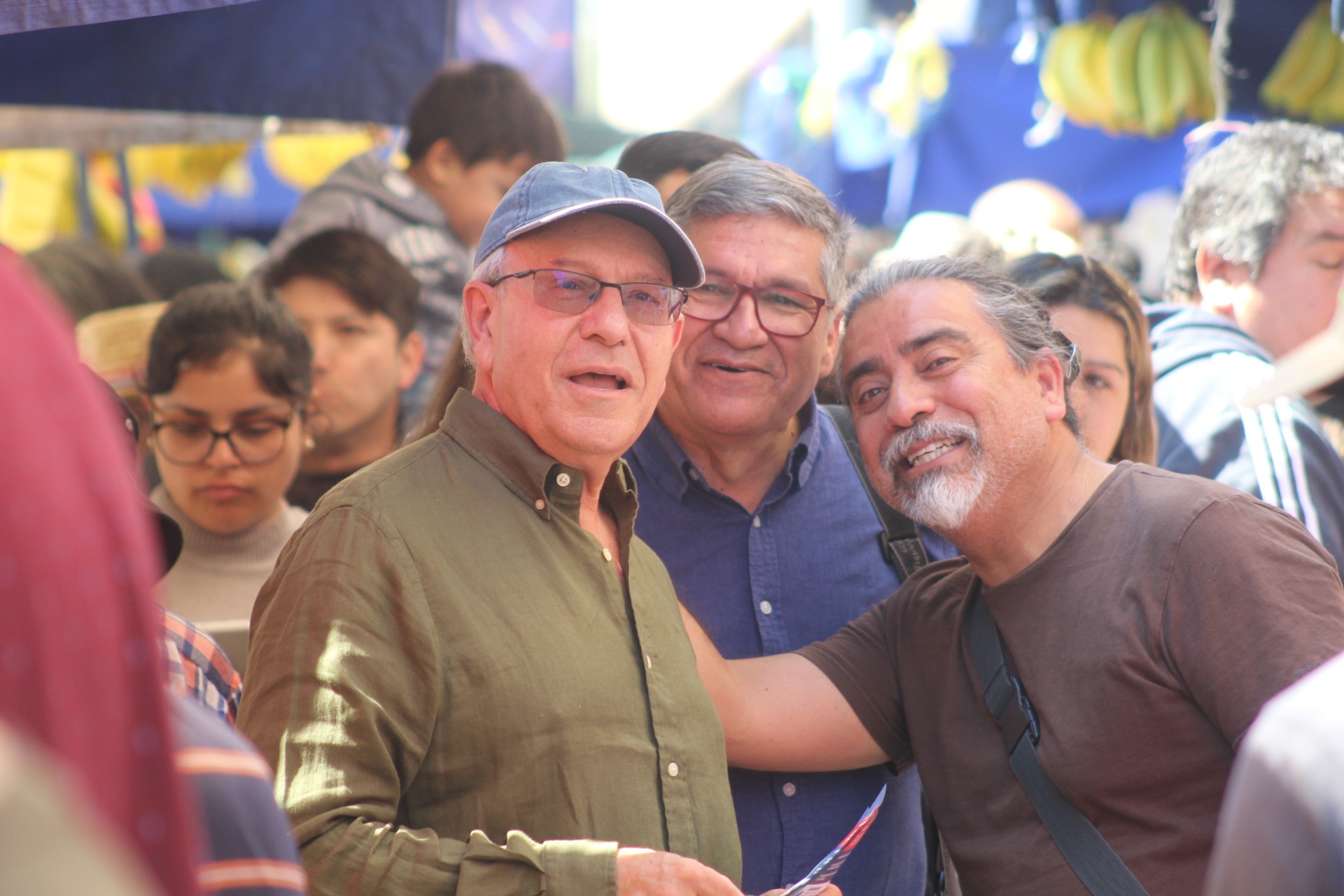
Tomás Hirsch on his Candidacy for Chile’s Congress
Pressenza: For Humanism, it has been very important to have you as a reference point from the Chilean Parliament. I’m not only referring to your role here, but also to the role of spokesperson that you have somehow fulfilled as a Humanist Deputy and also as an international reference, beyond our borders. In what way has Humanism, in its different expressions across the various Continents, been inspiring for you over these years? In what sense has it contributed to your work?
Tomás Hirsch: Everything we do in Congress, all the work we develop in our team, is inspired by Humanism. Silo is, for all of us who are part of this team, a Guide, a Teacher, someone who with his life, his work, his example, his lifestyle, inspires us every day. And this is also expressed in the value we place on what humanists are carrying forward all over the world. The action undertaken by humanists for peace, for active non-violence, for the rejection of war, for their connection with their communities, for welcoming those who suffer the most, for immigrants, for the displaced, is evidently a tremendous inspiration for us, and not only inspiration, but it gives us the strength to act, to strengthen our commitment. Therefore, we feel profoundly linked to the humanists of the entire world and we also hope to be able to contribute to the many activities being carried out in various countries and continents.
Pressenza: Is there anything more that humanists could do in concordance and in tune with your deputyship?
Tomás Hirsch: In a profoundly dehumanized world, a violent world, a world in which individualism is promoted, what each one does in connection with others is very relevant. Therefore, everything that humanists in different countries do is, for us, support, help, inspiration. Certainly, it also is when concrete proposals arise that are sent to us, when there are invitations that allow us to go to other places to dialogue, to exchange with other perspectives. And certainly also when they come to Chile and accompany us, learning what we are doing and taking that vision of what they see here in Chile back to their own places. All of this enriches a common project, all of this strengthens the common work. I have always been, and I am today, convinced that our work is in community, that our work is fueled by the action of some being known by others, and that, it seems to me, is the direction in which we must continue to act.
Pressenza: We wish you the best of luck and hope we can count on you once again from Congress! Thank you very much!