

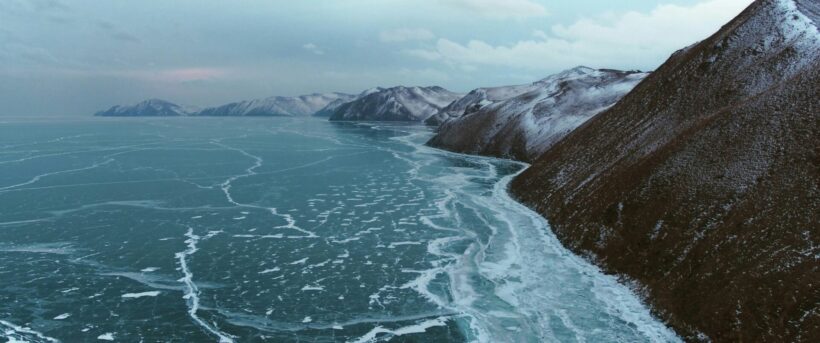
“There is no ocean without an owner, no ice without a price. The melting opens routes, but also claims that are worth more than oil.”
The Northern Sea Route (NSR), also known as the Northeast Passage, is a shipping route along Russia’s northern coast that connects the Atlantic Ocean with the Pacific. It is the shortest route between western Eurasia and the Asia-Pacific region. Most of the route lies in Arctic waters, and some parts are only ice-free for two months a year.
The NSR begins in the Kara Strait and ends in the Bering Strait. It is a strategic route for Russia, especially for transporting oil and mineral resources from the Arctic. Investments are pouring into infrastructure and development to attract international maritime traffic.
The route faces climatic and infrastructural challenges. It is often compared to the Suez Canal and the Strait of Malacca due to its strategic importance. With global warming and Arctic ice melt, the NSR is expected to become a key economic and logistical hub. It is a geopolitical and economic hotspot with direct implications for international trade and the future of the Arctic region.
The New Frontier of the Planet
Five countries have direct claims over the Arctic, each driven by a mix of geography, security, and economic interests.
• Russia seeks to secure its control over the Northern Sea Route and its vast oil and gas reserves. It has militarized the zone and deployed the world’s largest fleet of icebreakers.
• Canada insists that the Northwest Passage is internal waters and aims to consolidate sovereignty while ensuring access to its mineral resources.
• Denmark, through Greenland, claims seabed areas stretching to the North Pole via the Lomonosov Ridge.
• Norway is already exploiting part of the Barents Sea and aims to expand its exclusive economic zone for hydrocarbons and minerals.
• The United States, with Alaska as its base, is accelerating its Arctic presence to avoid being sidelined from trade and resource exploitation.
• China, though lacking Arctic territory, invests heavily in science, infrastructure, and strategic agreements. It seeks to shape the rules of the game, aiming for a polar extension of its Belt and Road Initiative.
The Arctic was once a remote wilderness, closer to myth than reality. A white desert guarded by ancient ice, inaccessible to global trade and too hostile for human ambition. The 21st century is rewriting that geography. Ice melt is no longer a matter of debate but of measurement. Arctic sea ice shrinks by 13% per decade, according to the National Snow and Ice Data Center. In summer, the minimum extent has fallen by 50% since the late 1970s. Where the ocean was once sealed for nine months a year, new passages now appear for increasingly longer periods.
This climatic transformation has opened one of the century’s most strategic corridors: the Northern Sea Route. Hugging Russia’s coast from the Barents Sea to the Bering Strait, it shortens transport times between Asia and Europe by up to 40% compared with Suez. A trip from Shanghai to Rotterdam, which takes about 35 days via Suez, could be reduced to less than 22. The difference is not just time—it is fuel, cost, and the ability to move goods faster and with less exposure to bottlenecks like Suez or Panama, where a single incident can paralyze global trade.
The potential value of this route is enormous. Studies by the Arctic Economic Council project that by 2040, annual trade through the Arctic could reach USD 700 billion. It is not only about electronics or textiles, but also strategic minerals, hydrocarbons, grains, and soon, hydrogen and green ammonia for the global energy transition. The Arctic is both a transit corridor and a resource warehouse.
Beneath its surface lie an estimated 13% of the world’s undiscovered oil and 30% of its undiscovered natural gas. Significant deposits of nickel, cobalt, rare earths, and other critical minerals for batteries, turbines, and clean technologies also abound. In the context of energy and technology sovereignty disputes, these resources make the Arctic a chessboard no global power can afford to ignore.
The problem is that the chessboard is contested. Territorial claims overlap and spark tension:
• Russia expands military infrastructure and icebreakers, invoking historical and geographic rights.
• Canada insists the Northwest Passage is sovereign internal waters, while the US claims it as an international corridor.
• Denmark, via Greenland, disputes seabed extensions reaching the Pole, clashing with Moscow.
• Norway, already active in the Barents Sea, eyes more territory as the ice recedes.
• The US, slow to act in the past, has accelerated its Arctic strategy not only for national security but to avoid Russian and Chinese dominance.
• China brands itself a “near-Arctic state,” investing in icebreakers, science, and agreements with Nordic countries to stake its claim in polar trade.
The Arctic, once a natural frontier, has become the planet’s newest economic and strategic frontier. Like all frontiers, it will attract investment, disputes, and possibly incidents that test diplomacy and global governance. What sets it apart is the role of climate change: the faster the ice melts, the faster competition heats up. And in a world where logistics equals power, the Arctic is the key to a new maritime and commercial order.
Routes That Could Reshape Global Trade
The melting Arctic does not open just one route but two: the Northern Sea Route (NSR), running along Russia’s coast from the Barents Sea to the Bering Strait, and the Northwest Passage (NWP), weaving through the Canadian Arctic Archipelago. Both differ in accessibility, cost, and political control, but they share a common trait: they challenge the geographic monopolies that have dominated trade for centuries.
The NSR is Moscow’s great project. Almost entirely under Russian control, with dozens of ports, monitoring stations, and the world’s largest icebreaker fleet, it is Vladimir Putin’s boldest geopolitical gamble of the 21st century. Russia projects that by 2035, it could move up to 80 million tons of cargo annually, compared with only 30 million in 2022.
The traffic includes LNG from Yamal, Siberian oil, and strategic minerals bound for Asia. The savings are substantial: a container ship from Shanghai to Hamburg via Suez travels 20,000 km; via the NSR, under 12,800. The voyage is 12–14 days shorter and tens of thousands of dollars cheaper.
The Northwest Passage, however, is more uncertain. Canada claims it as internal waters, which would grant full sovereignty and control over passage. The US and EU view it as an international strait, open to free navigation. This legal distinction is not semantic—it decides who collects tolls, enforces regulations, and ultimately controls a corridor that could rival Suez and Panama as ice retreats.
Accessibility is the challenge. The NWP clears more slowly, with limited port and rescue infrastructure. Still, Arctic Council studies project that by 2050, with ice-free summers, traffic could surpass 300 ships annually, compared to just 20 in the 2010s.
The appeal of these routes goes beyond time savings. In a world where chokepoints mean vulnerability, the Arctic offers the promise of alternative corridors that reduce dependence on Suez and Panama.
The Suez Canal, handling about 12% of world trade, proved fragile in 2021 when the Ever Given grounded, halting global shipping for six days and costing USD 9 billion a day. The Panama Canal, strained by droughts and competition from Mexico’s trans-isthmian railway, faces draft and capacity limits. The Arctic looms as a third option—more dangerous, costlier in insurance and technology, but faster and with the potential to become the highway of the 21st century.
Asia’s interest is obvious. For China, South Korea, and Japan, every day saved translates into millions in fuel, wages, and logistics. China has already dubbed the NSR the “Polar Silk Road,” folding it into its Belt and Road strategy:
• Chinese firms have invested billions in Yamal LNG projects and Arctic research, aiming to build a polar arm that reduces dependence on Malacca, Suez, and Panama. For Beijing, the NSR is not exotic—it is strategic insurance against naval blockades in crises.
• Europe views the Arctic with ambivalence. Germany, France, and the Netherlands see a route that could cut import costs and speed exports, but reliance on Russian infrastructure and legal uncertainty in the NWP makes them cautious.
• Brussels pushes for an international framework to limit Moscow’s and Ottawa’s control, but without direct investment, the EU risks becoming just a paying user.
• The United States, with Alaska as a platform, is racing to build ports, icebreakers, and polar navigation systems. Its goal is not just commercial but strategic: ensuring neither Russia nor China dictates the Arctic rules. The Pentagon’s 2022 National Security Strategy already stated that “the Arctic will be a critical domain for commerce and defense in the coming decades.”
The numbers underscore the stakes. Today, barely 0.1% of global maritime trade crosses the Arctic. By 2040, the IEA and Arctic Council project it could climb to 8%, worth more than USD 700 billion annually. Whether those routes are controlled by Russia, Canada, or an international regime is no technical detail—it is the crux of 21st-century maritime diplomacy.
In Part 2 of this Column We Will Explore:
• The white gold under the ice
• Silent militarization
• The Northern Route, a frozen highway of commerce
• Resources buried beneath the ice
The melting of the Arctic has turned impossible passages into strategic highways. These are not secondary routes or climate curiosities—they are the arteries of 21st-century commerce. Suez and Panama defined the maritime order of the 20th century. The Arctic, with its natural passages, threatens to define the 21st.
⸻
Condensed Bibliography
• US Geological Survey (USGS). Circum-Arctic Resource Appraisal: Estimates of Undiscovered Oil and Gas North of the Arctic Circle. 2008.
• US Energy Information Administration (EIA). International Energy Outlook 2023.
• International Energy Agency (IEA). World Energy Outlook 2023.
• Arctic Council. Arctic Shipping Status Report 2022.



