
This Asian country aims to structure itself by combining the virtues of a strong state and a market economy
Amid the legacy of a decade of infrastructure development and the ambition to add value to its productive base, Indonesia is testing a model that blends an active state and a market economy.
After joining the BRICS and consolidating itself as Southeast Asia’s greatest power, the country is trying to turn its demographic weight and geopolitical relevance into industrial capacity. The decade from 2014 to 2024, under the presidency of Joko Widodo — or Jokowi — accelerated infrastructure and shortened logistics distances in Indonesia, but left the challenge of turning asphalt and concrete into productivity, innovation, and higher-quality jobs.
Downstreaming — that is, the process of adding value to national production through industrialization, particularly of nickel, with restrictions on raw ore exports, a WTO dispute, and a strong influx of Chinese capital — has become the ultimate test of this turnaround.
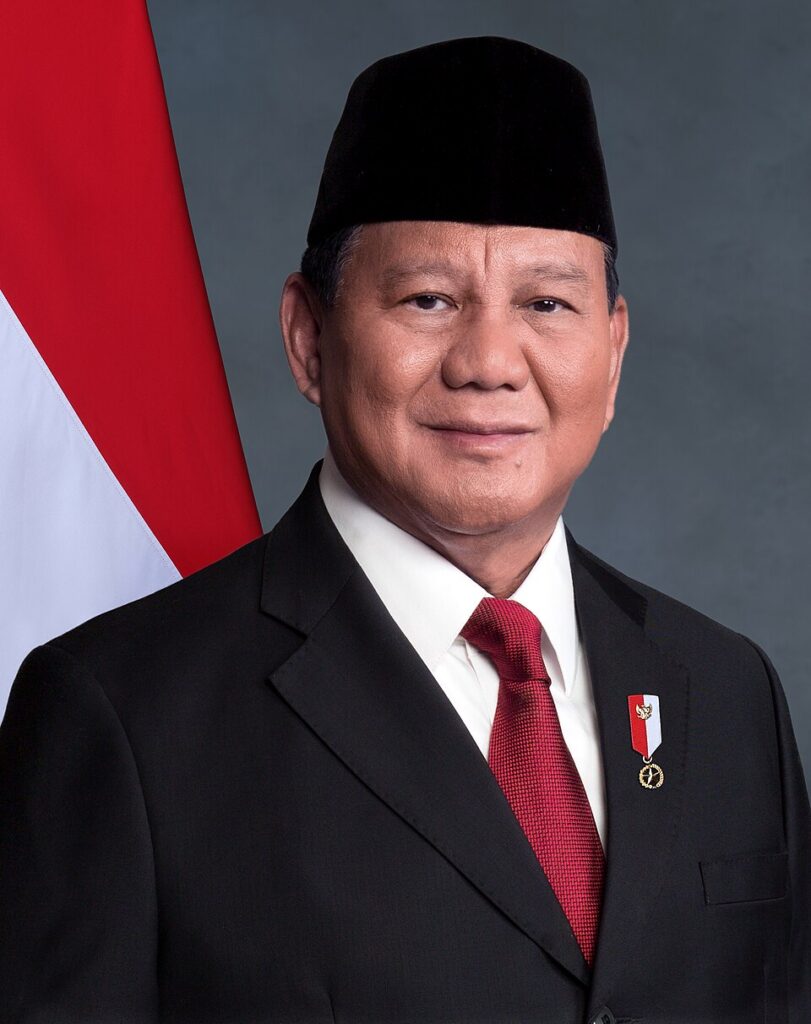
In an interview with Brasil de Fato, Indonesian BRICS People’s Council member Ah Maftuchan discusses the country’s role in the bloc, the limits of the Jokowi era, and the first social and institutional initiatives of the current president, Prabowo Subianto.
In his first year in office, the president introduced to the international stage the idea of a “mixed economic system,” combining both flaws and virtues of the state and market, anchored in the tradition of gotong royong (an Indonesian expression for mutual assistance and community cooperation) and cooperativism.
Domestically, this vision appears in social policies such as school meals, debt forgiveness for small producers, boarding schools, and institutional reforms — the creation of a coordinating ministry for popular empowerment and a sovereign wealth fund to manage strategic assets. In the interview, Ah Maftuchan, who is also executive director of Prakarsa, a Jakarta-based public policy research institute, discusses what Indonesia has already delivered and what still needs to be done to turn ambition into sustainable development.
Read the Interview
Brasil de Fato – Indonesia became a BRICS member earlier this year. The country, with 280 million inhabitants, is the largest Muslim nation in the world, the eighth-largest economy on the planet (very close to the seventh, which is Brazil), and the leading power in Southeast Asia, making Indonesia an important player in regional and global geopolitics. As a member of the BRICS Civil Council, what do you think the country can bring to the group?
Ah Maftuchan – First of all, Indonesia’s role in global forums stems from its history. Since independence and throughout the Cold War, the country has always acted responsibly within the international community, especially in humanitarian and security missions. The Indonesian Constitution itself establishes the duty to contribute to a secure and peaceful global community.
Indonesia has always sought an independent position, inspired by the spirit of the Non-Aligned Movement. This strategic stance allows the country to act as a mediator between major powers and developing nations, promoting dialogue and reducing tensions. This historical neutrality gives credibility and trust to Indonesian diplomacy.
The spirit of equality and cooperation has always been at the center of the country’s foreign policy. If Indonesia leverages its political and historical experience, it can expand its power and strengthen its position in international forums. Entry into BRICS reflects this intention: not just to follow the dynamics among major powers but to actively contribute to solving global problems.
Indonesia seeks to participate in initiatives aimed at tackling shared challenges, prioritizing cooperation over competition between countries. It is a populous country, the largest Muslim nation, and one of the ten largest economies in the world. However, more important than the numbers are the collective spirit and willingness to solve problems — core values Indonesia brings to the global stage.
The country’s history reinforces this role. Both the president and civil society share the vision that Indonesia should be a problem-solving agent, not just a spectator of global challenges. It’s not always easy to maintain this stance, as the country does not have the same military weight as major powers, but its credibility makes it indispensable as a reliable mediator, especially in conflict situations.
A recent example was President Prabowo Subianto’s speech at the United Nations General Assembly in September this year. He emphasized the importance of global security and announced that Indonesia would provide 20,000 professionals for humanitarian efforts in Gaza — a demonstration of the country’s commitment to peace, even without being a military power.
Furthermore, the country has sought cooperation with partners like Qatar and Saudi Arabia, which strengthens its credibility and coordination capacity in the Islamic world and the Global South. This “trust diplomacy” is one of Indonesia’s main strategies to contribute to international security. Though it belongs to the Global South, Indonesia aims to act beyond this definition, working proactively for a more balanced global order.
Brasil de Fato – What’s your overall assessment of Jokowi’s ten years in office? What were the main economic, political, and social advances during his government? What are the greatest challenges ahead?
Ah Maftuchan – Over the past ten years of Jokowi’s government, the country’s greatest achievement has been in the area of infrastructure. This development was made possible by planning based on government bonds, which allowed for the expansion of public goods for the population and energized the economy. Infrastructure modernization created new opportunities for both small and large businesses, becoming one of the pillars of economic growth and national integration.
The infrastructure projects implemented during Joko Widodo’s presidency brought important advances but also generated significant side effects, especially regarding fiscal stability and economic sustainability. Jokowi’s administration was extremely ambitious in its infrastructure expansion goals, and that ambition, while understandable, ended up causing imbalances.
In several cities, such as Jakarta and Bandung, the volume of construction and the expansion of local roads required large-scale investments. Some projects cost around US$130 million, while even smaller initiatives exceeded US$30 million. This level of investment directly impacted public finances and reduced the state’s ability to allocate resources to other equally strategic areas, such as health, education, and economic development programs.
The logistical improvements promoted by Jokowi’s government enhanced the transport of people and goods, but the country still lacks a solid industrial base. The downstreaming agenda remains incomplete, especially in the mining sector, which is strategic for the Indonesian economy.
As a result, the economy continues to rely heavily on traditional sectors and the import of inputs, which limits long-term structural gains. Reducing costs and accelerating transportation is important, but not enough to solve Indonesia’s fundamental economic challenges. The country needs to go beyond physical expansion and invest in innovation, productive diversification, and technological development so that infrastructure growth can translate into sustainable prosperity.
Brasil de Fato – In 2019, President Jokowi signed a historic measure banning the export of raw nickel ore, which had previously been widely shipped to China, its main buyer. This decision broke with the classic colonial logic of exporting primary goods and mandated that nickel be processed domestically before being exported. Did this bring benefits to the country’s economy? How did China react?
Ah Maftuchan – The policy had significant impacts. On the international front, it triggered disputes with European countries through the World Trade Organization (WTO), which challenged the decision. Despite this, Indonesia maintained its position, prioritizing sovereignty over its natural resources.
From an economic perspective, the effects were mixed. In the short term, the ban reduced state revenue from direct exports, since the country still lacks full industrial capacity to transform ore into higher-value products. However, in the medium and long term, the government expects that domestic industrialization will strengthen the national economy, create skilled jobs, and expand technological expertise.
The export restriction policy also attracted direct foreign investment, particularly from China, which began investing in the construction of smelters and industrial plants in regions such as Sulawesi and the Moluccas. Chinese companies partnered with Indonesian state-owned and private firms to establish processing factories. Still, the social and economic outcomes remain limited, since a significant portion of the labor force is foreign, and local gains are modest.
The government acknowledges that downstreaming will only yield lasting benefits if accompanied by complementary policies such as the development of technological, financial, and market capabilities. This transition requires time and planning. The new administration, under President Prabowo Subianto, has reaffirmed its commitment to continuing this agenda. To this end, a task force dedicated to the value-added policy has been created, along with the establishment of the Danantara Sovereign Wealth Fund, designed to consolidate the assets and profits of state-owned and private companies into a unified strategic management mechanism.
Danantara, inspired by models like China’s SASAC (State-owned Assets Supervision and Administration Commission), aims to centralize and optimize the returns of public companies and strengthen the state’s capacity to invest in productive sectors. The fund currently holds about US$1 trillion in assets. The expectation is that over a decade, the fund will grow to more than US$15 trillion. This institutional and regulatory reform is seen as one of the foundations for a new phase of Indonesia’s industrialization.
At the same time, the country signed an agreement with a major Chinese lithium battery producer to build a battery factory within Indonesian territory, with investments estimated at US$10 billion. The project, which will involve Indonesian and Chinese state-owned companies, represents a strategic step toward integrating Indonesia into the global value chain of the energy transition.
Overall, downstreaming remains a state priority. The combination of institutional consolidation, strengthening national companies, and attracting productive investment could gradually transform Indonesia from a mere exporter of natural resources into an integrated industrial power.
On the political front, however, Jokowi’s legacy also left tensions. In the last two years of his term, there were criticisms that the government had exceeded democratic limits by facilitating his son’s rise in national politics. The case involved a Constitutional Court ruling allowing exceptions to the minimum age requirement for presidential and vice-presidential candidates, sparking public debate about respect for democratic norms.
Despite this, the transition to the Prabowo Subianto government occurred smoothly. The new president has sought to preserve the economic gains of the Jokowi era while trying to reposition the country as a more autonomous actor in the global economy, staying true to Indonesia’s tradition of balance, sovereignty, and pragmatic diplomacy.
Brasil de Fato – Jokowi’s successor, President Prabowo Subianto, has just completed his first year in office. In June, during a speech at the St. Petersburg Economic Forum, he proposed the creation of a mixed economic system between capitalism and socialism. Was that just rhetoric for an international audience, or is this reflected in his internal economic and social policies?
Ah Maftuchan – I believe it’s not limited to rhetoric. His statement reflects his own historical background. President Prabowo is, in fact, a socialist by blood — he is the son of Sumitra Choyahati Kusuma, who was one of the co-founders of the Indonesian Socialist Party.
Indonesia has been, from the beginning, an ideologically rooted mix between capitalism and socialism. Our founding father, the first president Sukarno, and the first vice-president, Muhammad Hatta, were deeply knowledgeable about both the East and the West.
Our economy is, indeed, a blend of capitalism and socialism. We respect private property, but at the same time, we choose to manage our economy in a family-oriented way, based on cooperation — gotong royong — and cooperatives, which have always been pillars of our system.
So to me, President Prabowo’s statement at the St. Petersburg Economic Forum is not surprising, but it was surprising that he said it in that place. After all, the 1917 Revolution happened there.
He repeated this idea when interviewed by Stephen Forbes, founder of Forbes magazine, maybe a few weeks later, in Jakarta.
He said: “I’m going to adopt the best path of socialism and the best path of capitalism.”
And he said that to Forbes, the “bible of capitalism.” It was quite impressive.
What surprised me even more was that he brought a classic debate — that of schools of thought — to an international economic forum. It was interesting to see a leader inviting the audience to reflect on ideological foundations, prompting deeper analysis of the challenges we face.
Therefore, President Prabowo’s point of view is not limited to international speeches or intellectual exercises — it is directly reflected in domestic policy.
His vision of “sovereign social welfare” is a combination of socialism and capitalism — government by the state and government by the market. He acknowledges the failures of both: corruption and inefficiency of the state on one hand; and on the other, market failures such as inequality, profit concentration, and unemployment.
https://substackcdn.com/image/fetch/$s_!bBlw!,w_1456,c_limit,f_webp,q_auto:good,fl_progressive:steep/https%3A%2F%2Fsubstack-post-media.s3.amazonaws.com%2Fpublic%2Fimages%2Fbb907c0f-3e8f-426c-9437-7e0fa64e93a4_1344x768.jpeg
Danantara, in my opinion, reflects this approach: the best form of socialism and the best form of capitalism combined. Socialism appears not only in institutional structure and the state’s role, but also in programs directly aimed at the people — such as free meals and child nutrition.
The free meal policy involves government-provided meals for students, pregnant women, and nursing mothers. The idea is to ensure proper nutrition for child growth, brain development, physical conditioning, and to combat stunting.
It’s also a direct wealth redistribution tool. For urban families, it may seem unnecessary, but for rural communities, the impact is huge.
Additionally, the program shouldn’t be seen in isolation: it stimulates local production chains, drives transactions, and creates jobs. It’s a good policy, but its implementation still needs improvement.
There were cases of food poisoning affecting around 8,000 students due to low-quality food provided by large companies centralized in the cities. It’s acceptable that the first year serves as a learning phase, but in the coming years, the program must be decentralized.
Communities and schools should directly participate as leading implementers. And ingredients should prioritize local products — for example, import beef if needed, but use chicken, eggs, and vegetables produced in Indonesia. This combination helps strengthen rural economies and increase value-added in communities.
Currently, food is processed in urban centers and sent to rural areas. A single center delivers up to 3,000 meal packages a day within a few hours. Recently, the administration reduced the target to about 2,000 meals per center to ensure better quality and food safety.
The expectation is that, in the second year, community and school participation will increase, making the program more efficient. The idea is good, but its execution needs to be wisely adjusted — in terms of targets, ingredients, and technical issues.
Furthermore, a network of new boarding schools has been launched, with full scholarships for low-income children, including homeless children. These schools offer education, housing, and meals. This year, 50 schools have already opened, intending to reach 500.
Children stay there during the week and return home only on weekends. The idea is to break the vicious cycle of poverty — offering five days of learning and protection per week, enough time to begin reversing the pattern of vulnerability.
Most of Prabowo’s ideas, especially in the social realm, are aimed at human empowerment: income transfer, social assistance, food, and education. And to coordinate all this, he created a new ministry — the Coordinating Ministry for Popular Empowerment.
This ministry holds a senior rank and coordinates several other departments, such as Economic Affairs, Political and Security Affairs, Food, Infrastructure, and Human Development and Culture. It’s an important institutional innovation.
For decades, the term “popular empowerment” was just rhetoric. Now, it has become state policy. This allows civil society to demand concrete results.
Translated from the original with the kind permission of the author: Marco Fernandes