

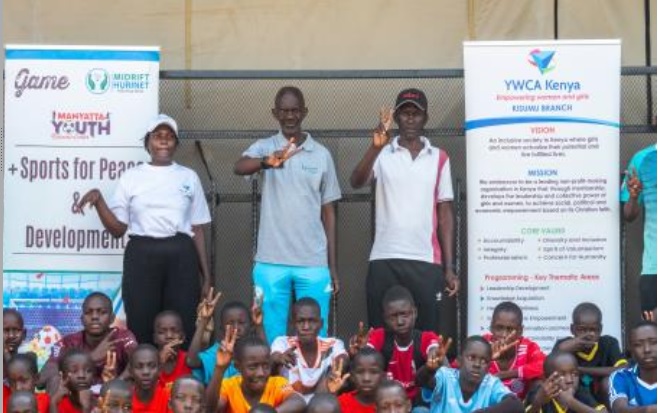
In Kisumu, International Peace Day was celebrated with multiple activities. The program began on Saturday the 20th with tree planting at Kasagam Secondary School, followed by friendly football matches between the teams of different divisions (10- to 16-year-old) from Manyatta Youth Resource Centre and Makini School. Before playing, participants discussed how to maintain a proper and respectful behavior during the games, instructed by Anthony Mzee Oballah, coordinator of the Thematic Table on Sport and Performing Arts for Peace and Development of the World Humanist Forum.
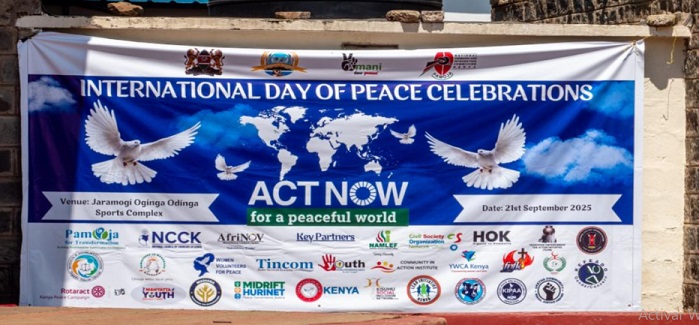
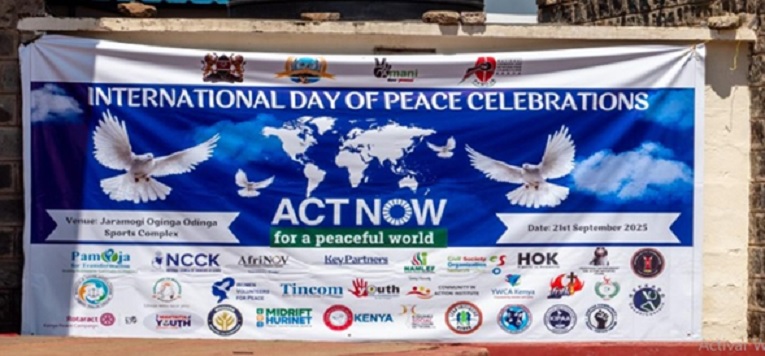
On Sunday 21th, the celebration of the World Day for Peace started with a walk from Kondele round about to Jaramogi Oginga Odinga Sports grounds led by NCIC commissioner Nancy and the Kisumu County Commissioner, with the participation of many other organizations including MYRC/MIDRIFT.
Once again, a good number of trees were planted at the sports ground by members of the National Cohesion and Integration Commission (NCIC), joined by the Kisumu County Governor, Kericho County and the Equity Bank representatives.
In the following, the kids enjoyed lots of entertainment and presentations. Quoting Oballah’s report, “we realized that some of our kids need a platform to show their talents and also to enable them achieve more through their talents. Rap or spoken word is a major platform or tool for passing information.”
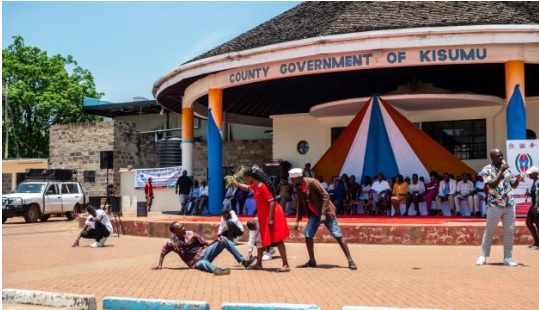
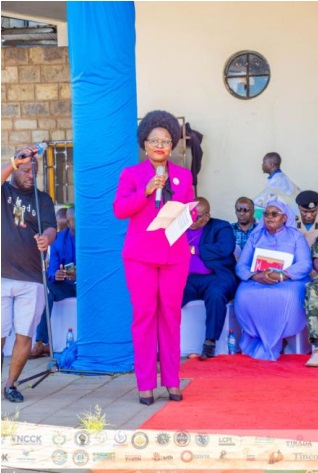
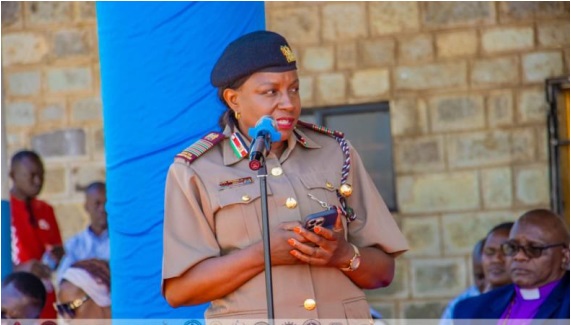
Several speeches were given by dignitaries. Dr. Silpah Owich, Head of Women and Youth Banking at Equity Bank emphasized that “without peace, there can be no sustainable growth.” In other intervention, the Nyanza Regional Commissioner Ms. Mwaroa, highlighted the importance of inter-ethnic and intergenerational dialogue to strengthen national unity and support non-violent conflict resolution within local communities. She also and encouraged youth to resist negative peer influence and avoid political manipulations that could induce conflict.
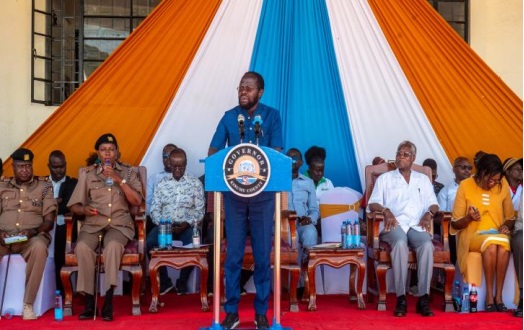
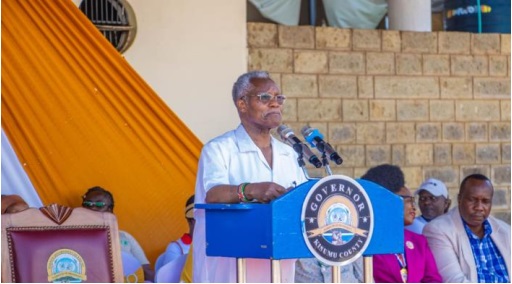
Kisumu’s Governor, Prof. Peter Anyang’ Nyong’o, strongly condemned in his speech the ongoing killings in Gaza, Palestine, calling for global attention and action ahead of International Peace Day. “What is happening in Gaza is deeply unfortunate. We cannot talk about peace in the world today without acknowledging the suffering in Gaza,” he said. The Governor criticized the United Nations and other international organizations tasked with promoting peace, accusing them of turning a blind eye to the atrocities being committed.
Finally, Rev. Dr. Samuel Kobia, Chairman of NCIC, urged the global community to unite in solidarity with the people of Gaza. He remarked the need to ensure the meaningful inclusion of young people in the dialogue of nation-building today. “They are not just the inheritors of our peace or of our conflicts but they are out essential partners in shaping a more just and stable society as their energy, their innovation and their impatience with old grievances are the very assets we need to break cycles of violence”, Nyong’o said. He emphasized that peace requires continuous effort, justice, and inclusion, and that dialogue enables communities to address conflicts constructively.
Global Women Empowerment Summit
A few days after, Coordinators and other members of the Thematic Table on Gender Based Violence and Education of the World Humanist Forum, took part in the Global Women Empowerment Summit, held in Mombasa from 26th to 28th September 2025.
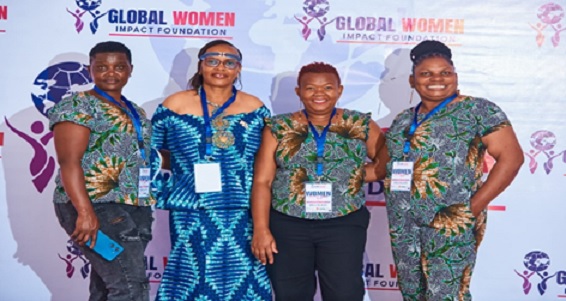
The Summit brought together diverse voices to empower women in leadership, advocacy, technology, and entrepreneurship and created a platform for Humanist engagement, showcasing inclusivity, resilience, and social transformation.
In the section of the program dedicated to Human Rights, Women Advocacy & Legal Compliance, Lilian Oluoch commented “We are all lawyers because we speak on behalf of someone.”
Rose Neema and Dorothy Adenga, sharing with the attendees a humanist perspective on Gender based violence, spoke it out loud: “Silence has never stopped injustice.”
Dorothy emphasized that her voice is what made her reach where she is today, encouraging women to speak up boldly. Rose shared a powerful affirmation: “I am enough and I am able,” reminding women to embrace self-worth and capacity. Siding them, Lilian added: “Advocacy starts with one person. Take action. #Act”
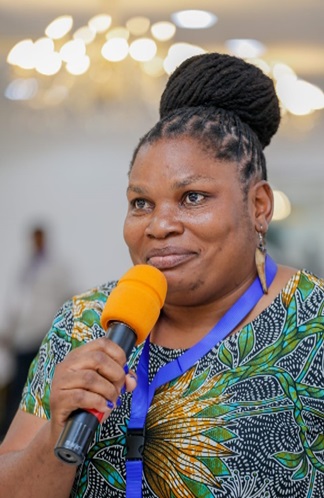
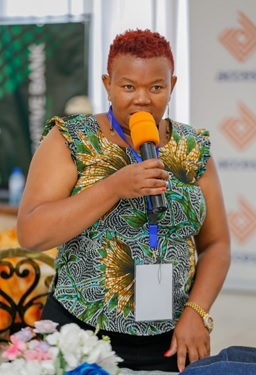
Afterwards Rose Doris Njagi inspired women to embrace their emotions as tools for self-awareness, leadership, and community contribution.
In the section related to humanist work taken on the grounds, Dorothy Adenga, Rose Neema & Maureen Akapkiay highlighted initiatives on wellness, inclusion, and supporting marginalized group. Giving testimony on strategies to improve the socioeconomic situation of women, Maureen shared her journey from Gender Based Violence survivor and single mother to successful fish and dairy entrepreneur, while Eunice Maina emphasized reinventing strategies, using cash wisely, solving problems for many people, and even accepting failure as a stepping stone.
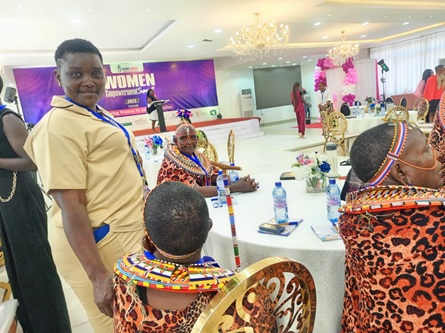
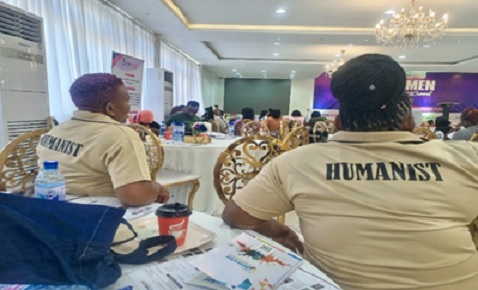
After a panel discussion around governance, women empowerment, and resilience, with the participation of Joyce Lay, first woman representative of Taita Taveta County, and other grassroots organizations, Rose Neema conducted the section of Internal Development in which she suggested the participants to be aware and use the power of the images, emphasizing the need to set clear goals and to plan a strategy of achieving them. You can create anything you want act, she stated.
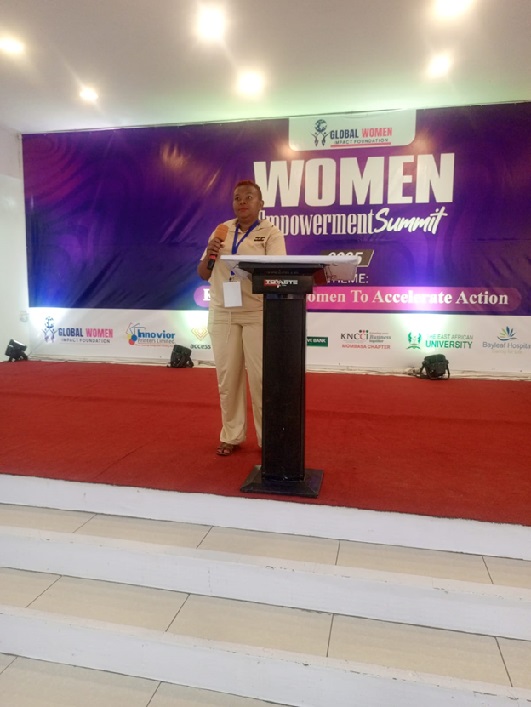
Rose went one explaining that the relaxation gives the body and mind a break and connection. It’s a tool that can be used to connect with people and to solve issues around the community, it can be practically advanced every day and remove negativity, reaching a different way of perceiving ourselves and others. After an exercise of internal, external and mental relaxation, most women present were able to connect with the experience of peace.
In the section dedicated to Education & Technology, Dorothy Adenga, who coordinates the Thematic Table of Education in the World Humanist Forum, shared her personal journey raising a son living differently and how technology helped bridge educational gaps.
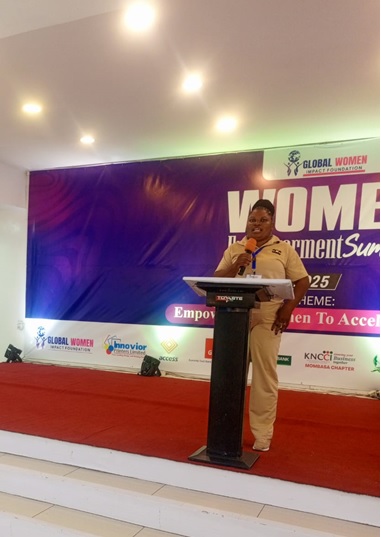
She later emphasized on the possibility to bridge education gaps by using online classes with proper internet and parent’s guide to connect with other children in different locations without hindrance of their condition.
The keynote address was given by Prof. Jostina Wawasi Mwang’ombe, also a member of the humanist Forum, who highlighted her journey from Danida employee to prison reforms leader and announced the launch of Iron Sharpen Iron (Dorcas Basket Initiative) supporting widows in Taita Taveta County, located in the south of the country, about 200 km from Mombasa and 360 km from the capital Nairobi.
Empowering young prisoners and widows
On September 30th, the humanists continued the trip holding an Empowerment Training Day at the Shimo La Tewa Borstal Youth correctional facility, located near Mombasa, Kenya.
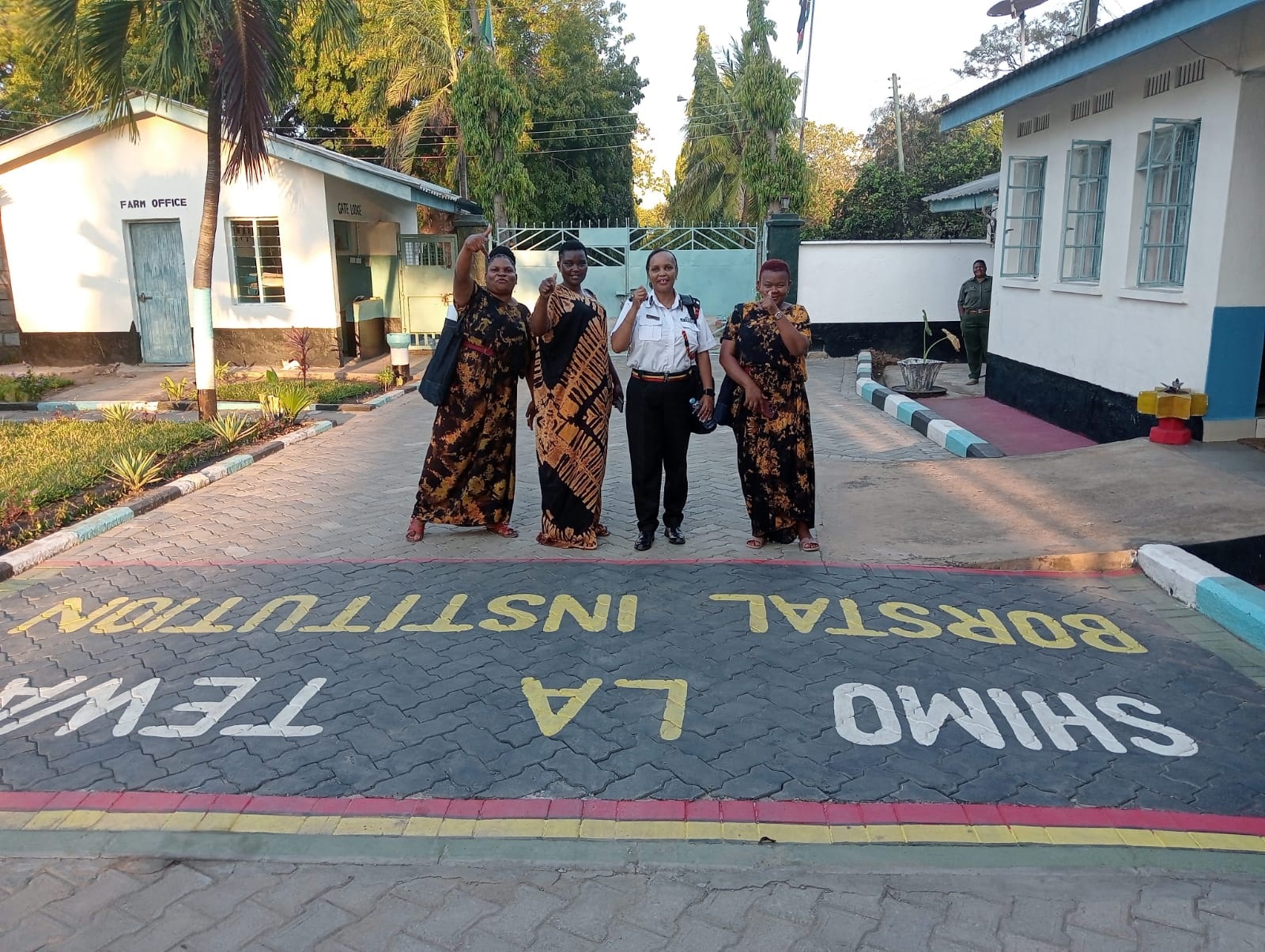
Accompanied by Professor Jostinah, the superintendent in charge of the facility, the team taught the inmates basic concepts of Humanism and Nonviolence. Donations of soap and tissue paper were also given to help with the boys’ hygiene.
In her speech, Prof. Jostinah said: “At Shimo la Tewa Borstal Juvenile Correctional Facility, we believe correction is not only about discipline, but about healing, restoring dignity, and giving hope to the young people under our care. Every boy here carries a story just of mistakes, but also of dreams, emotions, and unstopped vision and potential.
As a humanist and SGBV trainer, I know our responsibility goes beyond ensuring order. We must bring humanity into correctional centers by creating spaces where the boys feel seen, heard, and respected. Through vocational training, education, and empowerment activities, we help them develop life skills, resilience, and self-awareness that will guide them after release.”
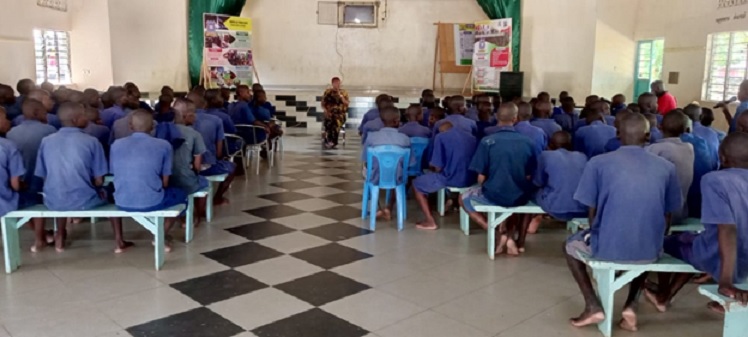
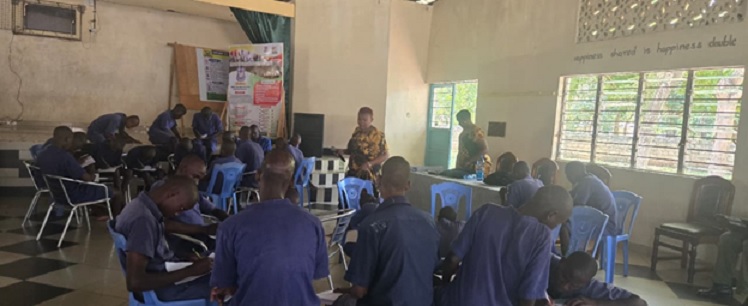
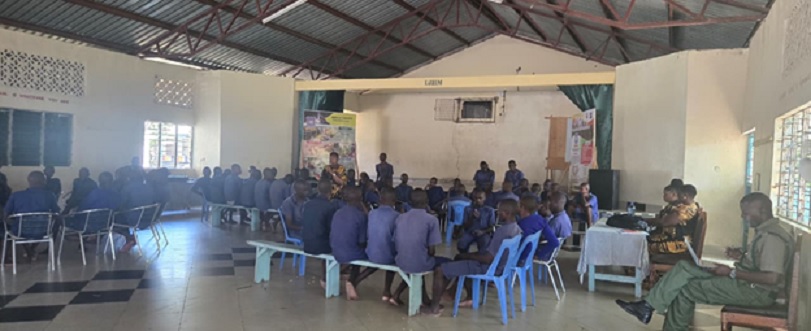
Afterwards, Rose led sessions on humanism and attention exercises (arranging chairs, mindful phone use, writing while walking, relaxation). She also guided the boys to write letters of love, affirmations, and hopes for life after Borstal.
In the following, Dorothy Adenga led a dance session to fight stress and depression. She also motivated the boys with encouragement drawn from her Gen Z perspective being a mother of a teenage musician and inspiring them to believe in their potential.
In the continuity of the day, there were open group discussions on Sexual and Reproductive Health. This session was conducted by the boys feeling free about their sexual orientation and gave themselves discussions of their health with assistance of officers in charge and the humanist activists.
Humanists donated soap, tissues, and writing/coloring materials. The day ended with music, coloring, and sharing messages of hope.
The institution is a correctional center under the Kenya Prisons Service, whose mandate is to provide young people between the ages of 15 and 18 in conflict with the law formal education, vocational training and technical/agricultural skills in a humane, safe and child-friendly environment.
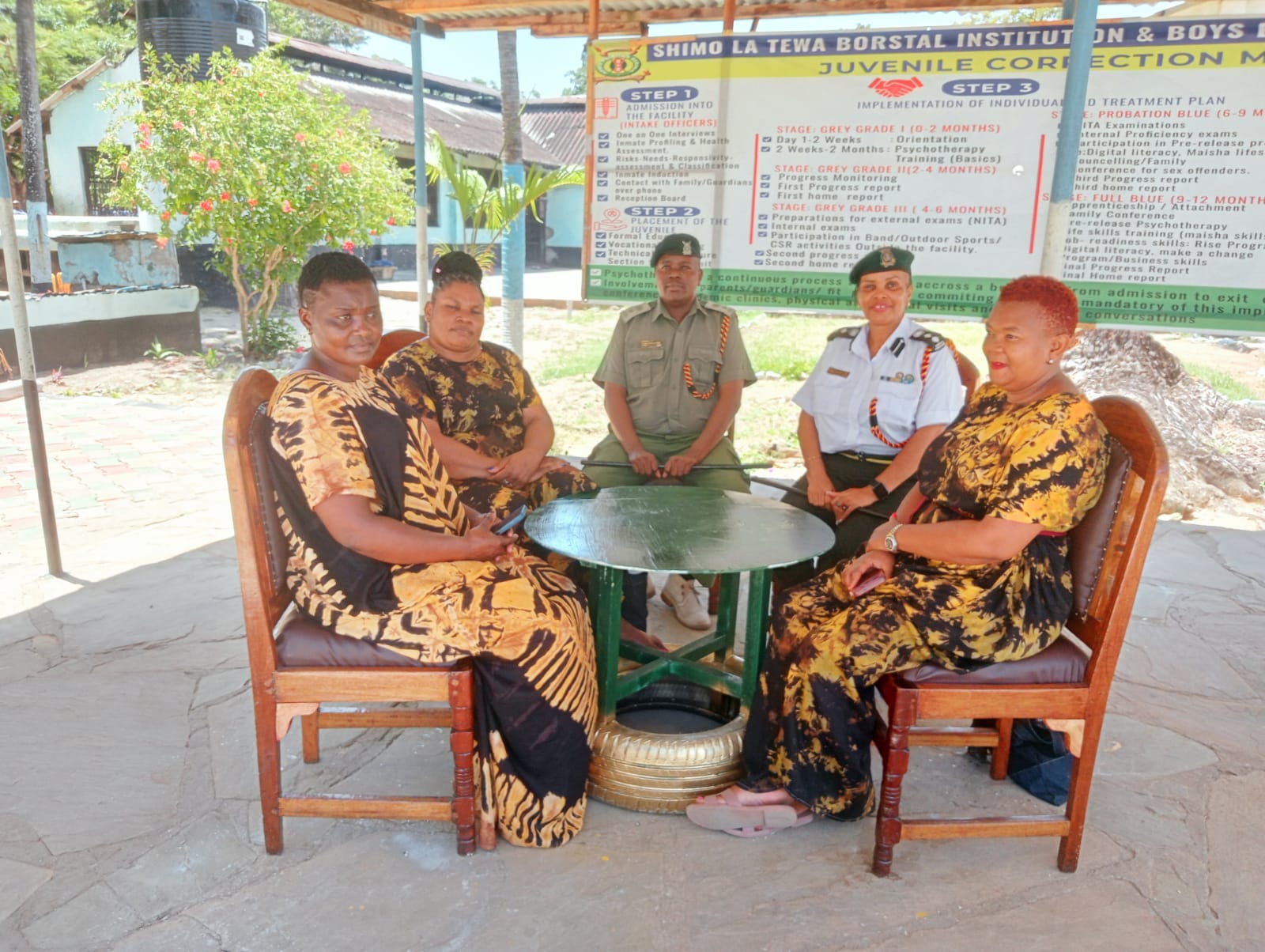
In Kenya, since the reform of correctional institutions, juvenile offenders imprisoned awaiting trial have been separated from adult inmates. Institutions of this type are located in the coastal region (Shimo la Tewa Borstal), in the western region (Shikusa Borstal) and in Nairobi (Kamiti Juvenile Correctional Centre).
The humanist activists will continue their journey this Friday to launch the Program for Widows in Taita-Taveta County.



