

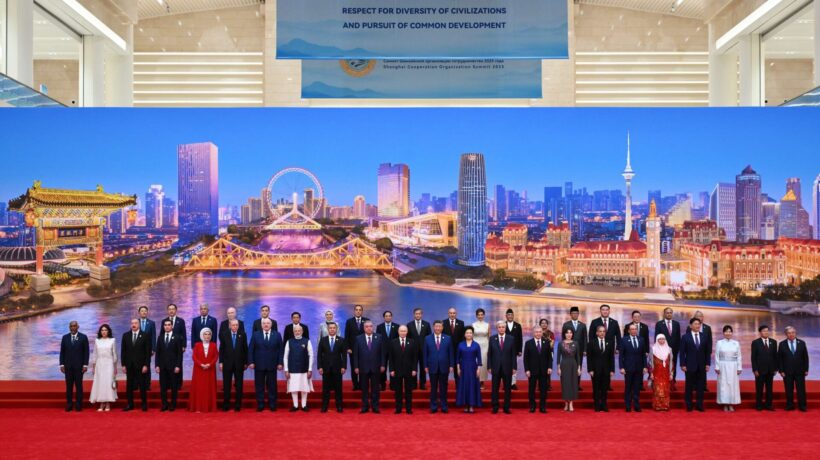
The recent summit of the Shanghai Cooperation Organization (SCO) in Beijing, often portrayed in headlines through images of missiles and military parades, carries a deeper and more enduring significance. Beyond the choreography of power lies an attempt to question the economic architecture that has governed the world for decades. For much of the Global South, including Africa and Latin America, this summit symbolized not only geopolitical maneuvering but also the search for a new path toward financial sovereignty and dignity.
For over seventy years, international finance has been largely monopolized by institutions such as the IMF and the World Bank. These institutions, while presented as neutral, have too often imposed conditions that undermined social protection, deepened inequalities, and silenced local priorities. Structural adjustment became another word for structural dependence. The SCO’s discussions of new financial mechanisms, such as a development bank or the use of local currencies, are modest in scale but radical in meaning: they represent the possibility of choice. They remind us that development need not be dictated exclusively by the priorities of the powerful, but can be built upon the agency of those long consigned to the margins.
For Africa, the implications are profound. To trade, borrow, and invest without the constant shadow of the dollar and its sanctions regime would mean the ability to plan with dignity and resist coercion. For Latin America, the idea of plural financial institutions resonates with decades of struggle against debt dependency and austerity. Multipolarity in finance does not guarantee justice, but it creates the space where justice can be pursued. It is a space where governments and peoples can say no to one set of conditions and seek another path.
China’s role in this process should not be romanticized. Beijing is pursuing its interests, just as Washington has long done. But the value of multipolarity lies precisely here: no power is left unchecked, no single narrative unquestioned. If the SCO’s economic initiatives mature, they will add to the alternatives already being explored by BRICS and other coalitions of the Global South. Together, they may begin to weave a fabric of solidarity where finance ceases to be a weapon and becomes once again a tool for human development.
The challenge before us is ethical as much as it is economic. Will these institutions embody cooperation and nonviolence, or will they replicate hierarchies under new banners? The answer will depend not only on Beijing or Moscow but on the active engagement of societies across Africa, Asia, and Latin America. Multipolarity is not an endpoint but a possibility. It opens the door to a world where dignity in development, freedom from coercion, and solidarity across borders become more than slogans.
To fully appreciate this transformation, one must also remember the human cost of the existing order. Behind the acronyms of IMF and World Bank are millions of lives shaped by austerity measures, by schools closed, hospitals underfunded, and jobs lost. Behind the rhetoric of “sanctions” are ordinary people unable to access medicine, trade their products, or live without fear of economic strangulation. If the SCO summit points toward alternatives, it is because the pain of the current system has been too deep and too long ignored. Justice is not an abstract word in this context; it is the lived demand of communities that have carried the burden of financial subordination.
At the same time, multipolarity calls for responsibility. A fairer order cannot emerge if governments of the Global South simply replace one dependency with another. It requires vigilance from civil society, from social movements, and from ordinary citizens to ensure that new institutions are shaped by principles of transparency, equality, and peace. Pressenza’s commitment to nonviolence resonates here: the rejection of economic violence is as urgent as the rejection of military violence. Both destroy human dignity, and both must be overcome.
The SCO summit in Beijing should thus be remembered less for its military parade than for the questions it raised about justice in the global economy. It invited us to imagine that another order is possible, one where no nation is condemned to eternal dependency, and where economic cooperation can become a foundation for peace. For the Global South, the challenge now is to seize this opening and ensure that multipolarity becomes more than a shift in balance among elites. It must become a chance to build a world of solidarity, dignity, and hope.



