

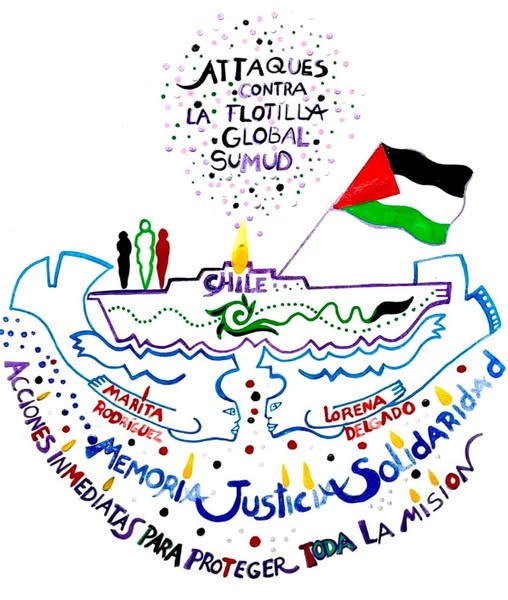
The last 50 hours in Gaza have unleashed an unprecedented scenario of devastation and humanitarian emergency in this recurring cycle of conflict. The Israeli ground and air offensive has intensified, severely affecting the civilian population and leaving a trail of destruction that any humanitarian flotilla will find if it manages to reach the port.
During this period, Gaza City has been subjected to massive bombings and ground military operations that have destroyed vital infrastructure, homes, and medical care centers. Tens of thousands of Palestinians have been forcibly displaced southward, facing the tragedy of having no safe place to seek refuge. The streets today are full of rubble, remains of collapsed buildings, and thick smoke mixing with the overwhelming heat.
Médecins Sans Frontières (MSF) has denounced that the intensification of the Israeli offensive has forced them to suspend their medical activities in the city. MSF’s emergency coordinator, Jacob Granger, explained that their facilities were surrounded by Israeli forces and that tanks came within less than a kilometer, leading to the activation of security protocols and the suspension of activities in Gaza City due to an unacceptable level of insecurity to protect medical staff and patients under their care. MSF emphasized that their clinics served vulnerable patients, including babies in neonatal units, critically injured, and terminally ill who now face increasingly limited access to essential care. The organization continues activities in central and southern Gaza but had to leave the city due to insecurity and relentless attacks. MSF also called on Israeli authorities to ensure unhindered access and protection of humanitarian organizations working in Gaza. In just the past week, MSF clinics conducted more than 3,600 consultations and treated 1,655 people with malnutrition, along with trauma patients, burn victims, and pregnant women. MSF warned that the population is being deliberately deprived of essentials for survival such as drinking water, food, shelter, and medical care and that the situation is worsening to the point where there might be no functioning hospitals if the conflict continues.
The Palestinian Health Authority reports that Gaza’s hospitals, especially the emblematic Al-Shifa Hospital, are overwhelmed, with morgues at full capacity and a constant influx of bodies and severely wounded in desperate conditions. At least 20 bodies were admitted last night alone, while Israeli drones and military forces restrict ambulance and health worker access and mobility. Women give birth in the streets without medical assistance, adding to the severe neonatal crisis. UNICEF has expressed concern for more than 26,000 children urgently needing care for malnutrition, while nutrition centers remain closed due to evacuation orders and military escalation.
On the political front, Hamas spokespersons have denounced the Israeli offensive as genocide against the Palestinian people, justifying their resistance as defense against a siege and brutal attacks. The Palestinian Authority strongly condemns the Israeli operation, denouncing the human tragedy and calling for international intervention to halt the escalation and protect civilians.
Visualizing the arrival of the humanitarian flotilla means confronting harrowing images: mothers holding premature babies in the dark, desperate young and old seeking temporary shelter, kilometer-long lines outside hospitals and water and food distribution points, an exhausted and insufficient medical system struggling to care for tens of thousands of wounded, ambulances blocked or delayed, and a widespread lack of electricity and potable water. Medical personnel work tirelessly under constant threats while military drones hover overhead.
This scenario is a clear snapshot of the immense humanitarian impact of the conflict, which has resulted in thousands of deaths and injuries, massive displacement, and destruction of vital infrastructure. It reflects the urgent need for international aid to enter to save lives and alleviate the suffering of a population trapped in a human rights crisis and utter vulnerability.
This account is based on official sources and testimonies, including the communications and warnings from Médecins Sans Frontières about suspending activities, reports from the Palestinian Health Authority, political statements by Hamas and the Palestinian Authority, and observations by international organizations such as UNICEF and the UN, highlighting the gravity of the emergency and the urgency of a coordinated and effective humanitarian response.