


Kazakh singer Dimash Qudaibergen will debut as executive producer at the helm of an ambitious mega music co-production with the Chinese broadcaster Hunan Broadcasting System. Filming, set to begin next week across various cities in Kazakhstan, aims to project the country’s cultural identity on a global scale through an audiovisual narrative that intertwines music, heritage, and cultural diplomacy.
A Country Telling Its Story to the World
In a land where the steppes bore witness to millennial caravans and ancient routes of knowledge, now cameras will traverse those same landscapes with a new purpose: telling Kazakhstan’s story to the world. The country transforms into an international set with the launch of an ambitious music project. Next week, filming will commence for a large-scale international audiovisual production led by Dimash Qudaibergen in his role as executive producer. In partnership with the influential and powerful Chinese media giant Hunan Broadcasting System, teams from China and Kazakhstan are already working on home soil to shape a co-production showcasing the country’s cultural identity in multiple dimensions.
A Mega Production Showcasing Diversity and Heritage
This global mega production, filmed across diverse regions, seeks to reveal to international audiences Kazakhstan’s cultural wealth and iconic landscapes through music and imagery. According to DimashNews, it will gather artists of various nationalities and styles with the aim of “creating a spectacle that displays musical and heritage richness to a global audience.”
Dimash Qudaibergen: More Than a Prodigious Voice, a Cultural Architect
For the first time in his career, Dimash embraces the role of executive producer of a work of this magnitude. Beyond the voice that made him a worldwide figure, he now projects himself as a creator and orchestrator of a narrative that fuses art, cultural diplomacy, and global projection. Taking on this role places him in a new professional dimension: not only as a charismatic performer but as a cultural ambassador who decides how Kazakhstan’s story is told to the world. This aligns with his recent trajectory: concerts in London, Madrid, and New York; collaboration with the Paris Opera; and now, a decisive step toward international production.
Cultural and Strategic Cooperation with China
The partnership with China fits within the framework of growing cooperation between the two countries and reflects a will to position Kazakhstan as a globally relevant cultural actor. Hunan Broadcasting System, one of Asia’s most influential networks, guarantees wide reach and international projection for a project that will not only tour Kazakhstani stages but also build bridges between East and West.
Filming and International Premiere
The shoot will extend through September across different regions, with a global premiere expected in 2026 as part of the international initiative *Voice Beyond Horizon*. Until then, what is at stake in Kazakhstan is not just a music production but an act of identity and openness: Dimash’s voice and the land that birthed him transformed into a planetary stage.
Kazakhstan, a Symbolic and Strategic Stage
Kazakhstan’s selection as a setting is no coincidence. It is the most developed country in Central Asia, with bilateral trade with China reaching US$44 billion in 2024—almost half of Beijing’s total regional exchange. Moreover, it is a land charged with symbolism: cradle of nomadic traditions, spiritual center of the Turkic world, and an urban laboratory of modernity, with Astana and Almaty as complementary poles of future and culture.
A Hybrid Format for a Global Cultural Narrative
According to media such as The Astana Times and Times of Central Asia, the project goes beyond a simple concert recording. It is a mega international production with a hybrid format: cultural documentary, television spectacle, and lyrical staging. Filming will take place in emblematic locations—Turkistan, Almaty, Aktau, Astana, and the regions of Akmola and Mangystau—culminating at month’s end.
Beyond Art: Diplomacy and Geopolitics
Though its final title remains unrevealed, the initiative transcends the artistic realm: it aligns with the Belt and Road logic, adds cultural diplomacy, and projects long-term strategic impacts.
Kazakhstan and the Modern Silk Road
Kazakhstan has assumed a central role in the modern expansion of the Silk Road. Since Xi Jinping launched the Belt and Road Initiative in Astana in 2013, the country has consolidated as a key partner, receiving infrastructure, investments, and cultural projects. Today, it forms part of three railway corridors connecting China with Europe and Turkey, significantly reducing travel times for goods and people.
Investments and Bilateral Trade
Between 2005 and 2023, China invested more than US$25.3 billion in Kazakh projects in energy, logistics, and infrastructure. In 2024, bilateral trade set a historic record of US$44 billion—almost half of the total regional exchange—and represented over 46% of trade between China and Central Asia.
Strategic Corridors and Modernization
Notable corridors include Aktau and the Trans-Caspian route, alongside a railway that bypasses Russian territory, strengthening Kazakhstan’s position as a Eurasian logistics hub. The domestic program Nurly Zhol (“Bright Path”), with US$9 billion allocated to modernize land routes, transport, and energy, is part of an integrated plan to position the country at the continent’s logistical heart. The Asian Infrastructure Investment Bank has also funded renewable energy projects, diversifying beyond oil and gas.
Bilateral Agreements and Cultural Diplomacy
Annually, both countries sign numerous agreements: cultural centers, university campuses, Lu Ban workshops, tourism exchanges, and visa exemptions. At the June 2025 Astana summit, Xi and Tokayev signed 24 agreements spanning innovation, energy, education, tourism, media, and financial cooperation.
Art as a Diplomatic Axis
Culture within this framework is not mere ornamentation but a diplomatic axis. Productions such as Dimash’s integrate into this international network seeking to build an interconnected, modern, and culturally diverse Eurasia.
Kazakhstan: A Strategic Bridge Between Continents
Kazakhstan is not only a physical bridge between powers but a strategic partner central to China in energy resources and minerals, as well as for its privileged geographic location. Its profile is strengthened in multilateral organizations like the Shanghai Cooperation Organization—which it helped found—and through Beijing’s support for its future BRICS membership.
The Belt and Road Reimagined
Presenting Kazakhstan in a global cultural television project strengthens this strategic role. The Belt and Road is no longer just trains, roads, and pipelines; it is also a visual and musical narrative capable of repositioning Central Asia as a space of encounter rather than periphery.
Dimash’s Leap
Within this framework, Dimash moves from prodigious voice to decision-maker. He becomes a cultural architect: selecting locations, choosing repertoires, convening artists of diverse nationalities and ensuring Kazakhstan is not merely a backdrop, but a protagonist. Although official sources highlight his role as executive producer, it is clear he will also participate as performer—it seems unthinkable that a project bearing his name and musical hallmark would omit his on-screen presence.
Locations: A Symbolic Map of Kazakhstan
A clear example is the choice of locations, forming a symbolic map where each city or region embodies a face of Kazakhstan:
Turkistan – Spiritual Capital
In the country’s south, Turkistan is Kazakhstan’s religious heart. It houses the Mausoleum of Khoja Ahmed Yasawi, constructed in the 14th century under Tamerlane’s rule and recognized by UNESCO as a World Heritage site. This shrine, center of Central Asian Sufism, condenses memory and roots. Beginning filming in Turkistan means projecting to the world the spiritual depth of a country reclaiming its Turkic roots and place in Islamic history.
Almaty – Cultural Capital and Urban Modernity
The former capital, surrounded by the Tien Shan mountains, remains the cultural epicenter. Its theaters, universities, museums, and the Abay State Opera consolidate it as Kazakhstan’s creative hub. Featuring Almaty in this production underscores the country’s offer not just of natural resources, but also a vibrant and contemporary cultural life, in dialogue with any global metropolis.
Aktau – Window to the Caspian
Located in Mangystau region, Aktau is Kazakhstan’s natural maritime outlet. Its port connects with Azerbaijan and the Caucasus via the Belt and Road Middle Corridor, seeking alternatives to routes controlled by Russia. Including Aktau signals openness: showing Kazakhstan as a country that dialogues with the sea and, by extension, the world.
Mangystau – The Sacred Desert
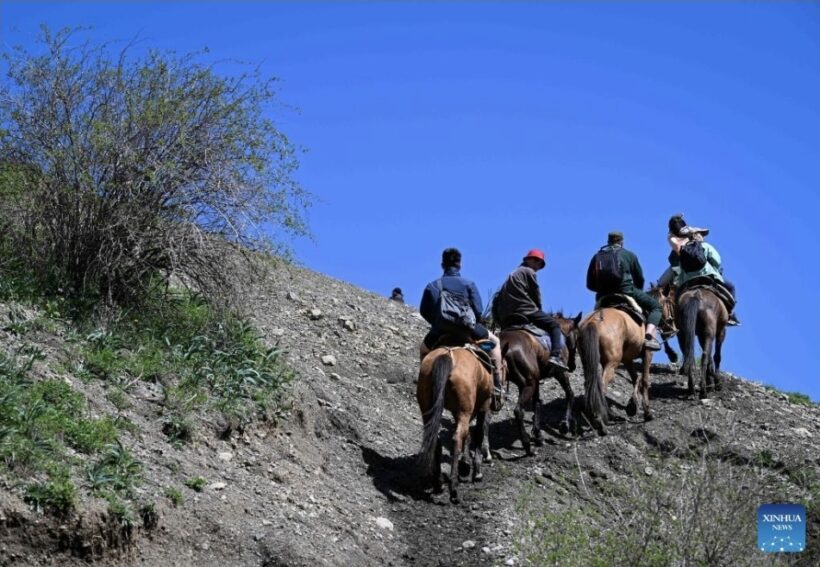
Known as the “land of 362 saints,” Mangystau combines mausoleums and pilgrimage sites amid white mountains, canyons, and deserts evoking eternity. Filming there highlights the link between ancestral spirituality and global cultural projection. Kazakhstan’s modernity does not deny memory but is nourished by it.
Astana – 21st Century Capital
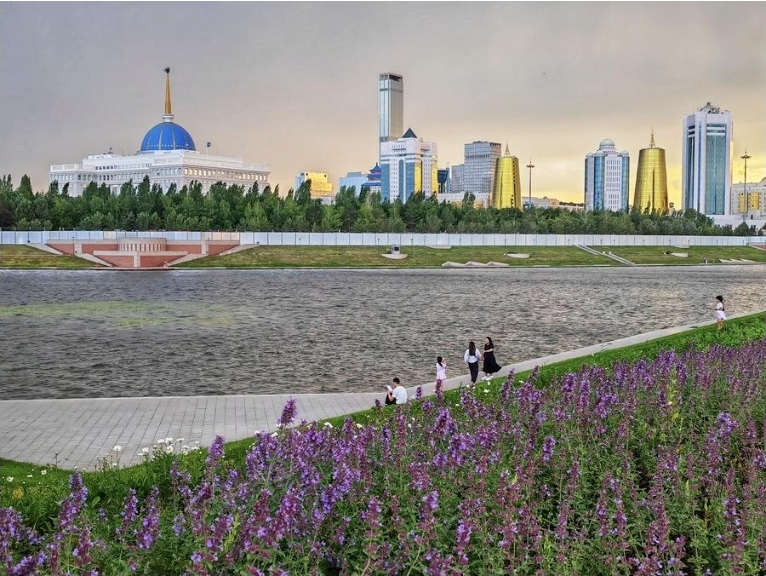
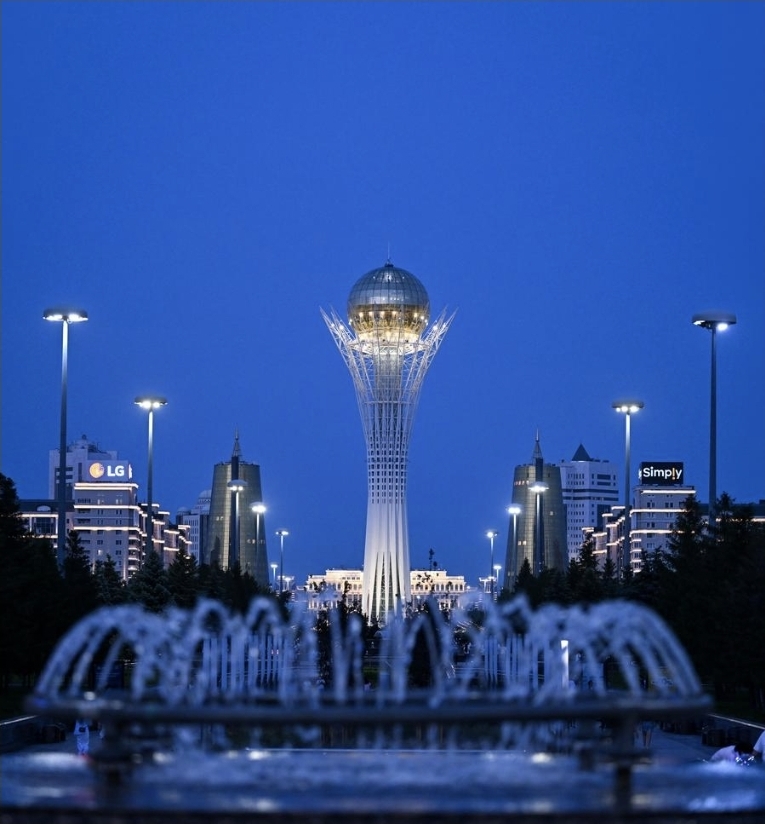
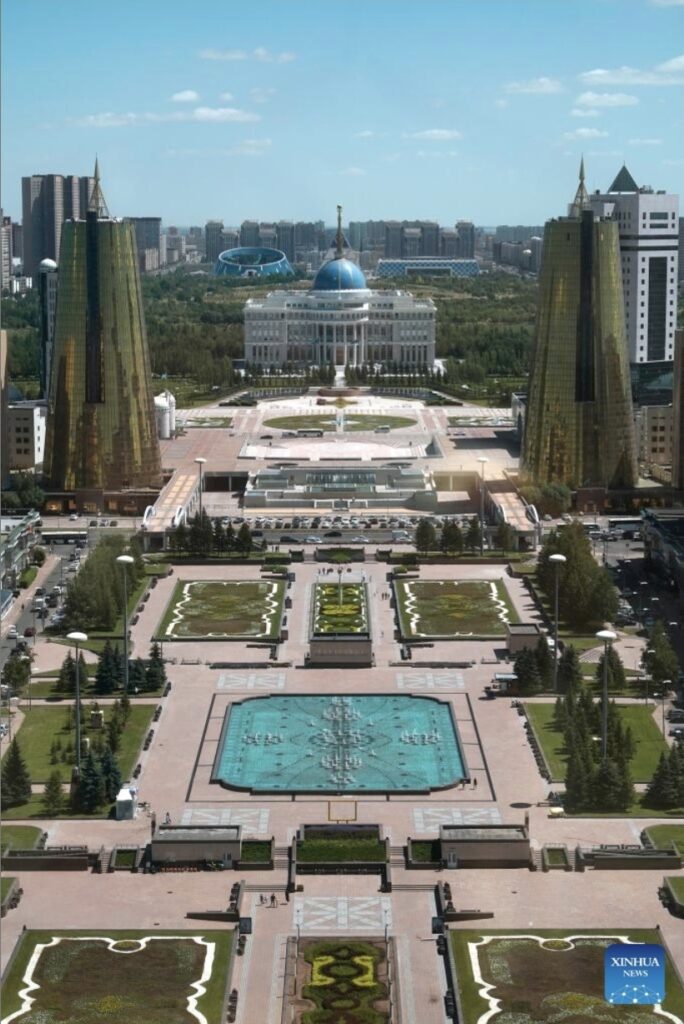
The current capital, conceived to symbolize modernity and regional power, rises with steel-and-glass skyscrapers, Norman Foster’s Palace of Peace, and wide avenues showcasing a country confidently advancing into the future. Filming here reveals not only Kazakhstan’s political and diplomatic face but also its development model in a moment of global reshuffling.
Akmola – The Nomadic Horizon
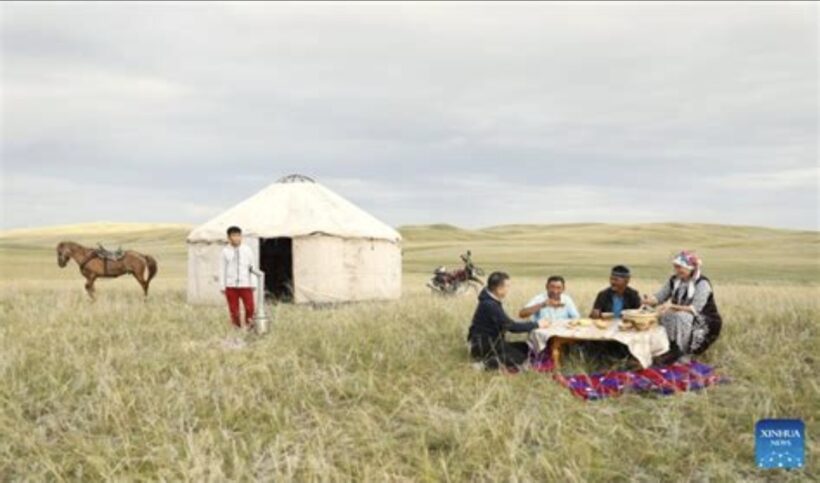
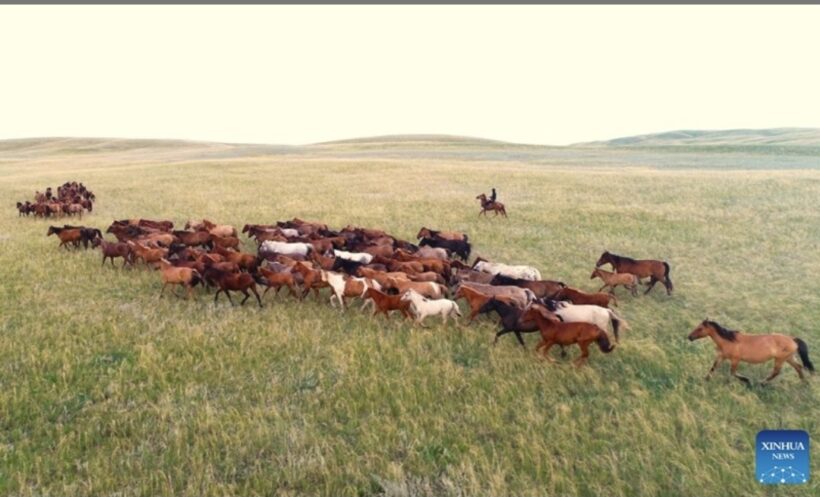
The region surrounding Astana preserves the memory of the steppe: a space of nomadic life, direct contact with earth and open skies. Including it in the production reminds us Kazakh identity was forged in this vastness and that modernization does not mean forgetting roots.



The Symbolic Infrastructure of Art
The cultural alliance between China and Kazakhstan, under the Belt and Road banner, is expressed not only in trains or pipelines but also in symbolic infrastructure. Dimash, with his voice of impossible registers, strives to build possible bridges, embodying that art is also sovereignty.
A Mosaic of Landscapes, Music, and Memories
The show, slated for 2026, will be a mosaic of landscapes, music, and memories. In times marked by wars and blockades, choosing to show cities like Turkistan, with its Sufi mausoleum, or Astana, with its futuristic towers, sends a political message encoded in cultural language: Kazakhstan is not periphery, it is center.
As Chinese and Kazakh crews ignite cameras in Turkistan or Almaty come Monday, something more than a shoot will begin. It will be an act of cultural diplomacy revealing how nations seek new ways to find each other. There, on the steppes and in theaters, a silent yet crucial contest is played out: showing that power can also express itself through singing, storytelling, and sharing beauty.
Dimash, both performer and producer, is the voice and architect of this venture. Kazakhstan, with its millennial cities and futuristic metropolises, rises as a living bridge between Asia and Europe, between East and West. In a world fractured by violence and distrust, this project reminds us that art can still open luminous cracks even in the highest walls.



