

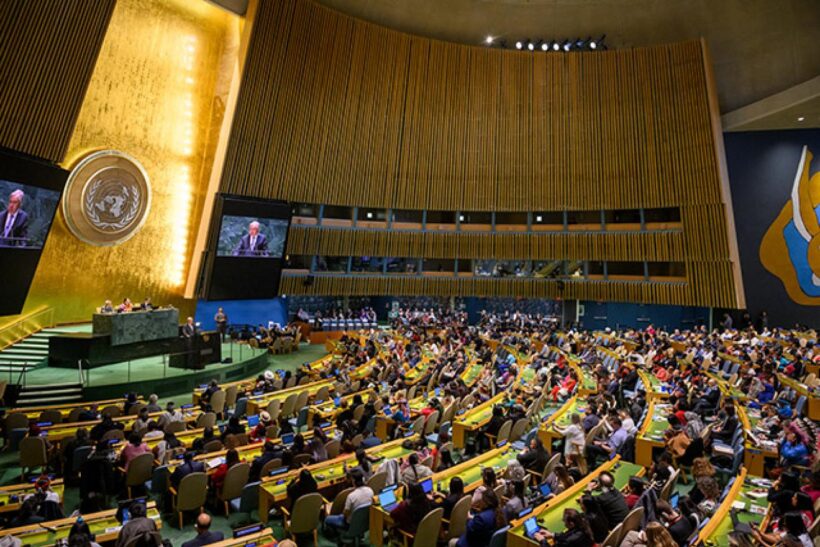
The United Nations has called things by their name: genocide. It did so today, with a searing report documenting mass killings, planned starvation, and the deliberate destruction of Palestinian life. The accusation is not rhetorical: it describes the intent to erase a people. As that word—genocide—circulates the globe, Israel unleashes a new phase of its ground offensive in Gaza City, where hundreds of thousands of civilians still cling to survival. In a single day, more than 85 dead, hundreds wounded, entire neighborhoods leveled. None of this surprises those who have followed the pulse of this war, but the magnitude of the charge forces a turning point.
Far from retreating, Benjamin Netanyahu appears to have chosen open defiance. At a Finance Ministry conference, he admitted that Israel “is entering diplomatic isolation” and that its economy may take on the traits of an “autarkic economy.” This was no slip of the tongue. It was a strategic statement: to embrace isolation as the cost of war. With an uncommon candor in his political record, he denounced what he calls “media artillery” in social networks and the press, accused countries such as Qatar of financing anti-Israeli campaigns, and announced colossal investments to counter that tide. “We will break the blockade, we will create the independence we need,” he said. In other words: if the world makes him a pariah, he will build a bunker-state.
This rhetoric reveals the depth of the dilemma. Netanyahu does not merely ignore the UN report; he turns it into fuel for a narrative of national resistance. He knows that the images of Gaza in ruins, the mounting death toll, and the charge of genocide will isolate him. And yet he presses on. It is the logic of a leader who sees war as destiny and international siege as an opportunity to rally his base, even at the expense of the economy and international law.
The risk for Israel is enormous. Prolonged isolation can sever strategic supplies, sink investments, and—above all—erode ties with long-standing allies. The risk for Palestine is deadly: more destruction, more displacement, more hunger. And the risk for humanity is the normalization of barbarism: a state accused of genocide choosing to answer with even more fire.
The question is not only what the international community will do—which so far has preferred verbal condemnation over effective embargo—but what global civil society will do when the supreme crime threatens to become routine. Netanyahu has already given his answer: to defy the world and dig in. History will judge not only his actions but also the complicity or silence of those who look on.



