
The recent finding by NASA’s Perseverance rover on Mars—a possible sign of ancient microbial life in the rock nicknamed Cheyava Falls—could mark a turning point in the history of human knowledge. What makes this discovery truly monumental is not only the technical evidence but what it implies: the possibility that we are not an exception, but part of a universal logic of life. At this intersection of science and philosophy, we are compelled to reconsider our deepest myths, beliefs, and assumptions.
Moreover, although absolute confirmation will require bringing the Martian samples back to Earth—a mission not expected before the 2040s—the current evidence already challenges traditional narratives. It forces an urgent debate: what remains of religious dogma when evidence suggests a living cosmos?
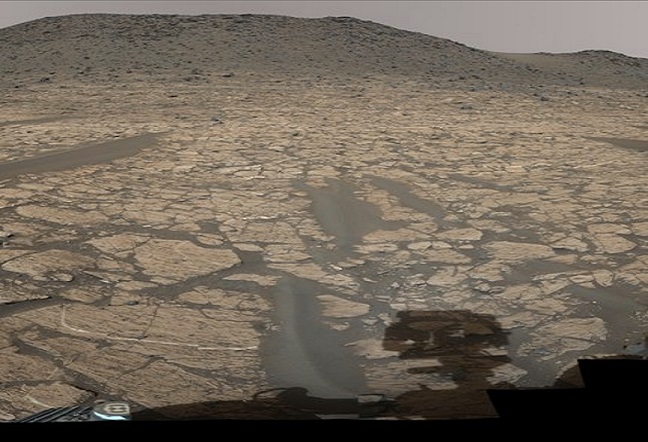
For those unfamiliar with space instrumentation, imagine capturing an almost inaudible voice behind cosmic noise. Perseverance performs chemical analyses of rocks using spectroscopy, X-ray mapping, elemental scans, and millimetric sensors. Remarkably, in Cheyava Falls it identified “leopard spots,” zones of chemical contrast containing minerals such as vivianite and greigite, coexisting with organic molecules. On Earth, these associations are often linked to microbial redox processes.
Scientific rigor does not allow easy interpretation. Teams compared these signatures with abiotic models—reactions without life—under varied conditions of temperature, pH, and pressure, looking for non-biological mechanisms that could generate the same chemical textures. So far, no alternative explanation has successfully reproduced all observed features: mineral distribution, chemical gradients, and coexistence with organic compounds. Taken together, the data strongly point to an ancient microbial hypothesis.
The study’s authors call it a “possible biosignature,” not conclusive proof. Yet it is already the most persuasive evidence ever obtained beyond Earth. While those samples remain on Mars, the hypothesis of ancient microbial life there occupies the center of scientific debate.
The mission to return these samples to Earth (Mars Sample Return) is planned for the 2040s, after multiple technical and budgetary delays. During that long interval, we cannot apply the full analytical sophistication of terrestrial laboratories. But this does not invalidate the discussion: we have moved from waiting for future evidence to weighing the accumulation of current signs.
This long wait creates an “epistemological threshold”: we stand neither in certainty nor in mere speculation. Science operates on provisional hypotheses, constant testing, and collective review; today these clues already press us to reconsider the human narrative.
This moment calls us into the anthropology of the cosmos—the study of how cultures construct identity when confronted with the possibility that life is not exclusive to our planet. Foundational myths of many religions have asserted that Earth is the center of divine design, that life is a unique and special act. Now scientific voices reopen the symbolic map of the possible. Carl Sagan put it poetically: “The cosmos is within us. We are made of starstuff. We are a way for the universe to know itself.” That statement affirms cosmic participation, not exceptionality. Similarly, Neil deGrasse Tyson warns: “If our solar system is not unusual, then there are so many planets in the universe … To declare that Earth must be the only planet with life … would be inexcusably bigheaded of us.”
From an anthropological perspective, the discovery of extraterrestrial life—or even a strong indication of it—would not merely be a scientific fact: it would reconfigure species narratives, religious frameworks, ethics, and collective destiny. What was once considered a privilege could be revealed as human arrogance.
Philosophers of science have likewise reflected on the very definition of “life” and how it carries an anthropocentric bias. In seeking life elsewhere, we expose how our criteria are shaped by earthly assumptions. Jean Schneider has argued that any discourse on extraterrestrial life must reconsider its conceptual premises, its preconceived definitions, and the very boundaries of knowledge.
The Fermi paradox—the apparent contradiction between the high statistical probability of extraterrestrial life and the absence of observable contact—remains a living debate. Some invoke it to claim we are unique; others propose that advanced civilizations choose silence or that interstellar travel is prohibitively difficult. Here lies the tension: is the absence of evidence truly evidence of absence, or merely a limitation of our methods and expectations?
At this point the column must not remain silent. This finding should not stay as a beautiful hint but ignite controversy. How much certainty is needed to displace a myth? Religious beliefs do not shift with half-proofs but with deeper cultural transformations. What role will contemporary theology play in a livable cosmos? Religions that claimed exclusivity may be forced to reinterpret themselves symbolically, re-signifying their myths. How will science and spirituality coexist in this new paradigm? Will spirituality be reduced to metaphor, or can it coexist with an empirical vision so expansive? What ethical responsibilities do we acquire as a species once we acknowledge we may not be unique? If Mars once hosted life, even microscopic, we inherit duties of stewardship toward the biological heritage of the cosmos. Can humanity embrace such a symbolic shift without cultural fragmentation? Resistance will be strong: identity-based indignation, fear of lost centrality, clashes between faith and evidence.
We now stand at the threshold of a renewed symbolic era. If those Martian spots indeed turn out to be traces of life, they will confirm not an exclusive miracle but a probable logic of the universe. Our planet will not be stripped of meaning but will be re-signified: no longer a divine center, but a sensitive participant in a cosmic biological symphony.
This transformation will be neither immediate nor peaceful. It will require philosophical debate, theological renewal, anthropological rethinking, and ethical reflection. Yet the impulse is already here: through instruments and rocks, science has brought us a murmur that resonates with age-old questions. Rather than closing the debate, this discovery opens a new threshold—not toward final certainties, but toward a humbly expanded planetary intelligence.