

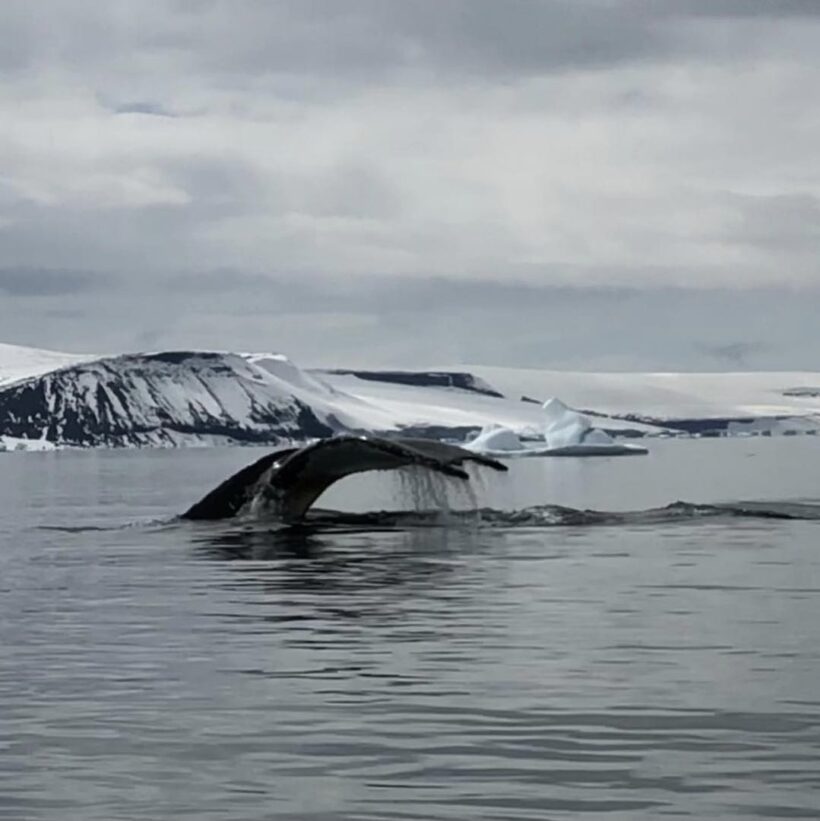
For a few seconds, my imagination staged a surreal scene: a gray, fortified building in the middle of the ice, with the flags of Russia and the United States flying side by side, as if the Cold War had ended with a tea party. But no, that image exists — and only halfway — in two very particular corners of the planet: Antarctica and outer space.
In reality, the “joint military base” where Vladimir Putin and Donald Trump will meet this Friday, August 15, is not a symbol of binational cooperation, but rather a facility of the Pentagon itself: Joint Base Elmendorf–Richardson (JBER), in Anchorage, Alaska. Here, “joint” does not refer to an improvised peace treaty, but to the 2010 merger of a U.S. Air Force base with an Army fort. Under exclusive U.S. control, it houses both the 11th Airborne Division and the 3rd Wing of the Air Force, at a strategic point for projecting power toward the Arctic, Asia, and Northern Europe.
Holding the meeting here follows the textbook logic: a secure perimeter, logistics under U.S. control, and a location that, while not part of the continental U.S., is not “foreign” to either leader. In other words, a space where diplomacy is played at home, but with a view of the Bering Strait — a reminder that geography still dictates more than rhetoric.
So no, there will be no Russian and U.S. uniforms walking shoulder to shoulder down the halls of JBER — at least not officially. The only thing to be shared here will be the agenda of two leaders who, between interpreters and long tables, will try to turn the Arctic chill into a setting to warm relations that have been frozen for years.
In the final preparations, the White House and the Kremlin have finalized their official agendas, confirming that there will be no political intermediaries during the initial meeting — only interpreters. U.S. security forces have tightened access control and established a high-security perimeter at JBER. Media reports describe a logistical operation that includes accommodations for delegations, press areas, and contingency plans for protests or incidents.
TASS reported that the final preparations are underway: The President of Russia, Vladimir Putin, met with members of the country’s top leadership as part of preparations for the U.S.–Russia summit in Alaska.
“I have gathered you today to tell you <…> about the stage we have reached with the current U.S. Administration, which, as we all know, is making quite energetic and sincere efforts to end the fighting, resolve the crisis, and reach agreements that are in the interest of all parties to the conflict. To create lasting conditions for peace between our countries, in Europe, and in the world in general,” said the Russian head of state.
He also did not rule out that in upcoming stages new agreements could be reached on the control of strategic offensive weapons.
And while the final logistical and security details at the base are being fine-tuned by the United States, Donald Trump has made statements combining diplomatic threats, strategic ambiguity, and controversial remarks that have sparked international reaction. While the declared objective of the summit is to address the war in Ukraine, bilateral economic potential, and other strategic issues, Trump has described the meeting as a “listening exercise” and left open the possibility of additional meetings, even involving Ukrainian President Volodymyr Zelensky, if initial progress is made.
He also issued the threat that there will be “very severe consequences” if Putin does not agree to a ceasefire in Ukraine, without specifying whether these would be sanctions, tariffs, or other measures.
In a humorous note, so to speak, the geographic confusion and nostalgic rhetoric, when referring to Saint Petersburg as “Leningrad” in a speech, drew criticism and ridicule on social media.
He also hinted at a possible trip to Russia after the summit and made a controversial remark describing certain areas of Ukraine as “valuable seafront property,” interpreted as openness to territorial concessions.
Trump made clear the conditioning of his support for Zelensky, stating that any peace must include him from the outset and rejecting any territorial negotiations without his direct participation.
The summit arrives framed by a communication strategy from Trump that blends shows of toughness with calculated ambiguity. Holding it at a U.S. military base reinforces the image of control and security, but his previous remarks have opened divergent interpretations, especially regarding Ukraine’s territorial integrity and the U.S.’s geopolitical projection. Expectations are high, both for the symbolism of the meeting and for its potential to serve as a prelude to broader negotiations involving Kyiv.
Meanwhile, in Antarctica…
At the other end of the planet, far from fortified military bases and summits where every word is calculated like a chess move, there is a place where “joint” means something radically different. There, in scientific stations and temporary camps, Chileans, Russians, Americans, Chinese, and dozens of other flags live and work together, sharing resources, data, and rescue missions without asking which country the other comes from. No one argues over who “controls” the ice; it is shared because survival depends on it. There are no negotiations with the threat of sanctions, nor rhetoric for the press: cooperation is immediate, practical, and unconditional — because the cold does not understand geopolitics, and science should not either.



