

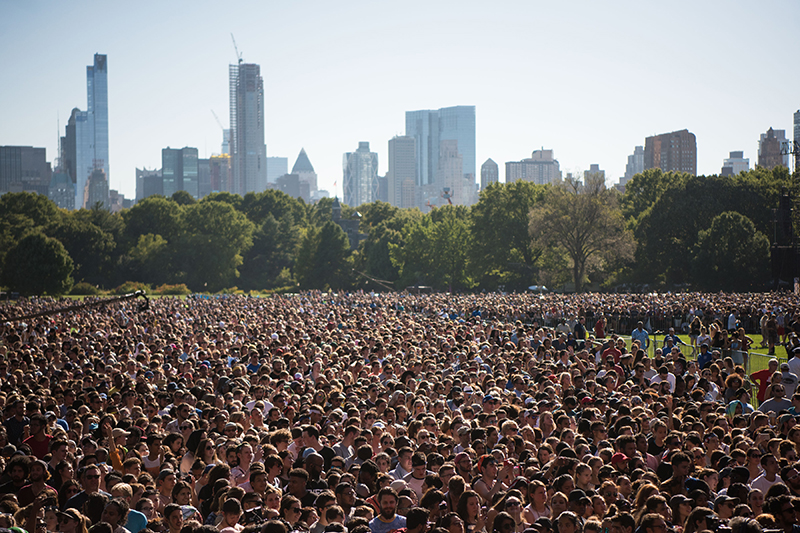
The upcoming Global Citizen Festival in New York City, scheduled for Saturday, September 27, 2025, on Central Park’s Great Lawn, offers a timely opportunity to reflect on the notion of global citizenship. Whether we like it or not, we are all now interconnected members of a global community, and we must act accordingly. As the French say, “Il faut vivre avec son temps”—we must live with our time.

The Global Citizen Festival’s mission is to drive positive global change by tackling some of the world’s most pressing issues—poverty, climate change, education, and health. The event aims to achieve ambitious goals: providing energy access to 1 million people in Africa, ensuring quality education for 30,000 children, protecting 30 million hectares of the Amazon rainforest, and mobilizing 40,000 volunteers in New York. Through music and activism, it encourages participants to take action, earn tickets, and advocate for policies that promote sustainable development and social justice worldwide.
The distance between us continues to shrink, day by day, as the speed of transportation accelerates and technology erodes language barriers. Digitalization of money transcends national boundaries and state controls, while the immediate circulation of information brings the world closer together. Today, with the palm of our hand, we can communicate with almost anyone across the globe.
The NGO humanitarian movement is evolving, engaging at local, national, and international levels. From renewable energy initiatives and sustainable farming practices to supporting indigenous communities, cooperatives, alternative businesses, urban planning, transportation, and networks of mayors, the world is teeming with transformative initiatives.
However, the real issue is not about efficiency—it’s about process and direction. Global citizens are already preparing the structures needed to replace the archaic concept of the nation-state. The collapse of far-right governments and their failure to administer effective policies have created a power vacuum, opening the door for a new form of governance. This emerging culture is one in which global citizens collaborate, develop projects, and tackle challenges that transcend borders, languages, and cultural fragmentation.
We can collaborate, share projects, and build a new future together without excessive control or cumbersome administrative systems. As the saying goes, “If we build it, they will come.”



