

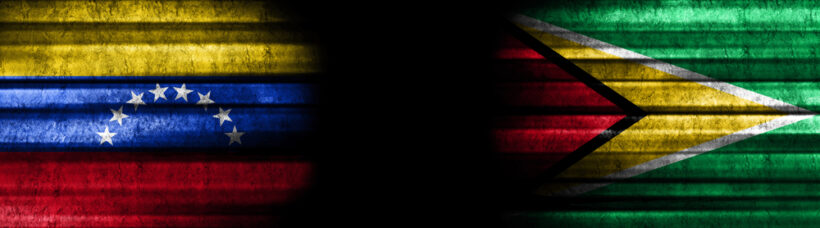
The Esequibo Territory: Disputed Sovereignty and Global Stakes The Esequibo territory, with over 159,000 km² of jungle, rivers, and resources, was historically part of the Viceroyalty of Peru and later of the Captaincy General of Venezuela during colonial times. When Venezuela gained independence in 1811, it inherited that territory under the principle of uti possidetis iuris, which upholds colonial borders. However, British expansion from what was then the colony of Guyana advanced progressively. In 1899, a rigged arbitral award in Paris—where the United States acted against Venezuela—granted the Esequibo to the United Kingdom.
Venezuela never accepted the ruling. In 1966, just before Guyana gained independence, the Geneva Agreement was signed between Venezuela, the United Kingdom, and Guyana itself. It acknowledged that the dispute remained unresolved. Since then, Venezuela has maintained its active claim, while Guyana has consolidated de facto control over the territory.
This territory belongs to Venezuela. Historical evidence, colonial maps, and the principle of self-determination support this claim. But history took a different path. Foreign powers—first the United Kingdom, and today the United States through ExxonMobil—have turned this land into a contested zone. What began as a poorly resolved border conflict has become a global geopolitical dispute.
What Is Happening Today Between Guyana and Venezuela
Since Guyana signed oil exploration agreements with ExxonMobil off the Esequibo coast in 2015, the conflict has taken a new turn. Venezuela responded by intensifying its claims. It included the issue in a national referendum in 2023, where millions voted in favor of incorporating Esequibo as a Venezuelan state. It also created a new administrative region for the territory, appointed a governor, and even issued official maps including it.
Guyana, on the other hand, appealed to the International Court of Justice (ICJ) to validate the 1899 award. The United States has increased its support for Georgetown with joint military exercises and high-level diplomatic visits. The region lives in tense calm. Warships, drones, and media campaigns accumulate like dry gunpowder.
A new element has now been added to the equation. The BRICS countries—particularly Russia, China, and Iran—have expressed support for Venezuela’s right to self-determination and its historical claim over Esequibo. What was once a border dispute has become a stage for global realignments.
Esequibo and Its Economic Potential
ExxonMobil has discovered offshore reserves near Esequibo exceeding 11 billion barrels of oil—one of the largest in the world in the last decade. These reserves have transformed Guyana into the fastest-growing economy on the planet. Its GDP grew by 62% in 2022 and by an additional 38% in 2023.
Guyana’s economy now depends on oil for more than 60% of its revenues. ExxonMobil generates over USD 6 billion annually in the country—a staggering amount for a state with barely over 800,000 inhabitants. According to 2023 data, ExxonMobil’s global revenue was approximately USD 380 billion.
Guyana receives a 14.5% royalty rate, a figure criticized domestically and internationally as low given the scale of exploitation. Meanwhile, poverty and inequality remain structural problems.
What would this mean for Venezuela? A potential recovery of Esequibo would allow the country to add more than 11 billion barrels to its already world-leading reserves. It would also enable diversification of its oil matrix in the post-sanctions era. Even 20% of that wealth would represent a total geopolitical and economic shift for Caracas. It would provide tools to relaunch its economy and negotiate from a new position. And Exxon knows it.
Riches Under Siege: Esequibo as an Extractivist Prize
Esequibo is not just a jungle territory or a disputed border. It is a land overflowing with wealth. Beneath its rivers, mountains, and plains lies one of the most coveted natural arsenals on the continent: gold, bauxite, diamonds, rare earth elements—and in recent years, vast offshore oil deposits. That is the real reason foreign powers are interested in this remote corner of the world.
The region includes gold mines such as Aurora, operated by China’s Zijin Mining, producing over 150,000 ounces of gold per year. It also hosts the Toroparu project with 6 million ounces in reserves, and Oko West, developed by G Mining Ventures. In 2022 alone, Guyana exported more than USD 800 million in gold, much of it from concessions within Esequibo.
Bauxite, essential for the aluminum industry, is extracted by subsidiaries of Rusal (Russia) and Bosai Minerals Group (China). Add to that more than 100,000 carats of diamonds annually, and emerging exploration of rare earths, copper, molybdenum, and lithium.
The geopolitical turning point came in 2015. ExxonMobil discovered massive oil reserves in the Stabroek block off the Esequibo coast. Since then, oil has flowed, platforms have multiplied, and with U.S. backing, Guyana became the fastest-growing economy in the hemisphere. By 2024, Exxon was producing over 600,000 barrels per day and expects to reach one million.
This is not a border dispute—it is a struggle over 21st-century resources. The riches of Esequibo explain why powers remain silent, why multinationals rejoice, and why Venezuela persists.
The Role of the United States and ExxonMobil
The United States has turned Guyana into a virtual protectorate. Through ExxonMobil and Chevron, it controls the country’s main sources of income. It also manages geostrategic information from offshore platforms and has established unprecedented military and diplomatic cooperation.
Exxon is not just any company. It is part of the real power structure in the U.S. It has more influence over foreign policy decisions than many congressmen. Its control over Guyana’s oil makes Esequibo a first-tier geopolitical asset.
China also has interests in Guyana. It has financed infrastructure and trade. Russia and Brazil hold strategic investments. Iran has shown interest in diplomatic rapprochement with Venezuela and some Caribbean states. Although these countries are not seeking conflict, they could intervene diplomatically or in multilateral forums to contain the unilateral expansion of the United States in the region.
Venezuela, along with these allies, is betting on a reconfiguration of the board. This is not just about reclaiming Esequibo. It is about redefining how Latin America resolves its disputes—with sovereignty, without foreign interference, and with a multilateral vision.
Could There Be War? Conflict Scenarios
An open war between Venezuela and Guyana remains unlikely—but not impossible. While Venezuela has military superiority, a direct conflict with a small nation protected by the U.S. umbrella could have catastrophic consequences for the region. The Maduro government seems aware of this limit. So far, its actions have been more symbolic and diplomatic than militarily effective.
Guyana has attempted to internationalize the conflict. It has sought explicit support from the United States, the Commonwealth, and even the International Court of Justice (ICJ). Joint military exercises between Guyanese and U.S. forces are part of a deterrence strategy. They send a clear message to Caracas: any aggression will be answered—and not just by Georgetown.
In the event of escalation, countries supporting Venezuela—such as China, Russia, Iran, and Brazil—could play a crucial role in preventing the United States from unilaterally intervening as the continent’s enforcer. In this era of global realignment, the old power game is no longer unilateral. This would not just be Guyana versus Venezuela—it would mirror a world in transformation.
A Conflict That Defines the Future
The Esequibo dispute is not a territorial anachronism. It reflects the contemporary global tensions between sovereignty and interference, between development and plunder, between historical justice and geopolitical power. Venezuela, despite its internal flaws, presents a legitimate claim based on history and international law. Guyana, despite its fears, has ceded its economic sovereignty to the interests of major corporations.
The final question isn’t just what will happen to Esequibo. It also forces us to ask what kind of international relations we want to build in the 21st century. Relations dictated by force, or guided by law and the self-determination of peoples.
This conflict will set the tone for how territorial disputes are resolved over the next 50 years. If the logic of gunboat diplomacy, commercial blackmail, and aircraft carriers prevails, no nation will be safe. But if active diplomacy, recognition of historical rights, and a real redistribution of global power win the day, then a new path will have opened.
Venezuela and its allies understand that they cannot afford to lose this historic opportunity. And the United States, for its part, knows that if Exxon loses Guyana, a bigger prize lies on the table: the unlocking of Russian Arctic energy exploitation, where reserves are massive and potential profits ten times higher. Sometimes, retreating in time is the wisest strategy.
Common sense must prevail. Let peace be the rule, not the exception. No one loses by yielding to justice. Venezuela regains what is rightfully hers. Guyana frees itself from corporate tutelage. And the United States reorients itself toward more stable business—without destroying a corner of South America. Recovering the ancestral ownership of lands is not regression. It is reparation. It is a return to the light from the colonial shadows that still linger.
A History of Dispossession: Ten Steps Toward the Esequibo Crisis
“First they came for the river, then for the jungle, then for the oil… and by the time we arrived, the borders were already drawn in someone else’s blood.”
Step 1. Before the Empires: Indigenous Peoples of Esequibo
Long before the words “Venezuela” or “Guyana” were ever uttered, the region was inhabited by the Warao, Pemón, Arawak, and Carib peoples. Their relationship with the land was not one of ownership, but of spiritual belonging. The history of Esequibo does not begin with treaties—it begins with free peoples.
Before maps, there were sacred rivers. Before borders, there were fishing routes and shared languages. It was colonization that turned Esequibo into a prize. The people who lived there recognized no kings, no ambassadors—only living land. And that was the first thing taken from them.
Step 2. The Arrival of the Spanish (1500–1750)
The Spanish were the first Europeans to lay claim to this territory. For the Crown, Esequibo was part of the Captaincy General of Venezuela. They explored it, mapped it, and defended it. On imperial maps, Esequibo was Venezuela. There was no debate.
Dutch presence marked the first formal act of occupation—not with cannons, but with cartography. They drew lines on a map and claimed ownership over jungles they had never walked. Thus began the imperial logic: he who draws the map believes he owns the land.
Step 3. The British Enter: Covert Colonization (1750–1814)
Taking advantage of the decline of the Spanish Empire, the British began settling without legitimacy. They did so with plantations, Protestant missions, and military outposts. In 1814, the United Kingdom formally acquired nearby Dutch colonies… and the eastward advance into Esequibo continued quietly.
The transfer was outrageous. One empire gave lands to another as if they were merchandise. Not a single local consulted. Not a single community heard. Venezuela was not part of the deal. Colonialism didn’t just occupy territories—it trafficked them like imperial furniture.
Step 4. The Seizure of Esequibo by the British Empire
While Venezuela was being born as a republic, the United Kingdom continued to occupy Esequibo. There was never an agreement—it was a unilateral seizure. What was once Spanish, and later Venezuelan, ended up under the British flag—without a single shot fired.
Schomburgk was not a scientist. He was an agent of expansion. His “line” didn’t follow geographical facts, but strategic interests. The map became a weapon. And from then on, Venezuela lost more than territory—it lost its voice in the face of global powers.
Step 5. The 1899 Arbitral Award: The False Border
In 1899, a fraudulent arbitration was held. The United States supported the United Kingdom. Venezuela was excluded from the process. In 1949, a judge confessed the fraud. Venezuela has never recognized the ruling.
That arbitration was a farce disguised as justice. Five judges—four Europeans. Only one represented Venezuela. The verdict had been cooked before the hearing. The Paris Award was not a solution—it was a diplomatic theft with an imperial stamp.
Step 6. Venezuela’s Claim Endures
Throughout the 20th and 21st centuries, Venezuela has maintained its claim over Esequibo. The 1999 Constitution reaffirms it as part of the national territory.
The Geneva Agreement is the clearest acknowledgment that foul play occurred. It is the document that revives the hope for justice in Venezuela. And it is also the thorn in Guyana’s side—for without that agreement, it would never have had…
Step 7. Guyana Is Born in 1966 Without Resolving Esequibo
The Geneva Agreement recognized the dispute. Still, Guyana took control of the territory without a definitive resolution.
Twelve years of silence didn’t end the claim—it only paused it. Esequibo is not a frozen issue—it’s a living wound. Venezuela reactivated its claim because history has no expiration date. And because prolonged silence does not mean surrender—but strategic patience.
Step 8. ExxonMobil Moves In (2015)
They knew it was a disputed area. Yet they exploited oil, under Washington’s protection. They transformed Esequibo into a corporate platform.
This is the beginning of a new chapter. It’s no longer just territory—it’s oil. ExxonMobil didn’t enter as a neutral player, but as a modern colonizer with a stock ticker. Guyana handed over the subsoil to a corporation and turned Esequibo into a multinational business at the expense of a historic conflict.
Step 9. The Hague: Diplomacy for the Wealthy
Guyana appealed to the International Court of Justice (ICJ). Venezuela objected. The case remains open. Many fear a technical ruling that would repeat the injustice of 1899.
When Guyana goes to The Hague without prior agreement, it violates the Geneva Agreement itself. The ICJ, far from being impartial, has shown signs of aligning with Western interests. International law is beginning to look too much like the law of the strongest.
Step 10. The United States’ Silent Strategy
As in Iraq. As in Libya. Control the resource. Control the territory. International silence. Exxon in charge.
The referendum is not just a nationalist gesture. It is a symbolic act of reaffirmation in the face of an international system that ignores the voice of the people. While Exxon drills and the ICJ deliberates, Venezuela shouts its truth at the ballot box. And even if diplomacy gets uncomfortable, the message has been delivered.
What If Esequibo Could Speak?
If Esequibo could speak, it wouldn’t ask for permission. It would scream. It would denounce its plunder with an Indigenous accent, with the memory of the jungle, with scars of rubber, gold, and oil. It wouldn’t show maps—it would show rigged treaties, extractive platforms, military bases, and contracts with foreign names.
Esequibo is not a legal dispute. It is an open wound of colonialism. A brutal mirror of who we still are—and who we could stop being.
If Esequibo could speak, it would remember the treaties signed without its voice, the maps drawn with foreign ink, and the broken promises of development for its Indigenous peoples. It would cry out that its wealth has been its curse, that each barrel of oil extracted is a heartbeat stolen from its jungle, and that every investment cheered by multinationals has been a defeat for its people.
It would say it needs no intermediaries—that it already knows too well the language of exploitation. That it has been witness to centuries of looting, and that this time, it will not be silenced by speeches about invented legality. It would denounce those who see it as a figure, a reserve, a useful border, and would remind the world that it is also living history, stolen memory, and a land in resistance.
Epilogue
And if Esequibo could laugh—it would do so bitterly. Because sometimes, maps are drawn with oil instead of ink, and borders are traced with drills instead of treaties. It would laugh at the courts that speak of justice without seeing the jungle, at the governments that call themselves democratic while handing over the subsoil, and at the NGOs that appear for the whales—but vanish for Exxon.
Because Esequibo has already understood the essential: it’s not enough to exist on the map—you must resist in memory. And this time, its story will not be told by the powerful, but by those who do not forget. By those who still believe that a river cannot be sold.
And that dignity, no matter how plundered, remains—flowing like an underground river, naked, searching for its course… through jungles that still remember its name.



