

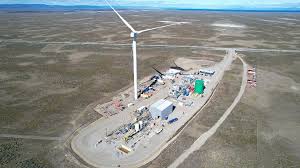
First it was nitrate, then lithium. Today, green hydrogen. And history threatens to repeat itself.
The history we did not learn
Chile lost its nitrate and did not even grieve. It was taken away in the name of progress, exploited until only white dust and ghost towns remained, and sold by the ton to the highest bidder. There was no national company, no industrial state, no justice for Iquique or Tocopilla. Only a broken memory and the invisible salt between the nails of the north.
Then came copper. First exploited by foreign companies, recovered by Allende, handed back by the dictatorship, and today Codelco survives surrounded by a policy that suffocates it. Copper financed schools, hospitals, roads, but it also served to enrich the same few as always. It was not enough to have the resource if there was no complete control.
Lithium was the new white gold. They promised sovereignty, energy transition, scientific development. But it was captured by a handful of companies, kept by SQM, sold to the world without the country even realizing it. The rent was minimal, sovereignty was symbolic, and state participation was trapped in weak agreements. Chile could have been the Saudi Arabia of batteries, and ended up leasing out its salt flats.
Now comes green hydrogen, the new promise. The new frontier. The new map of planetary wealth. This time there is no room to repeat history. This time we either win or we disappear. Because the future is not written with speeches, it is written with energy. And whoever does not control it will be left out of history.
Green hydrogen is not a distant promise, it is a reality that has already begun. It is the fuel that will move ships, trains, factories and entire cities. It is the key input of the economy to come. And Chile has everything to lead that revolution. But if it does not build a National Green Hydrogen Company, it will once again watch its energy exported with no return, its waters electrolyzed to enrich others, and its winds blowing to fill the accounts of foreign giants. This time, the looting will be silent, technical, environmentalist. But just as brutal as before.
The hydrogen map is being drawn without us
In 2023 the world produced barely 180 thousand tons of green hydrogen. A drop in the energy ocean. But that drop is worth gold. At current prices, a ton of green hydrogen can reach between 3,000 and 6,000 dollars, depending on the market and purity. This means that in a few years, when global production stabilizes and demand increases, it could become a business worth more than 1 trillion dollars annually. And those left out will simply watch.
Germany has already committed more than 9 billion euros to secure its supply of green hydrogen. Australia has more than 100 projects underway, some exceeding 5 billion dollars in individual investment, such as the Western Green Energy Hub. China advances with its own silent model, with more than 40 pilot plants in operation and a vertical integration that no one will be able to stop. The United States subsidizes its industry through the Inflation Reduction Act, with tax benefits of up to 3 dollars per kilo produced.
And Chile, which could be a world leader, moves forward without a state-owned company, without a national structure, without clear sovereignty. It has more than 40 projects on the books, but most are private, with foreign ownership or legal structures that prevent the State from having strategic control. It is estimated that by 2030 we could produce 1.5 million tons annually. At current prices, that could mean more than 7 billion dollars a year. But the big question remains unanswered. How much of that will be for Chile?
Chile and the National Company that has yet to be born
Chile has wind, water, engineers, ports, knowledge, international standing, everything. The only thing it does not have is a National Green Hydrogen Company. And if it does not create one now, it will be too late.
It is not an exaggeration. Just as nitrate was privatized, lithium was given away, and the national steel industry dismantled, today a new energy matrix is at stake that can reshape the global power map. And Chile, which could be the Saudi Arabia of hydrogen, still has not seriously considered sovereign control of this industry.
The creation of a National Company would allow for the coordination of long-term policies, investment in domestic technology, majority participation in strategic projects, regulation of sale prices, negotiation of international agreements from a position of strength, and, above all, ensuring that economic benefits remain in Chile.
Without a public company, everything will depend on what multinationals do or do not do. And we already know. They produce, export, bill, pay little tax and leave. We are left with the scraps, the environmental liabilities, and empty promises. History cannot repeat itself once again.
What Chile should do with ENAP, Codelco or a new company to lead green hydrogen
Chile is not starting from scratch; it has two large public companies with technical capacity, history and territorial presence: Codelco and ENAP. Both could be the foundation for a National Green Hydrogen Company. But this requires political will, state vision and the readiness to break from the subordinate extractivist model.
Codelco knows large-scale mining, export logistics, international contract management, and has ties with Europe and Asia. ENAP manages energy networks, industrial infrastructure, transport capacity and fuel experience. There are no technical reasons to exclude them from green hydrogen. There are political reasons to integrate them immediately.
One option would be for both to lead a mixed state consortium, with majority state participation, adding universities, research centers and national private actors under strict regulation. Another alternative is to create a new public company, 100% state-owned, with the capacity to finance its own projects, partner with strategic countries, and develop domestic electrolyzers instead of importing them.
But it is not enough to declare interest; this company must have a strong legal mandate, clear industrial objectives, and real execution tools. And it must be done now. If this decade is allowed to pass, the contracts already signed, the land already ceded, and the commercial routes already mapped will make it impossible to reverse the handover. It will be another historic loss. And this time it will not be just a resource. It will be the loss of a new energy matrix. And of the future.
Australia, Germany and the global race for hydrogen
Australia does not want to be left behind. It is the country with the largest cumulative investment in green hydrogen worldwide. It has more than 110 projects on the books, and at least 12 of them are in advanced stages. The total projected production capacity for 2030 exceeds 15 million tons of green hydrogen annually. The Western Green Energy Hub in Western Australia alone plans to produce 3.5 million tons annually from renewable energies, with an estimated investment of 70 billion dollars. That single plant is equivalent to nearly 20 times the total capacity of all current projects in Chile.
Germany, on the other hand, has no deserts but it has strategy. It is funding 62 projects in its territory and at least 8 abroad, including in Chile and Namibia. Its goal is to import 70% of the green hydrogen it will need by 2035. The German government has allocated more than 10 billion dollars to its national hydrogen plan, aiming to drastically reduce its dependence on Russian gas and Polish coal.
Between the two, Germany and Australia account for 45% of announced investments worldwide. The map is shifting. And Chile is still in pilot mode.
While in Berlin they design turbines and in Perth they raise mega-pipes, in Magallanes the engine of history is barely starting. The wind blows the same, but the will does not. There, they build the future.
Here, we are still waiting.



