

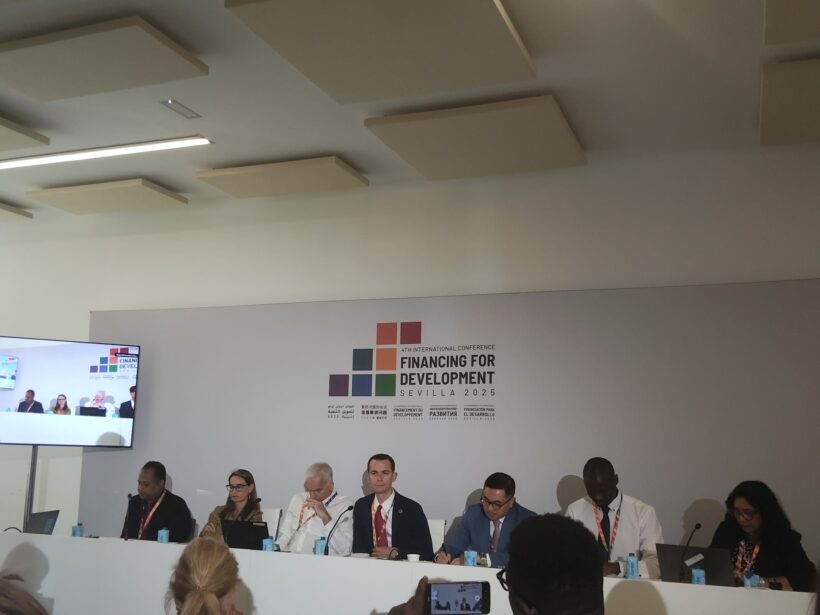
At the 4th United Nations International Conference on Financing for Development (FFD) in Sevilla, Spain, July 2, 2025, the NGO Committee on FfD hosted a pivotal side event titled “Reimagining the Global Financial Architecture”, gathering high-level representatives and grassroots leaders to address deep-rooted inequities in global finance and development systems.
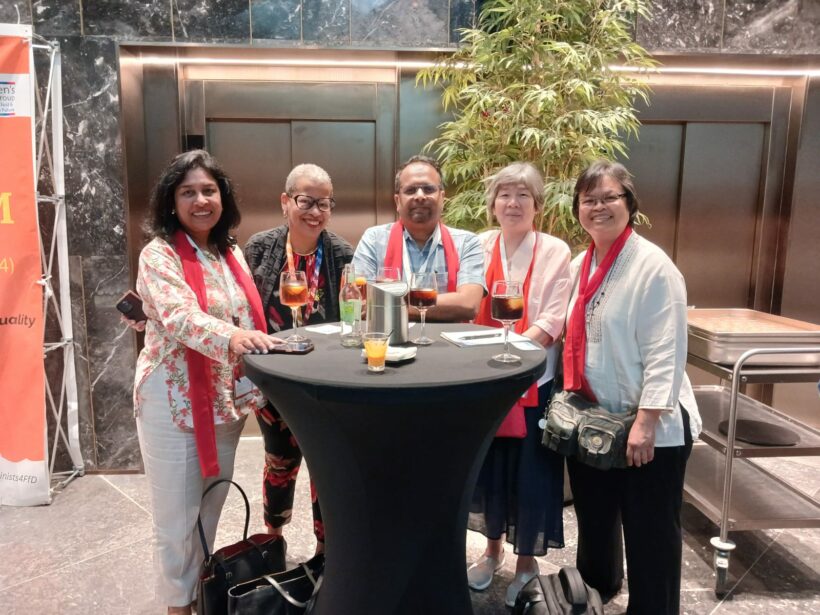
Moderated by Ms. Anita Thomas, Chair of the NGO Committee on FfD and UN Representative for Women First International Fund, the panel brought together a diverse group of voices—ranging from diplomats and economists to climate advocates and youth leaders—to spotlight structural barriers and propose actionable solutions.
Mr. Jesús Enrique G. García, Minister at the Philippine Mission to the UN, emphasized the G77’s leadership in pushing for fairer financial systems during negotiations. He underscored the Philippines’ unique position as a climate-vulnerable, middle-income country often excluded from traditional aid frameworks.
García outlined national efforts such as:
- Climate expenditure tagging to prioritize environmental investments;
- Digital tools for financial inclusion, targeting small vendors and informal workers;
- Support for MSMEs and South-South cooperation to share local solutions;
- And a call for more equitable global financing structures, including fair credit ratings and coordinated debt relief.
UN Special Rapporteur Dr. Surya Deva made an impassioned case for aligning global financial architecture with human rights law. He identified five urgent reforms:
- Fair representation in global financial institutions like the IMF and World Bank;
- Lower capital costs for developing countries;
- Action on unsustainable debt burdens;
- Introduction of innovative financing mechanisms, such as taxing the ultra-wealthy and carbon emissions;
- Addressing systemic inequalities, particularly gender disparities and the neglect of informal workers.
He warned that without political will, the lofty goals of the FFD process risk remaining “just words on paper.”
Mr. Robert Powell, IMF Special Representative to the UN, clarified the IMF’s technical but pivotal role in creating the macroeconomic conditions for development and human rights to flourish.
Powell highlighted the need for:
- Robust domestic reforms for revenue mobilization;
- Public financial management improvements to enhance transparency and trust;
- And leveraging digital technologies to expand tax compliance and better target public services.
Dr. Umberto Cattaneo of the ILO introduced a new global initiative: increasing universal social protection (USP) coverage by 2% per year, especially in low-income nations. He noted this target is both affordable (just 0.04% of GDP per year) and already achievable, citing progress in countries like India and Mexico.
Cattaneo stressed that expanded USP is essential for reducing poverty and inequality, and should be treated as a minimum global standard—not an aspirational goal.
Ms. Lisa Guzman, VP at Accion, presented stark figures: 1.4 billion people remain excluded from the formal financial system, with 50% being women. She emphasized that access to finance is a human right and economic necessity.
Guzman championed:
- Regulatory frameworks that support inclusive innovation,
- Ethical and responsible fintech,
- And people-centered financial literacy, particularly tailored for women and vulnerable populations.
She highlighted India’s Aadhaar digital ID system as a game-changing model of how public-private collaboration can drive both inclusion and equity.
Janina Peter, founder of Bridging Gaps Microloans, showcased a successful grassroots financing model using interest-free microloans repaid through community service, empowering refugee-led entrepreneurs.
She called for:
- Initial seed funding to launch local businesses,
- Scalable digital tools to expand reach in remote areas,
- And support for long-term financial independence through local ownership.
Md Biozid Jessorey, Executive Director, Biozid Climate Institute, brought a compelling message from the climate-ravaged region of Khulna, Bangladesh.
He urged:
- Shifting climate finance from loans to grants,
- Faster disbursement of loss and damage funds,
- Locally led, small-scale adaptation solutions,
- Investment in climate education and youth leadership,
- And systemic reforms to anchor climate justice and decentralization in decision-making.
Mr. Willice Okoth Onyango, Executive Director of African Youth Café, represented over one million young people from 22 African nations. He emphasized that while youth are often labeled as “the future,” they need investment now.
His calls included:
- Financial education from secondary school onward,
- AI and digital tools to boost youth financial literacy,
- Direct funding to youth-led enterprises via mechanisms like the African Youth Foundation,
- And evidence-based data to quantify the youth sector’s economic value.
All speakers agreed: the global financial system must be transformed—not just tweaked—to meet today’s intersecting challenges of inequality, debt, climate change, and exclusion. The event closed with a strong consensus that the outcome documents and commitments made at FFD4 must be translated into real, community-level change, driven by inclusive policymaking, international solidarity, and bold leadership. As Ms. Anita Thomas remarked in closing, “It’s time we stop designing systems for people without their voices at the table. This is our collective call to reimagine finance for people, planet, and justice.”