
Hope is typical of the human being who, as Edmund Husserl states, is a being who plans his future since he is moved by the desire for a happier life liberates from personal and social determinism. Therefore human beings explore with thought and imagination the ways to get there, into the future.
The United Nations General Assembly has designated 12 July as the International Day of Hope—a day to celebrate and promote hope as a guiding principle for individuals, communities, and nations alike.
This resolution draws upon the enduring values of the United Nations Charter it builds on earlier UN initiatives—such as the International Day of Conscience—by highlighting the essential role hope plays in promoting well-being, mutual respect, social stability, and sustainable development.
Ultimately, this day is a reminder that even in difficult times, hope remains a transformative force.
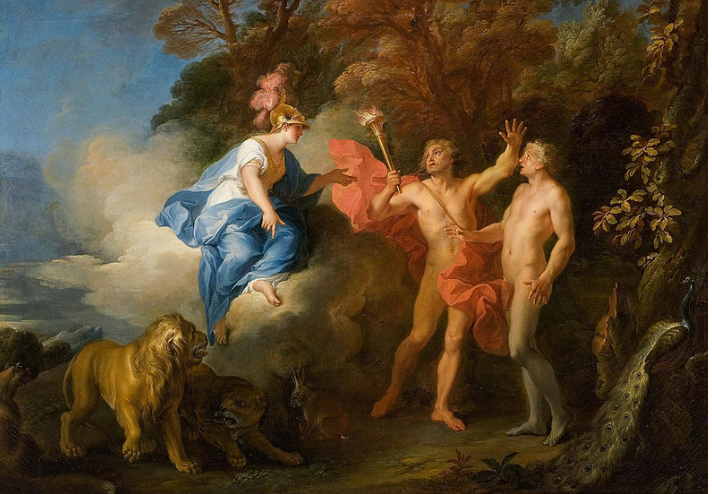
Myths and stories of hope are found in various cultures and civilisations. These narratives serve to illustrate the triumph of the human spirit over hardship, reinforcing the idea that hope can lead to renewal and transformation. The Greek myth of Prometheus is one story of transformation who brought human progress by opening the future in the face of great adversity.
Humans have a need for stories of hope, we are increasingly bereft of stories that deflect and give meaning to our lives. This phenomenon has been noted by various eminent observers from Victor Frankl and Carl Jung to mythologist Joseph Campbell.
Victor Frankl who was an Austrian neurologist, psychologist, philosopher, and Holocaust survivor notes that the accelerating problems in our society – drug, abuse, mistrust, social isolation and violence cannot be understood without recognizing the existential vacuum that underlies them. Campbell’s writings remind us that shared myths connect us, give us hope and propel our participation in society, but he also shows us how profoundly our unifying mythology has disintegrated. According to Campbell, mythological symbols exhilarate centers of life beyond the reach of reason or coercion and the function of mythology is to reconcile waking consciousness to the mysterium tremendum et fascinans of this universe as it is (1).
Today the vacuum of meaningness in society has awakened in people a central drive to reconnect with a functional social fabric and with the myths and stories of hope. We are surrounded by computers, virtual realities, and all the wonders of AI, but as human beings we search ever more deeply for cultural resources and for stories of hope that could guide us and help us make sense of the breathtaking changes we experience in our daily life.
As Jane Yolen told years ago, storytelling, the oldest arts, serves as more than entertainment, filling a vital role in weaving together the strands that form a common culture. (2)
We need stories of hope that will help us to integrate the events of today’s world that swirl ever faster around us and in us. We need stories of hope addressing resolutions for the future
Hope is a transformative force and in many tales and stories the main character will strengthen his deepest hopes by letting go of the false hopes that caused him failure and suffering.
Throughout history some writers have understood the importance of letting go the false hopes in order to go forward into the future.
First and foremost is Dantes in The Divine Comedy:
- Abandon all hope, all you who enter here – Dantes, April, 1300
- All hope abandon, ye who enter here – Henry Francis Cary (1805–1814).
- All hope abandon, ye who enter in! – Henry Wadsworth Longfellow (1882)
- Leave every hope, ye who enter! – Charles Eliot Norton (1891)
- Leave all hope, ye that enter – Carlyle-Okey-Wicksteed (1932)
- Lay down all hope, you that go in by me – Dorothy L. Sayers (1949)A
- Abandon all hope, ye who enter here – John Ciardi (1954)
- Abandon every hope, you who enter. – Charles S. Singleton (1970)
In the tale of False Hope of the book of Tales for the Heart and the Mind (3), the author Silo, offers a psychological practice expressed in literary form. At the entrance of the story, the reader arrives at the famous door, where Virgile mandated by Béatrice (the poet muse) begin the journey through Hell with Dante.
Through me you pass into the city of Woe; through me you pass into eternal pain; Through me among the people lost aye. Justice the founder of my fabric moved; To rear me was the task of power divine, Supremist Wisdom, and Primeval Love. Before me things createwere none, Save things Eternal, and Eternal I endure. All hope abandone Ye who enter here.
Once pass the entrance, the reader meets a doctor that explain:
Human beings cannot live without hope, but once they realize some of their hopes are false, they can’t keep these hopes up indefinitely, and sooner or later everything ends in a crisis of failure. If you could go deep within yourself and find those hopes you realize will not be fulfilled, and if you could also accomplish the work of leaving these hopes here, forever, you would gain a greater sense of reality, So, let’s work on this again. Search for your most profound hopes, those you feel will never be fulfilled. Be careful not to make mistakes. There are some hopes that do seem possible. Do not take any of these. Take only those that will never be achieved. Go ahead. search for them with all the honesty you are capable of, even though this may be a bit painful.
When you leave this room, resolve to leave these hopes here, forever.
Perhaps if we let go our false hopes, our deepest hopes and images (4) will be strengthened and renewed.
Perhaps than we will have free energy to take action and transform our lives and the world.
Rejects fears and disheartenment.
Rejects the desire to flee toward low and dark regions.
Rejects attachment to memories.
Remains in a state of inner freedom indifferent to the illusion of the landscape, with resolution in the ascent (Silo Message, siloNet, 2025)
______________________________________________________
Source: (1) wikipedia, Joseph Cambell biography
(2) Tales for Heart and Mind, by Silo The Guided Experiences. A storybook for Grownups, Translated from Spanish by Paul Tooby, Latitude Press, 1993 San Diego.
(3) The stories in the book Tales for the Heart and the Mind are guided experiences. Silo encourages the reader and listener to complete each tale by imagining in your own mind’s eye elements from his own life. With a little active imagination, the reader crafts a tale uniquely resonant with his own situation. As in virtual reality, he becomes part of the story, both writer and actor in the scene set on the stage of his life. Written narratives in the first person, asterisk appears in the texts; pauses are missing and help to mentally introduce the images that transform the passive reader into an actor and co-actor.
(4) For Silo and universal humanism, the image is an active way for consciousness to position itself as a structure in the world. It can act on the body itself, and the body acts in the world thanks to intentionality that is directed outside of itself and does not simply respond to a natural for-itself or in-itself. The image acts within a spatio-temporal structure and within an internal spatiality that we call the space of representation. The various complex functions that the image fulfills generally depend on the position it assumes within this spatiality. – Silo Parle, p.139, 2013,